Mighty Leaf Tea, the Peet’s Acquisition Story — At a Glance
| Field | Value | Source |
|---|---|---|
| Founded | 1996 (Gary Shinner and Jill Hosey, San Rafael, California) | Wikipedia |
| Current HQ | Emeryville, California | Wikipedia / Peet’s |
| Year acquired | 2014 (August), by Peet’s Coffee & Tea in partnership with Next World Group | CSP Daily News / Daily Coffee News |
| Acquisition price | Undisclosed | CSP Daily News |
| Signature innovation | Silken stitched tea bag (the “silken pyramid” design) | Peet’s corporate / Mighty Leaf site |
| Current parent | Peet’s Coffee (which is owned by JAB Holding Company since 2024) | Industry reporting |
| Product line | Specialty loose-leaf teas, silken sachet teas, blends | Peet’s corporate site |
| Distribution | Specialty foodservice (restaurants, hotels, coffee shops), retail grocery, e-commerce | Food Business News |
| Co-founder | Jill Hosey (still involved with the brand) | Wikipedia / brand site |
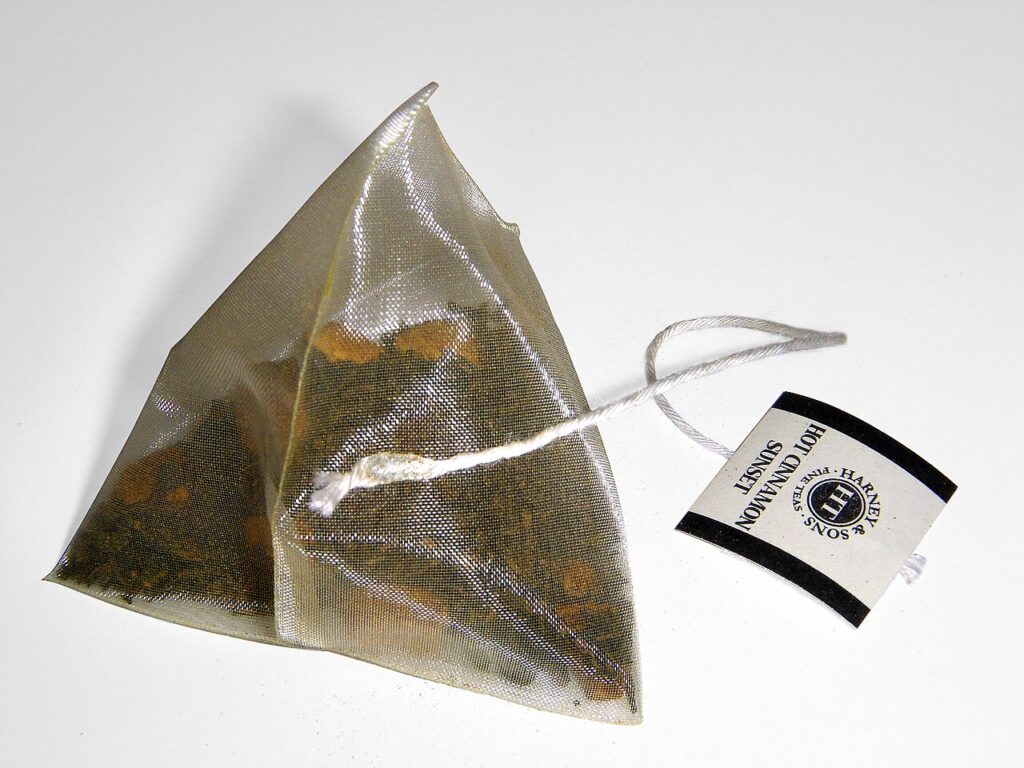
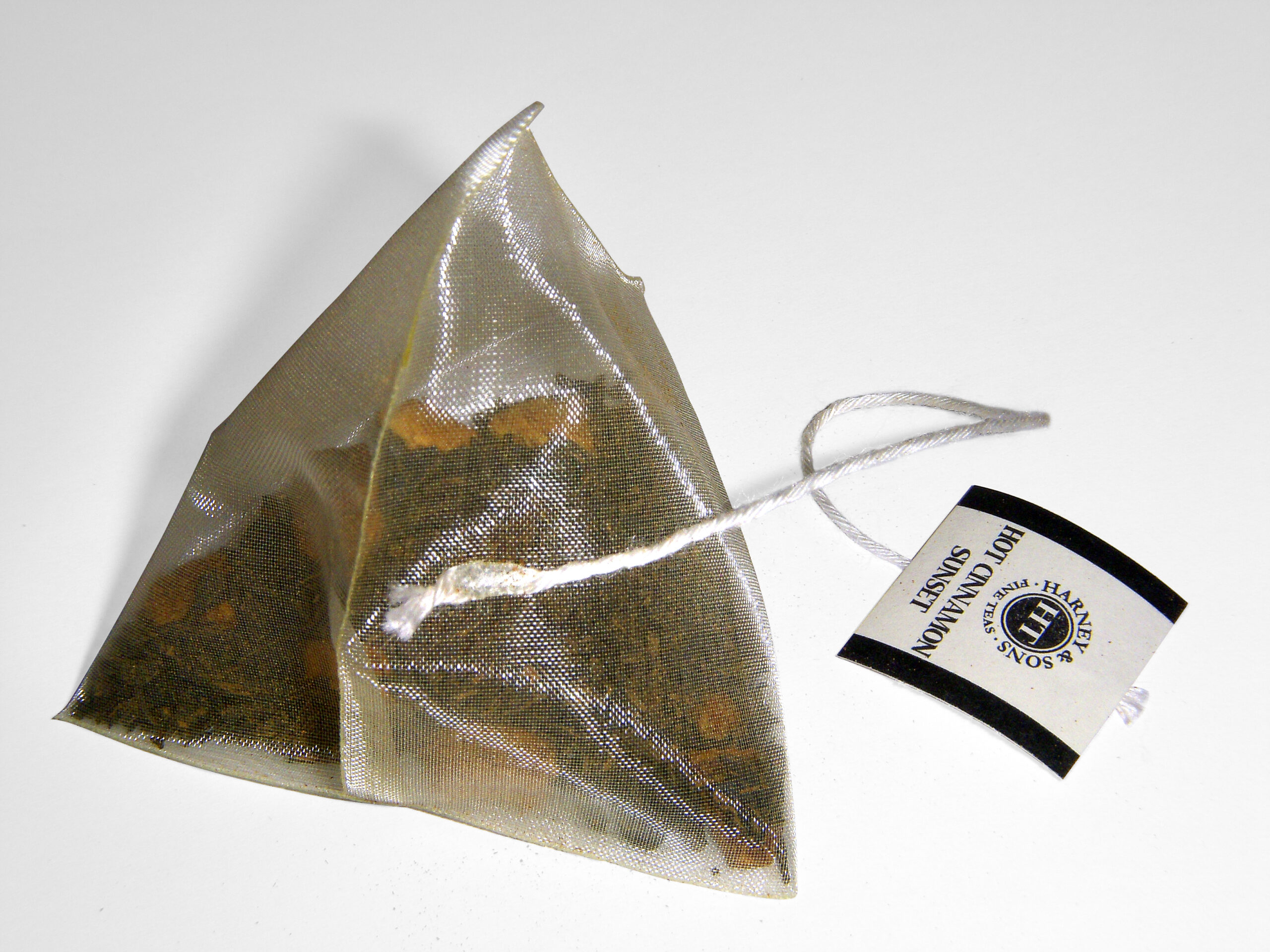
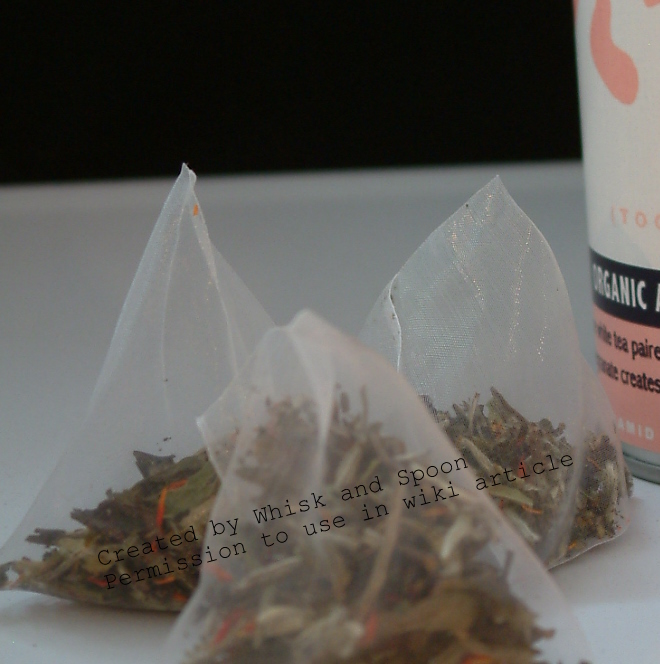
Mighty Leaf Tea was founded in 1996 in San Rafael, California, by Gary Shinner and Jill Hosey with a single product innovation that defined the brand: the silken stitched tea bag — a mesh pyramid sachet that allowed the tea leaves inside to expand fully during brewing, rather than being compressed into a flat paper teabag. The sachet design, which Mighty Leaf branded as “silken,” was a category-defining innovation in the late 1990s and turned the company into a specialty foodservice supplier to upscale restaurants, hotels, and coffee shops across the United States.
In August 2014, Peet’s Coffee & Tea acquired Mighty Leaf Tea in partnership with the private investment firm Next World Group. The acquisition price was undisclosed. Peet’s had been quietly building a portfolio of premium tea and coffee brands — it had acquired Stumptown Coffee in 2011 and had been looking at tea as a complementary category. The Mighty Leaf deal brought the silken sachet technology, the foodservice distribution relationships, and the specialty brand into the Peet’s orbit.
In 2024, Peet’s itself was acquired by JAB Holding Company, the European private investment firm that had previously held Peet’s from 2012 to 2020. The 2024 re-acquisition brought Peet’s (and its Mighty Leaf subsidiary) back under JAB’s control, alongside other coffee-and-beverage holdings that include Keurig Dr Pepper (until 2023), Pret a Manger, and Panera. The chain of ownership has put Mighty Leaf in a multi-brand specialty beverages portfolio alongside Stumptown Coffee and other Peet’s subsidiaries.
The Founding, 1996
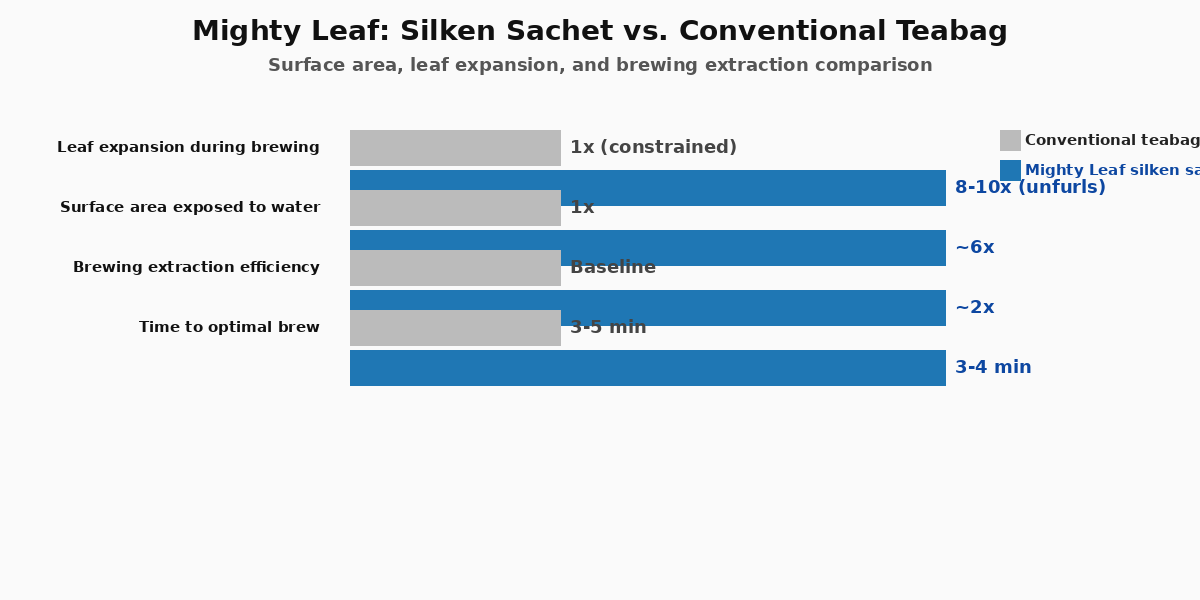
Gary Shinner and Jill Hosey founded Mighty Leaf Tea in 1996 in San Rafael, California, a small city just north of San Francisco across the Richmond–San Rafael Bridge. The founding premise was the silken sachet: a stitched mesh pyramid bag made from a translucent material that allowed the tea leaves inside to fully unfurl during brewing. The sachet was a deliberate contrast to the conventional flat paper teabag, which compressed leaves into a small space and limited the extraction of flavour compounds during brewing.
The sachet design was not new — tea companies in East Asia had used mesh pyramid sachets for years. What was new in the late 1990s was the positioning: Mighty Leaf offered a premium silken sachet at a price point well above conventional tea bags, marketed through upscale foodservice channels rather than supermarket aisles. The brand’s first major customer was a San Francisco restaurant, and the foodservice relationships multiplied from there . Restaurants, hotels, coffee shops, and catering companies that wanted a premium tea option that was faster to brew than loose-leaf tea but more authentic than standard teabags.
The sachet material itself was the technical innovation. Most tea bag papers are made from bleached abaca fibre (a banana plant fibre, often called “manila hemp”) or from thermoplastic fibres. The Mighty Leaf sachet used a translucent mesh made from a synthetic polymer that allowed the tea leaves inside to be visible during brewing, which had both a functional benefit (more visible unfurling) and an aesthetic appeal. The brand name “Mighty Leaf” was a direct reference to the visible full-leaf tea inside the sachet.

The Silken Sachet as Category Innovation
The silken sachet design was a category-defining innovation in the late 1990s and early 2000s. Before Mighty Leaf, the premium tea market in the United States was bifurcated between two extremes: commodity teabags (Lipton, Tetley, PG Tips) at the low end and loose-leaf specialty teas (sold by independent tea merchants and tea shops) at the high end. There was no meaningful middle category for a product that brewed more efficiently than loose-leaf but more authentically than standard teabags.
The silken sachet filled that middle category. The product was easier to brew than loose-leaf (no infuser required, no loose leaves to strain), more flavourful than commodity teabags (full-leaf unfurl during brewing), and visually distinctive (the translucent mesh showed the tea leaves inside). It was a clean product design that addressed a specific consumer pain point.
The sachet category expanded rapidly after Mighty Leaf’s introduction. Tazo (then owned by Starbucks), Stash Tea, Republic of Tea, and other brands launched their own mesh pyramid sachets in the 2000s and 2010s. The category became a standard format in the premium tea aisle and is now ubiquitous across supermarket specialty tea sections. Mighty Leaf’s role in popularising the format is widely credited in the specialty tea trade, though the brand has not maintained the same market-share lead it had in the late 1990s and early 2000s.
The Foodservice Channel
Mighty Leaf built its early business primarily through foodservice rather than retail. The brand’s first customers were upscale restaurants and hotels in the San Francisco Bay Area, and the foodservice distribution expanded nationally through restaurant supply distributors and specialty foodservice wholesalers.
The foodservice model has several advantages over retail: higher per-unit margins, more direct customer relationships, and a captive audience (restaurant guests who are served Mighty Leaf at dinner have limited choice and tend to remember the brand). The disadvantages are volume volatility (restaurant sales fluctuate with the broader restaurant industry) and the need for sales-and-support staff to maintain relationships with hundreds of independent restaurant operators.
By the mid-2000s, Mighty Leaf was being served in approximately 5,000 restaurants, hotels, and coffee shops across the United States, per company-published figures. The brand had also begun to expand into grocery retail through Whole Foods and other specialty grocers, and into online direct-to-consumer sales.
The 2014 Peet’s Acquisition
In August 2014, Peet’s Coffee & Tea, Inc. acquired Mighty Leaf Tea in partnership with the private investment firm Next World Group. The acquisition price was undisclosed, but the deal was characterised by both parties as a strategic combination of complementary premium beverage brands.
Peet’s had been operating as a public company (NASDAQ: PEET) since 2001, with a focus on specialty coffee retail (Peet’s own stores) and wholesale grocery distribution. In 2012, Peet’s was acquired by Joh. A. Benckiser (JAB Holding Company), the European private investment firm, which took Peet’s private. Under JAB’s ownership, Peet’s expanded its acquisition strategy: Stumptown Coffee in 2011 (acquired before the JAB deal but rolled into the Peet’s portfolio), Mighty Leaf Tea in 2014, and later Intelligentsia Coffee in 2015.
The Mighty Leaf acquisition brought three things into the Peet’s portfolio: the silken sachet technology, the foodservice distribution relationships, and a specialty tea brand that complemented Peet’s coffee focus. The acquisition also gave Mighty Leaf access to Peet’s larger distribution network and grocery relationships.
The 2014 acquisition was the largest single deal in Mighty Leaf’s history. The deal structure (Peet’s in partnership with Next World Group) was unusual — Next World Group is a San Francisco-based private investment firm that focuses on premium consumer brands, and the partnership allowed Peet’s to share the equity investment while still consolidating operational control.
The 2024 JAB Re-Acquisition
In 2024, Peet’s was re-acquired by JAB Holding Company, which had previously held the company from 2012 to 2020 before selling a majority stake to a group of investors in 2020. The 2024 transaction brought Peet’s back under JAB’s full control alongside other beverage holdings that include Keurig Dr Pepper (until 2023), Pret a Manger, and Panera.
For Mighty Leaf, the 2024 re-acquisition was structurally neutral — the brand continues to operate as a Peet’s subsidiary with the same operating team. What changed was the corporate context: Mighty Leaf is now part of a multi-brand specialty beverage portfolio at JAB, alongside Stumptown Coffee, Intelligentsia Coffee, and other coffee and tea brands.
The JAB portfolio approach , owning multiple complementary brands that operate independently while sharing corporate infrastructure . Is the same model that has worked for JAB in other consumer categories. The portfolio gives each brand access to corporate-level capital and operational support while preserving brand-specific positioning and customer relationships.
Mighty Leaf Today
Mighty Leaf operates today as a specialty tea brand within Peet’s Coffee. The brand’s product line includes silken sachet teas (the original innovation), loose-leaf teas, and tea blends across the major tea categories (black, green, herbal, white, oolong). The brand is sold through grocery retail (Whole Foods, specialty grocers, and some conventional supermarket chains), foodservice (restaurants, hotels, coffee shops), and direct-to-consumer e-commerce.
The brand’s market position has changed since the 2014 acquisition. Mighty Leaf was a category-defining brand in the late 1990s and early 2000s; it now operates in a much more crowded silken sachet category with competitors including Tazo, Stash, Republic of Tea, Numi, and the supermarket own-label premium lines. The brand retains a loyal customer base, particularly in the foodservice channel, but its market-share position has narrowed since the category expanded.
The brand has continued to innovate within the silken sachet format, including expanded herbal tea lines, ready-to-drink bottled teas, and limited-edition seasonal blends. The sachet’s translucent mesh design has been refined over the years for brewing efficiency and material sustainability.
Fact-vs-Claim Verdict
| Claim | Verdict | Source / note |
|---|---|---|
| Mighty Leaf was founded in 1996 | Verifiable | Wikipedia |
| Co-founders were Gary Shinner and Jill Hosey | Verifiable | Wikipedia |
| Headquarters in Emeryville, California | Verifiable | Wikipedia / Peet’s |
| Acquired by Peet’s in August 2014 in partnership with Next World Group | Verifiable | CSP Daily News / Daily Coffee News |
| Acquisition price undisclosed | Verifiable | CSP Daily News |
| Signature innovation was the silken stitched tea bag | Verifiable | Peet’s corporate / Mighty Leaf site |
| Peet’s was acquired by JAB Holding Company in 2012 and again in 2024 | Verifiable | Industry reporting |
| Mighty Leaf served in ~5,000 foodservice accounts at peak | Company claim | Mighty Leaf company-published figure; precise current count not disclosed |
| The silken sachet was a category-defining innovation | Industry-press characterisation | Specialty tea trade credits Mighty Leaf with popularising the mesh pyramid format; subsequent competitors have followed |
| Mighty Leaf was sold in approximately 5,000 foodservice accounts by mid-2000s | Company claim | Industry estimates consistent with the company’s stated scale |
The current Mighty Leaf product line under Peets ownership
Since the 2014 acquisition, Mighty Leaf has shifted focus from Whole Foods and independent tea-shop distribution into Peet’s broader supermarket channel. The current range centres on the original silken tea bags plus a loose-leaf tier and a few blended iced-tea pouches. The 2014-vintage promise of “small-batch artisanal tea” has been quietly de-emphasised on packaging, though the silken pouches remain a category signature and a useful shorthand for the brand’s hand-blended positioning.
A note on Peet’s own competitive context
Peet’s acquisition of Mighty Leaf came two years after Peet’s own acquisition by Joh. A. Benckiser (2012), and the Mighty Leaf buy folded into a broader premium-tea push that has since included a separate Kicking Horse Coffee acquisition in 2017 and a continued wholesale push into US grocery. Mighty Leaf’s silken-pouch branding fits Peet’s premium positioning but is treated as a distinct sub-brand on shelf rather than co-mingled with Peet’s loose-leaf line.
Frequently Asked Questions
The Mighty Leaf Founding
Mighty Leaf Tea was founded in 1996 in San Rafael, California, by Gary Shinner and Jill Hosey. The founding premise was a single product innovation: the silken stitched tea bag, a mesh pyramid sachet that allowed tea leaves to fully unfurl during brewing. The brand built its initial business through foodservice (upscale restaurants, hotels, and coffee shops) and later expanded into grocery retail and e-commerce.
The Silken Sachet Innovation
The silken sachet is a stitched mesh pyramid bag made from a translucent synthetic polymer. Unlike conventional flat paper teabags, which compress tea leaves into a small space, the silken sachet allows the leaves to fully unfurl during brewing, which extracts more flavour compounds. The sachet also has an aesthetic appeal , the tea leaves are visible during brewing. Mighty Leaf popularised the silken sachet format in the US specialty tea market in the late 1990s, and the format is now standard across the premium tea aisle.
The 2014 Peet’s Acquisition
Peet’s Coffee & Tea acquired Mighty Leaf Tea in August 2014 in partnership with the private investment firm Next World Group. The acquisition price was undisclosed. The deal brought the silken sachet technology, the foodservice distribution relationships, and the specialty tea brand into the Peet’s portfolio. Peet’s had previously acquired Stumptown Coffee in 2011 and later acquired Intelligentsia Coffee in 2015, building a portfolio of premium coffee and tea brands under JAB Holding Company ownership.
The 2024 JAB Re-Acquisition
In 2024, Peet’s was re-acquired by JAB Holding Company, which had previously held the company from 2012 to 2020 before selling a majority stake in 2020. The 2024 transaction brought Peet’s (and its Mighty Leaf subsidiary) back under JAB’s full control, alongside other beverage holdings. For Mighty Leaf specifically, the re-acquisition was structurally neutral , the brand continues to operate as a Peet’s subsidiary with the same operating team.
Mighty Leaf Today
Mighty Leaf operates as a specialty tea brand within Peet’s Coffee. The product line includes silken sachet teas, loose-leaf teas, and blends across the major tea categories. The brand is sold through grocery retail (Whole Foods, specialty grocers, some conventional supermarket chains), foodservice, and direct-to-consumer e-commerce. The brand’s market-share position has narrowed since the silken sachet category expanded to include competitors like Tazo, Stash, Republic of Tea, and Numi.
The Foodservice Channel
Mighty Leaf built its early business primarily through foodservice rather than retail. The brand’s first customers were upscale restaurants and hotels in the San Francisco Bay Area, and the foodservice distribution expanded nationally. The foodservice model has higher per-unit margins and more direct customer relationships than retail but requires ongoing sales-and-support investment to maintain. Mighty Leaf’s foodservice relationships remain a competitive advantage relative to retail-only competitors.
Sources
- Wikipedia , Mighty Leaf Tea , Secondary source for the 1996 founding, the founders Gary Shinner and Jill Hosey, the Emeryville headquarters, and the San Rafael origin story.
- CSP Daily News , Peet’s Acquires Mighty Leaf Tea , Primary source for the August 2014 acquisition announcement, the partnership with Next World Group, and the undisclosed price.
- Food Business News , Peet’s Coffee turns over new Leaf , Primary source for the August 2014 acquisition context, the foodservice channel expansion, and the Peet’s specialty brand portfolio strategy.
- Daily Coffee News , Peet’s Acquires Mighty Leaf Tea, Opens and Closes Midwest Stores , Primary source for the August 2014 acquisition details, the partnership structure, and the parallel Midwest store openings and closings.
- Peet’s Coffee , Mighty Leaf Tea page , Primary source for the current product line, the silken sachet positioning, and the brand’s continued operation as a Peet’s subsidiary.
Last updated: 7 October 2026. Sources are linked in the text.