Nettle tea is an infusion of the dried leaves of stinging nettle, a common weed of gardens and riverbanks. It is caffeine-free, tastes mild and grassy, and European regulators accept it as a traditional remedy to increase urine flow and ease minor joint pain. The clinical trials people quote for hay fever, prostate symptoms and blood sugar mostly tested capsules of nettle extract, not tea, and the results are mixed. It is safe for most adults, but not advised in pregnancy, and worth checking with a pharmacist if you take water tablets, lithium, warfarin or diabetes drugs.
What is nettle tea?
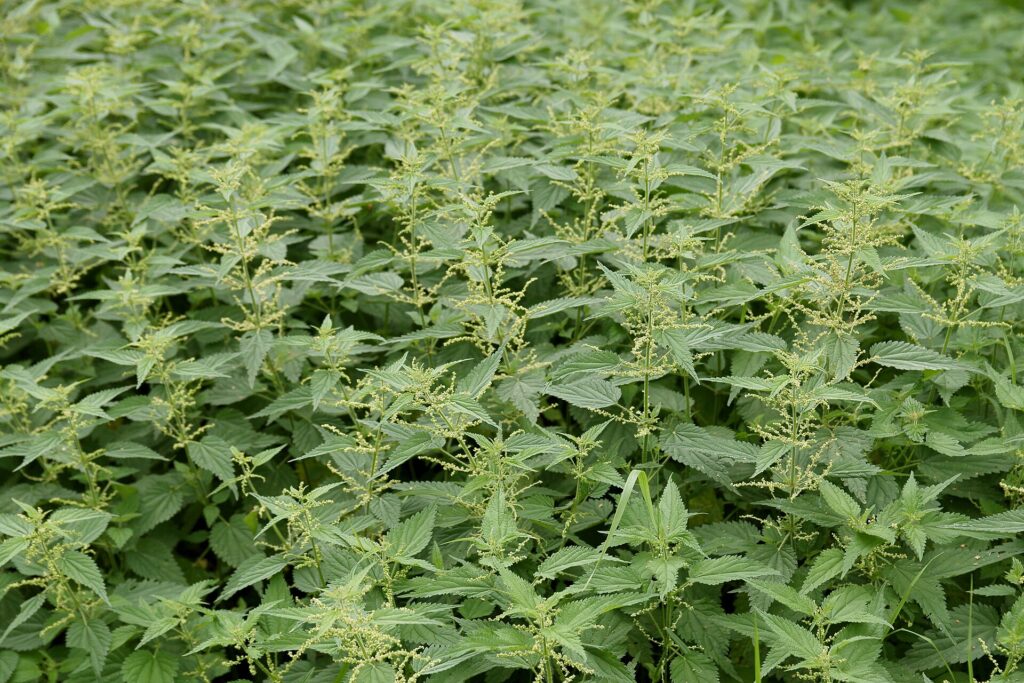
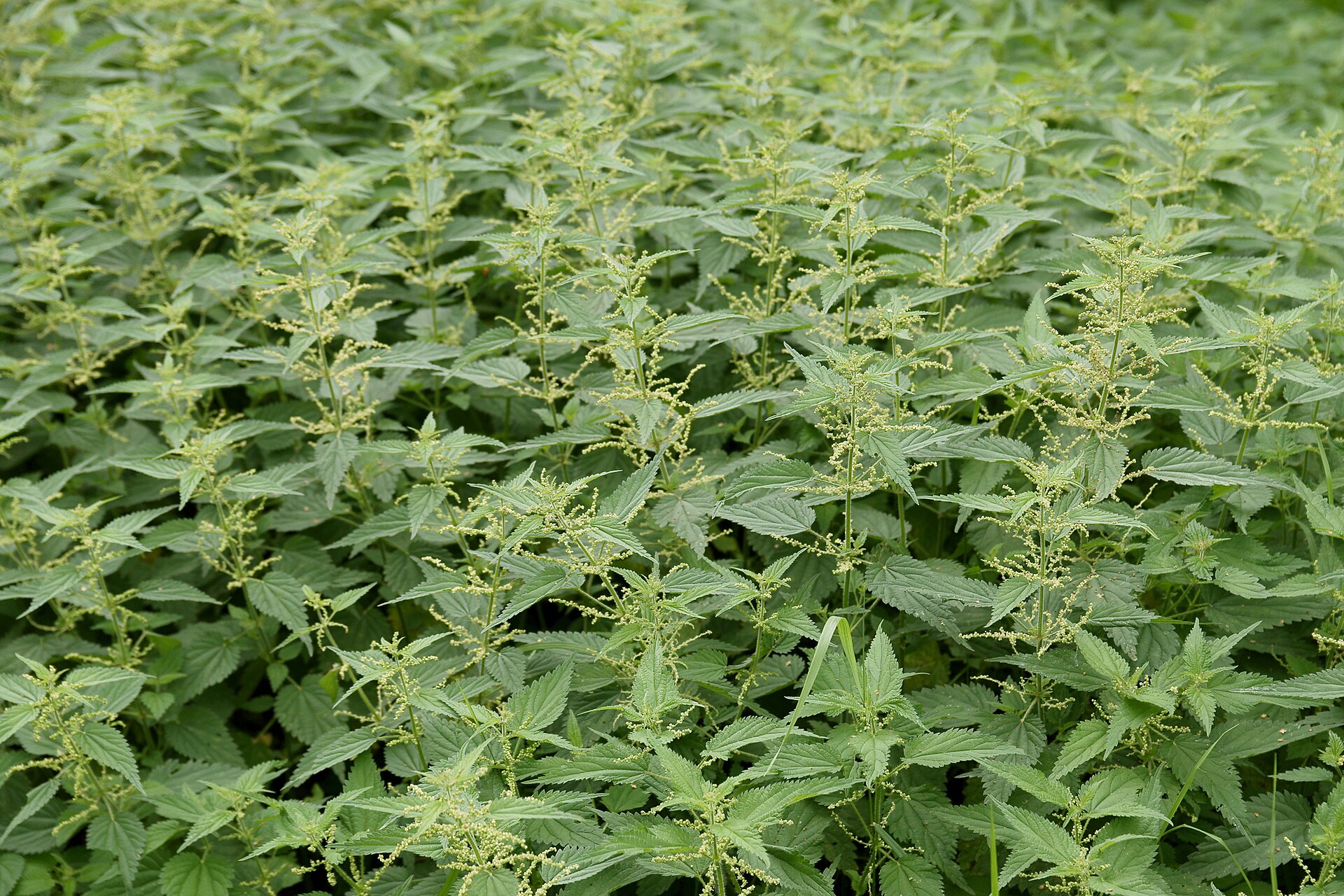
Stinging nettle (Urtica dioica) grows across Europe, Asia and North America, usually in rich, damp soil near houses, farms and streams. Its leaves and stems are covered in fine hollow hairs that break on contact and push a mix of irritants into the skin. Histamine is one of them. In a 2006 study of a related nettle species, oxalic acid and tartaric acid caused the pain that lingers for hours after a brush with the plant.
Drying, steeping or cooking disarms the hairs, so nettle tea does not sting. Most tea bags and loose blends use the leaf, sometimes with the stems and flowers (sold as nettle herb). The root is a separate product, mostly sold as an extract for prostate symptoms. Like other herbal infusions, nettle tea contains no tea leaves, which is why it sits in our guide to caffeine-free teas. The taste is soft, green and slightly earthy, close to a mild green tea or spinach water.
Leaf, herb or root
The European Medicines Agency (EMA) has three separate herbal monographs for nettle, one for each part. All three are rated as traditional use, which means accepted on the basis of long use rather than proven by clinical trials. None reaches the stronger category of well-established use.
| Part | EU traditional use | Tea dose in the monograph |
|---|---|---|
| Leaf | Relief of minor joint pain; flushing the urinary tract in minor urinary complaints | 2 to 4 g per cup, 3 to 6 times a day (8 to 12 g a day) |
| Herb (leaf and stem) | Minor urinary complaints, with plenty of fluid; minor joint pain; oily skin conditions | 1.5 g in 150 ml boiling water, 3 to 4 times a day |
| Root | Lower urinary tract symptoms of an enlarged prostate, once a doctor has ruled out anything serious | 2 g in 150 ml water, 2 to 3 times a day |
The monographs also set time limits. The leaf monograph says not to use it for more than two to four weeks for urinary complaints, or four weeks for joint pain, and to see a doctor if symptoms persist. Only the root is cleared for long-term use.
Does nettle tea help hay fever?
Nettle’s reputation as an allergy remedy rests on one small study from 1990. Paul Mittman gave 98 people with hay fever either freeze-dried nettle capsules or a placebo for a week, and 69 finished. At the follow-up visit, nettle was rated higher than placebo in the overall assessments, but in the daily symptom diaries it scored only slightly better.
A larger test came in 2017. Bakhshaee and colleagues in Iran gave 74 people with confirmed allergic rhinitis either 150 mg nettle root tablets or a placebo for a month. Only 40 completed the trial. Symptoms improved in both groups to a similar degree. Nettle did lower one marker of allergic inflammation, the share of eosinophils in nasal swabs, but the authors concluded that larger and longer studies were needed.
Lab studies summarised by Memorial Sloan Kettering Cancer Center show nettle extract can block the histamine-1 receptor and enzymes involved in inflammation, which explains the interest. But no trial has tested nettle tea for hay fever, and the capsule trials do not show a clear benefit over placebo. If you want relief you can count on, standard antihistamines and steroid nasal sprays have far stronger evidence.
Nettle root and an enlarged prostate
Benign prostatic hyperplasia (BPH) is the non-cancerous growth of the prostate that makes many older men pass urine more often and less strongly. Nettle root is widely used for it in Germany, usually as an extract and often mixed with saw palmetto. Two trials of nettle on its own, without other herbs, give a sense of the range of results.
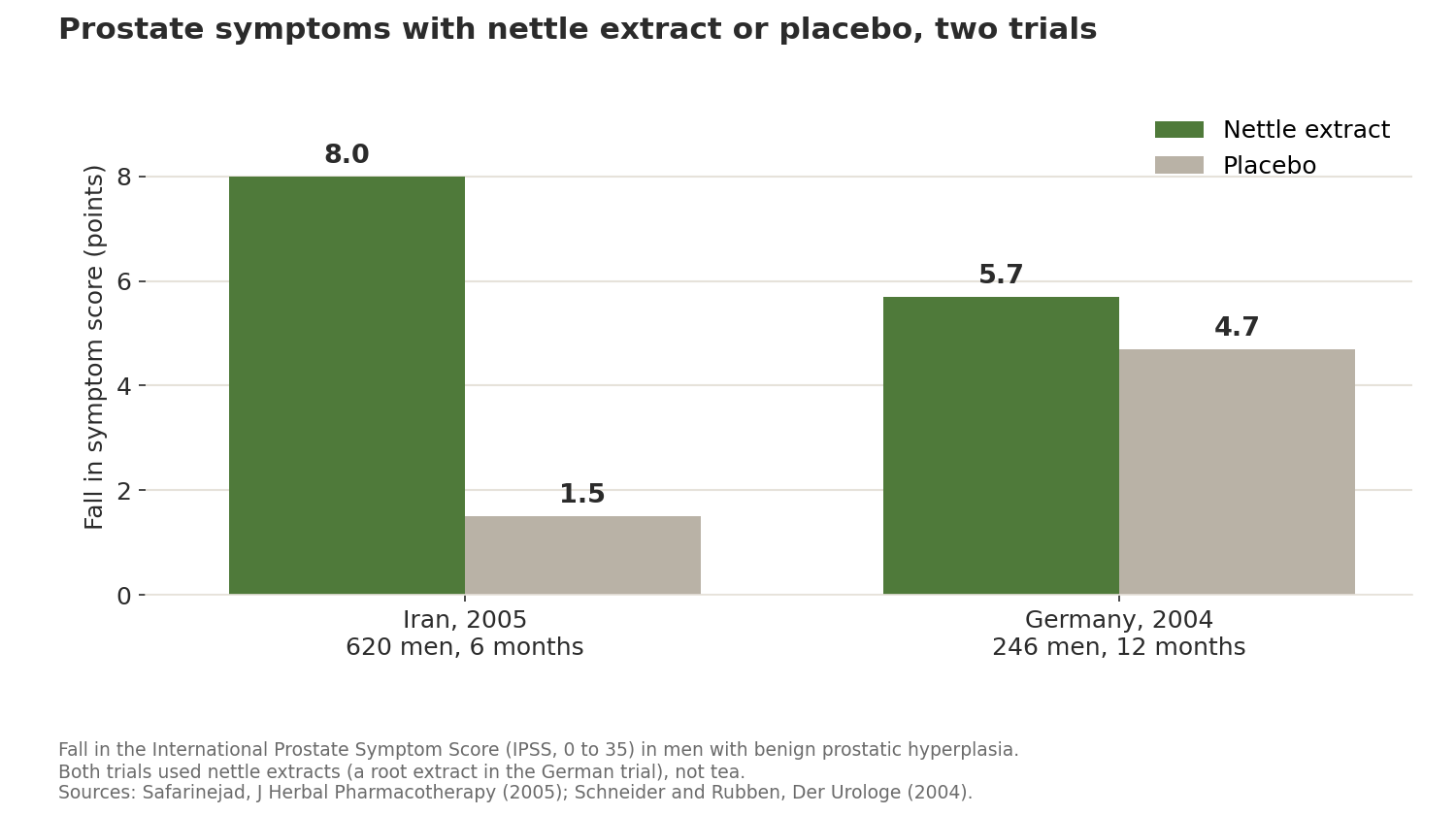
In a German trial of 246 men who took 459 mg of dry nettle root extract daily for a year, the International Prostate Symptom Score fell from 18.7 to 13.0, against 18.5 to 13.8 on placebo. That gap was statistically significant but small, and urine flow improved no more than with placebo. The authors themselves wrote that a strong increase in flow should not be expected.
A six-month Iranian trial of 620 men of a nettle extract reported far bigger effects: 81% of men on nettle said their symptoms improved against 16% on placebo, and the symptom score fell from 19.8 to 11.8 versus 19.2 to 17.7. Results this much stronger than other trials deserve caution, all the more because at least one of the same author’s other trials has since been retracted. The EMA root monograph keeps nettle root at the traditional-use level, and stresses that a doctor should first rule out more serious causes of urinary symptoms.
Remember too that these trials used concentrated extracts, and the products sold for the prostate are made from the root. Nettle leaf tea is a different part of the plant, and there is no trial showing it helps the prostate.
Blood sugar
Nettle leaf has been used in folk medicine for diabetes, and lab work shows its compounds can slow the enzymes that break down starch. In a three-month Iranian trial, 92 people with advanced type 2 diabetes took either 500 mg of nettle leaf extract three times a day or a placebo alongside their usual drugs. Fasting blood sugar, blood sugar after meals and HbA1c all fell more with nettle.
A 2020 meta-analysis of eight trials with 401 people found nettle lowered fasting blood sugar by an average of 18 mg/dl (about 1 mmol/l). It did not significantly change HbA1c, the longer-term marker that matters most, or insulin resistance, and the trials varied widely. All used extracts, not tea. The practical message is a safety one: if you take diabetes medicine and start drinking a lot of nettle tea, watch your readings, because Memorial Sloan Kettering lists a case of low blood sugar in a man taking a nettle remedy.
Joint pain and the nettle sting
The EMA accepts nettle leaf and herb tea as a traditional remedy for minor joint pain. The most unusual evidence here involves the sting itself. In a small British trial, 27 people with osteoarthritis at the base of the thumb or index finger rubbed fresh stinging nettle leaf on the painful joint daily for a week, and in another week used white deadnettle, a look-alike plant that does not sting. Pain and disability scores fell significantly more after the real nettle.
That tells us nothing about drinking the tea, and the patients could hardly be blinded to whether they were being stung. A French trial of a supplement combining fish oil, vitamin E and nettle cut painkiller use in 81 people with hip or knee arthritis, but reviewers judged its risk of bias as high, partly because people may have tasted the fish oil. Neither trial isolates the effect of nettle leaf.
Nutrients in nettles
Nettles are a nutritious leafy green when eaten. USDA data for blanched stinging nettles show, per 100 g, 42 calories, 481 mg of calcium, 1.64 mg of iron, 334 mg of potassium and 499 micrograms of vitamin K, several times an adult’s daily need.
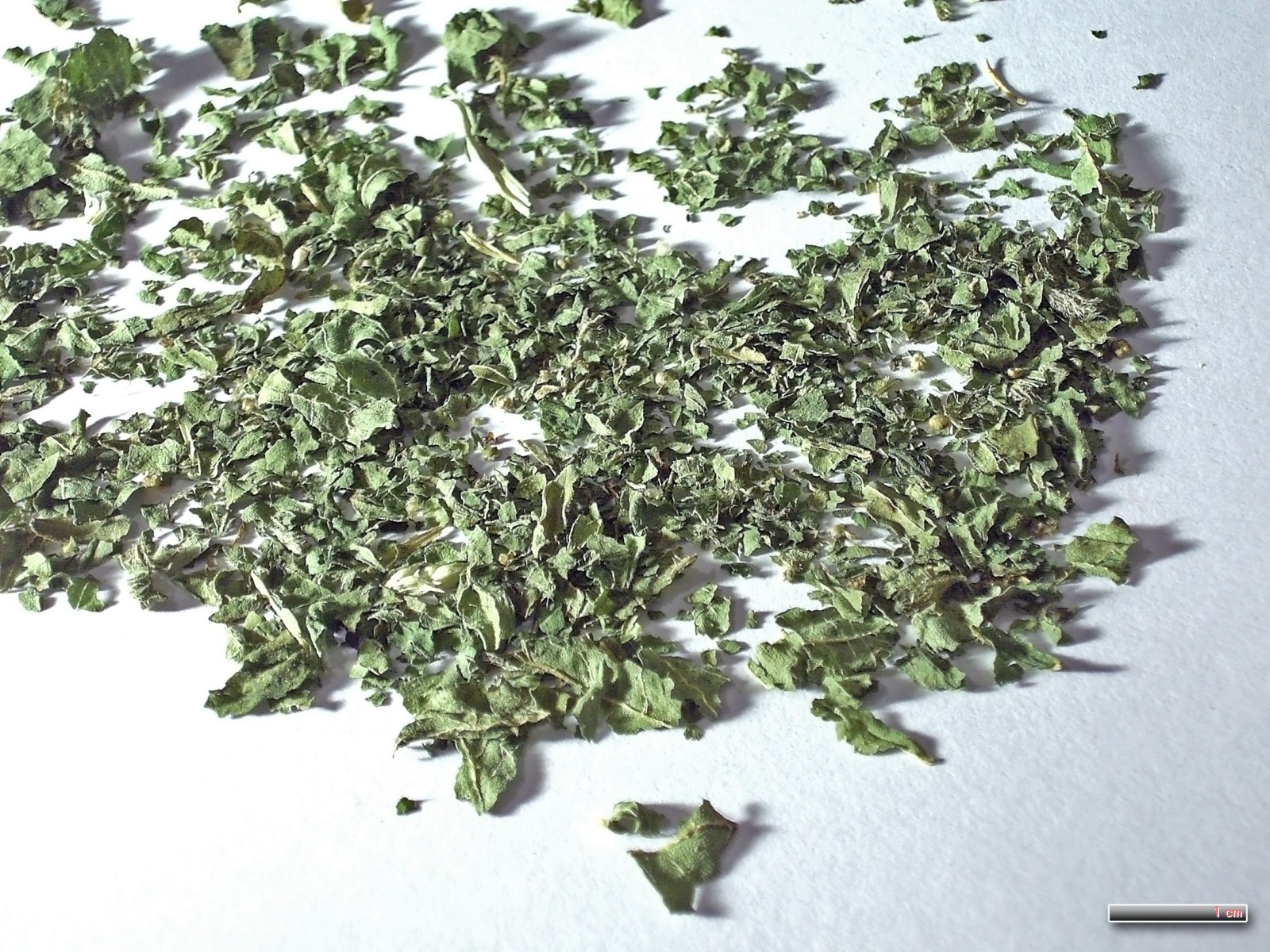
A cup of tea is a different matter. You drink a hot-water extract of 2 to 4 g of dried leaf, then throw the leaves away. Vitamin K dissolves in fat, not water, and minerals only partly leach into the cup, so nettle tea is not a reliable source of iron or calcium. If iron is your concern, our guide to tea and iron absorption explains how timing your drinks around meals matters more.
Side effects and who should avoid it
The EMA monographs list mild stomach upsets, such as nausea, vomiting and diarrhoea, and skin reactions such as itching and hives, with frequency unknown. The root can also cause heartburn and a feeling of fullness. Beyond that, take these cautions seriously:
- Pregnancy and breastfeeding. The leaf and herb monographs say safety has not been established and use is not recommended. Our pregnancy tea guide covers safer choices.
- Children. Not recommended under 12, and the EMA advises against nettle herb tea under 18 for lack of data.
- Heart or kidney disease. The leaf monograph says not to use it where a doctor has told you to limit fluids, because the point of the tea is to make you pass more urine.
- Water tablets and lithium. Memorial Sloan Kettering notes nettle may add to the effect of diuretics. The NHS warns that diuretics can change lithium levels, so anyone on lithium should ask before drinking nettle tea regularly.
- Warfarin. Nettle leaf is rich in vitamin K, and MedlinePlus advises people on warfarin to keep vitamin K intake steady. Little reaches the cup, but nettle soups, powders and capsules carry much more.
- Blood pressure and diabetes drugs. Animal studies suggest nettle lowers blood pressure, and trials show it can lower blood sugar, so the effects could add up.
Rare case reports linked nettle tea with breast swelling in a man and milk discharge in a woman. See a doctor if urinary symptoms come with fever, pain, blood in the urine or difficulty passing urine, or if a painful joint is red, hot and swollen.
How to forage nettles for tea
- Wear gloves and long sleeves, and cut the stems with scissors rather than pulling them.
- Pick young tops in spring, the top four to six leaves of plants before they flower. They taste sweeter and are easier to dry.
- Choose clean sites away from roadsides, dog-walking paths and fields that may be sprayed with weedkiller.
- Be sure of the plant. Nettles have opposite, toothed, heart-shaped leaves on a square stem, covered in stinging hairs. The stinging is a good identity check in itself.
- Dry them by hanging small bunches upside down somewhere airy and shaded, or spread the leaves on a tray. When crisp, crumble and store as in our tea storage guide.
How to make nettle tea
- Use 2 to 4 g of dried nettle leaf (about 1 to 2 heaped teaspoons) or one tea bag per 200 ml mug. For fresh leaves, use a small handful, rinsed and handled with gloves.
- Pour on freshly boiled water. Herbs need hotter water than green tea, as our brewing temperature guide explains.
- Cover and steep for 5 to 10 minutes. A longer steep gives a darker, more savoury cup.
- Strain and drink up to three or four cups a day, and take a break after a few weeks.
On its own the flavour is gentle, so it blends well. Try it with peppermint, lemon balm or rooibos, or add a squeeze of lemon and some honey. Because it is a mild diuretic, you may need the toilet more often, though as our article on whether tea dehydrates you explains, a cup still counts towards your fluid intake.
If you want a calming caffeine-free cup instead, see chamomile tea; for colds, our review of echinacea tea; and for blood pressure, hibiscus tea, which has better trial evidence than nettle.
Quick answers
What is nettle tea good for?
European regulators accept it as a traditional remedy to increase urine flow in minor urinary complaints and to ease minor joint pain. Claims for hay fever, the prostate and blood sugar come from small trials of extracts, not tea.
Does nettle tea have caffeine?
No. Pure nettle tea is caffeine-free. Some blends add green or black tea, so check the label.
Can I drink nettle tea every day?
Most adults can drink a few cups a day for a few weeks. The EMA leaf monograph suggests no more than two to four weeks at a time, then a break, and a doctor’s advice if symptoms persist.
Is nettle tea safe in pregnancy?
It is not recommended, because safety in pregnancy and breastfeeding has not been established.
Does nettle tea make you pee?
Yes, mildly. Increasing urine flow is its main traditional use, so avoid it if a doctor has told you to limit fluids.
Does nettle tea sting?
No. Drying the leaves or pouring hot water over them destroys the stinging hairs.
Sources
- Mittman P. Randomized, double-blind study of freeze-dried Urtica dioica in the treatment of allergic rhinitis. Planta Medica, 1990.
- Bakhshaee M et al. Efficacy of supportive therapy of allergic rhinitis by stinging nettle (Urtica dioica) root extract. Iranian Journal of Pharmaceutical Research, 2017.
- Safarinejad MR. Urtica dioica for treatment of benign prostatic hyperplasia: a prospective, randomized, double-blind, placebo-controlled, crossover study. Journal of Herbal Pharmacotherapy, 2005.
- Retraction note: Safety and efficacy of dapoxetine in the treatment of premature ejaculation (Safarinejad MR). 2023.
- Schneider T, Rübben H. Stinging nettle root extract (Bazoton-uno) in long term treatment of benign prostatic syndrome. Der Urologe A, 2004.
- Kianbakht S et al. Improved glycemic control in patients with advanced type 2 diabetes mellitus taking Urtica dioica leaf extract. Clinical Laboratory, 2013.
- Ziaei R et al. The effect of nettle (Urtica dioica) supplementation on the glycemic control of patients with type 2 diabetes mellitus: a systematic review and meta-analysis. Phytotherapy Research, 2020.
- Randall C et al. Randomized controlled trial of nettle sting for treatment of base-of-thumb pain. Journal of the Royal Society of Medicine, 2000.
- Jacquet A et al. Phytalgic, a food supplement, vs placebo in patients with osteoarthritis of the knee or hip. Arthritis Research and Therapy, 2009.
- Christensen R, Bliddal H. Is Phytalgic a goldmine for osteoarthritis patients or is there something fishy about this nutraceutical? Arthritis Research and Therapy, 2010.
- Fu HY et al. Identification of oxalic acid and tartaric acid as major persistent pain-inducing toxins in the stinging hairs of the nettle, Urtica thunbergiana. Annals of Botany, 2006.
- European Medicines Agency, HMPC. Community herbal monograph on Urtica dioica L.; Urtica urens L., folium. EMA/HMPC/508015/2007.
- European Medicines Agency, HMPC. European Union herbal monograph on Urtica dioica L.; Urtica urens L., herba. EMA/HMPC/261302/2022.
- European Medicines Agency, HMPC. European Union herbal monograph on Urtica dioica L.; Urtica urens L., radix. EMA/HMPC/322646/2023.
- Memorial Sloan Kettering Cancer Center. Nettle. About Herbs database.
- US Department of Agriculture, FoodData Central. Stinging nettles, blanched (Northern Plains Indians), FDC 169819.
- MedlinePlus. Warfarin.
- NHS. Taking lithium with other medicines and herbal supplements.
Last updated: 17 October 2026. Sources are linked in the text.
This article is general information, not medical advice. Talk to your doctor or pharmacist before using tea or herbs for a health condition, especially if you are pregnant, breastfeeding or take regular medication.