Do tea bags contain plastic? Some do, including bags that look like paper. A small amount of polypropylene can hold a heat-sealed bag together; some replacements use polylactic acid, or PLA, a plant-based plastic. The useful distinction is the material in the particular bag you buy, followed by the disposal route available where you live. [1][2]
A claim about a recyclable box does not describe the filter bag inside it. Equally, a compostable bag does not establish that its individual envelope is compostable. This guide separates those components and compares the published UK statements of five brands, checked on 5 November 2026. It is a materials and disposal comparison, not a laboratory test or a ranking of microplastic release or health effects.
Paper, polypropylene and PLA
The seal can matter as much as the fabric. Recycle Now explains that polypropylene is used to heat-seal some paper-based tea bags, helping them stay intact in hot water. The fact that a bag is mainly natural fibre therefore does not settle whether it contains plastic. [1]
PLA is a different material from polypropylene, but it remains a plastic. European Bioplastics places PLA among plastics that are both bio-based and biodegradable. Those two properties answer different questions: bio-based describes the feedstock; biodegradability concerns what happens under specified conditions. Neither term, by itself, identifies the right household bin. [2][3]
This changes how a shopping comparison should work. If your aim is to avoid fossil-based polypropylene, a disclosed PLA seal may meet that preference. If your aim is to avoid both polypropylene and PLA, a move to plant-based material does not answer your question. If your aim is home composting, look for a claim covering that exact use, rather than choosing on the origin of the material.
UK tea bag materials by range
The entries below report manufacturers’ disclosures. An unnamed polymer stays unnamed: cornstarch or plant-based wording is not converted into a confirmed PLA specification. A collection recommendation also remains conditional on the collector accepting the item.
| Brand and range | Disclosed bag material | Disposal and verification boundary |
|---|---|---|
| Twinings UK: new Green Tea & Infusions string-and-tag format | The announcement describes the format but does not name its polymer composition. | Home and industrial compostability claimed, including string and tag. Identify the new format on your pack. [4] |
| Twinings UK: general FAQ statement | Plant-based; specific material not named. | The generic FAQ describes local-authority composting and slower garden breakdown. It does not establish home compostability for every UK product. [5] |
| Yorkshire Tea: UK supermarket boxes | PLA replacing oil-based plastic, according to the group’s 2025 annual review. | For plant-based plastic bags, follow pack instructions and an accepted collection route; do not assume home compostability. The report’s scope is UK supermarket boxes. [6][7] |
| Clipper: heat-sealed bags | PLA seal; the FAQ distinguishes this from polypropylene. | Manufacturer recommends council food-waste collection and advises against putting the intact bag on a home heap. This row concerns heat-sealed bags. [8] |
| PG Tips: UK brand range statement | Paper and cornstarch; exact polymer not named on the page. | Industrially compostable, with food-waste disposal where accepted. No home-compost claim in this statement. [9] |
| Tetley UK: main Black Tea packaging section | Plant-based; exact polymer not named. | Food-waste disposal recommended for this section; other pack sections differ. [10] |
| Tetley UK: catering bags | Material not specified in this disposal section. | Enclosed tea bags described as not compostable, with general-waste disposal. [10] |
The range differences behind the table
Twinings has a format-specific answer. Its autumn announcement says Green Tea & Infusions are moving to string-and-tag bags that can be home composted, including the string and tag. The generic FAQ gives a broader plant-based answer. Use the specific new-format statement when it matches your box; do not apply it automatically to a different range or older pack. [4][5]
Yorkshire’s statement names the plastic. Page 16 of Bettys & Taylors’ 2025 annual review explicitly identifies PLA in UK supermarket Yorkshire Tea boxes. That is more useful for this comparison than a broad environmental slogan. It still does not establish the material of every export or food-service product. The company’s background is covered separately in Who Owns Yorkshire Tea. [6]
Clipper’s heat-seal disclosure also names PLA. The presence of natural fibres or an unbleached appearance does not remove that seal from the comparison. Its FAQ recommends separating out the tea if you want to put the contents on a home compost heap. Do not transfer that heat-seal specification to a different bag construction without checking it. [8]
PG Tips leaves a material question open. The current brand page gives paper and cornstarch as the materials and specifies industrial composting. That supports a disposal instruction. It does not give the chemical identity needed to establish a polymer-by-polymer comparison with PLA or polypropylene. Ask for that specification if excluding a particular polymer is your buying criterion. [9]
Tetley distinguishes tea bags from the catering pack. Its main Black Tea section recommends food waste; catering, 18s/20s and 40s/50s sections describe non-compostable tea bags. The catering outer bag has a separate recycling instruction. Match the exact pack section, rather than treating this as a rule for every retail box. [10]
A label decoder for the supermarket shelf
- Plant-based or bio-based: describes a material’s biological origin, wholly or partly. It does not establish that the bag contains no plastic. [3]
- Biodegradable: needs conditions and a timescale to be useful. It is not a substitute for a home-compost instruction. [3]
- Industrially compostable: describes a controlled treatment route. Recycle Now says bags sealed with plant-based plastic need an industrial process to break down completely. [7]
- Home compostable: is the relevant claim for a garden heap. Recycle Now points readers to the OK compost HOME label when checking suitability. Make sure the claim covers the bag, including any attached components you intend to compost. [7]
- Recyclable: needs a named component and a collection route. Read whether the instruction concerns the carton, an envelope, a pouch or the filter bag.
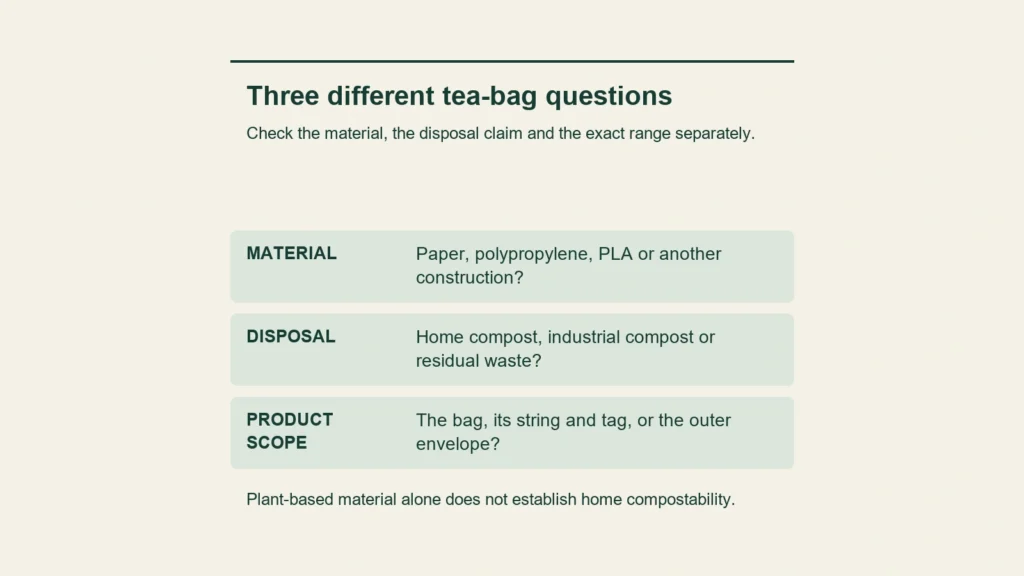
Keep three questions separate when reading a pack: what enters the cup, what protects the unused tea, and what can go into each waste stream. A claim printed beside the cardboard-box symbol should not be stretched to cover the whole product. Tea Savor’s Twinings sourcing evidence guide makes a related distinction between a programme’s stated scope and conclusions it cannot establish.
A practical buying and disposal check
- Identify the actual pack. Note the country of sale, blend, bag format and pack size. Keep the batch or best-before code if you need a manufacturer to identify it. A supermarket box and a hospitality refill can have different specifications.
- Set your criterion. Avoiding polypropylene, avoiding all named plastics and choosing something suitable for home composting are different purchasing decisions. Write down which one matters to you before interpreting a claim.
- Read the component instructions. Separate the used bag, string and tag from the envelope, inner pouch and carton. Retain the pack until you understand which instruction belongs to which item.
- Resolve unnamed materials. Ask the manufacturer for the filter-paper composition and any heat-seal fibre or coating. Include a photograph of the pack so the reply covers the version you own.
- Match the route locally. Check your council or waste collector’s accepted-items list. A manufacturer’s industrial-compostability claim does not ensure that a particular collection will accept or compost it.
A useful enquiry is: “For this UK pack and batch, what are the filter bag and sealing material made from? Do either contain polypropylene, PLA or another plastic? Does your compostability claim cover the string and tag, and is it home or industrial composting?” This asks for a specification rather than another general sustainability statement.
Food waste can go to anaerobic digestion, where processors screen out materials such as bag plastics. Recycle Now’s explanation means acceptance in a caddy does not establish that the bag itself becomes compost. [1]
For uncertain home-compost suitability, Recycle Now describes splitting the bag and composting the leaves separately. Follow local instructions for the filter. Disappearing leaves do not prove that the entire bag has broken down. [7]
The bag-free option
Loose leaf used with a reusable strainer removes the disposable filter bag from this decision. It does not remove the need to check the tea’s retail packaging. You can keep your usual tea style and adjust the amount of leaf and steeping time; the brewing temperature and steep-time guide provides starting points.
Buy an amount you can use and protect it properly after opening. An airtight container and suitable storage are separate decisions from the material of a disposable bag; see how to store tea. Neither loose leaf nor a different bag material is presented here as a guarantee about particle exposure or health.
Sources
- Recycle Now: plastic in tea bags and food-waste processing.
- European Bioplastics: bioplastic materials.
- European Commission: bio-based, biodegradable and compostable plastics.
- Twinings: Green Tea & Infusions format announcement.
- Twinings UK FAQs: tea bag materials.
- Bettys & Taylors Group: Annual Review 2025, page 16.
- Recycle Now: tea bags and home composting.
- Clipper FAQs: heat-sealed bags, PLA and disposal.
- LIPTON Teas and Infusions: PG Tips, “Care in every cup”.
- Tetley UK: packaging guidance by pack type.
Last updated: 5 November 2026. Sources are linked in the text.