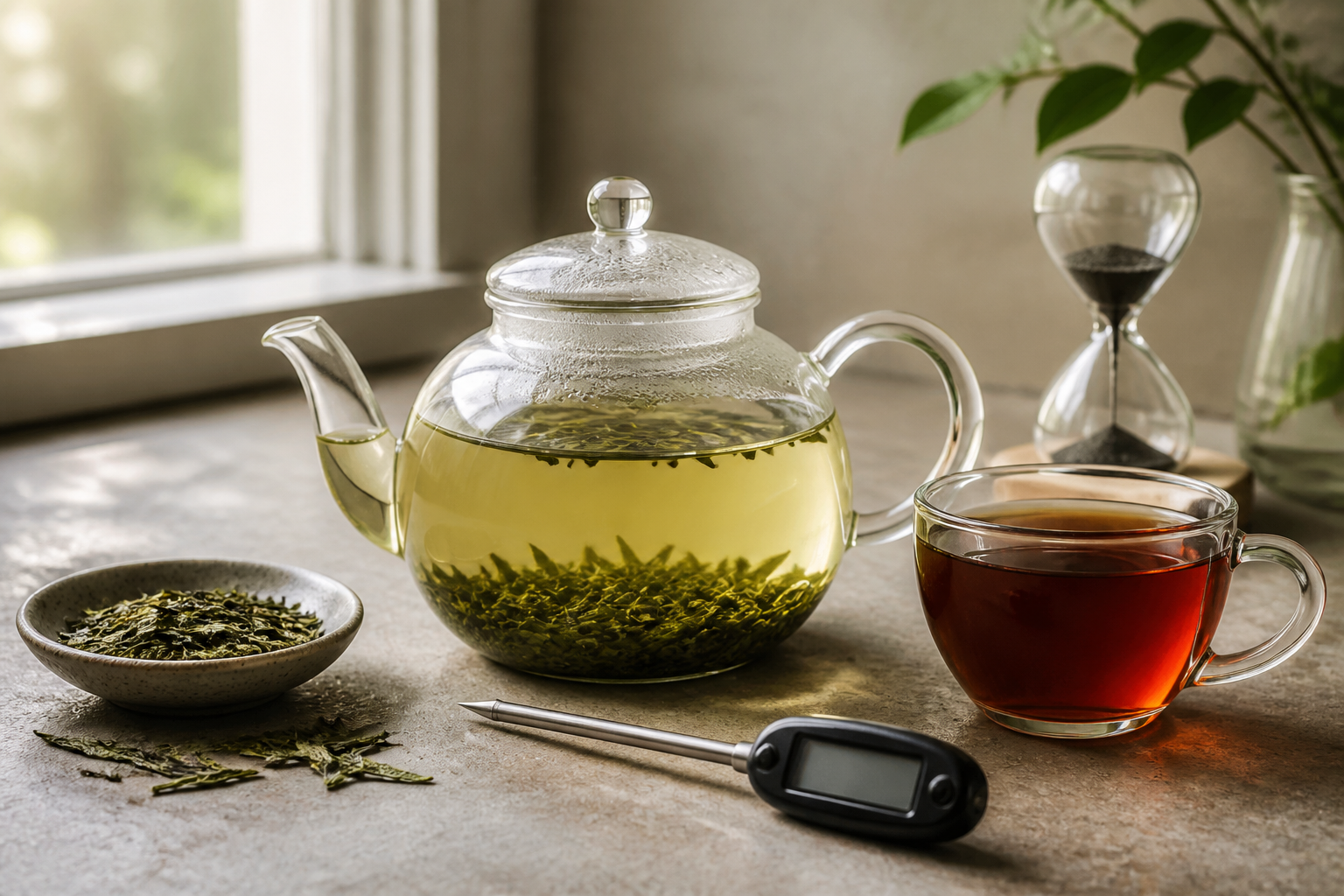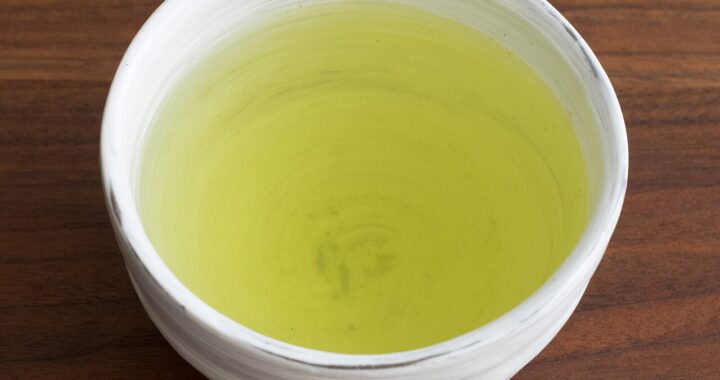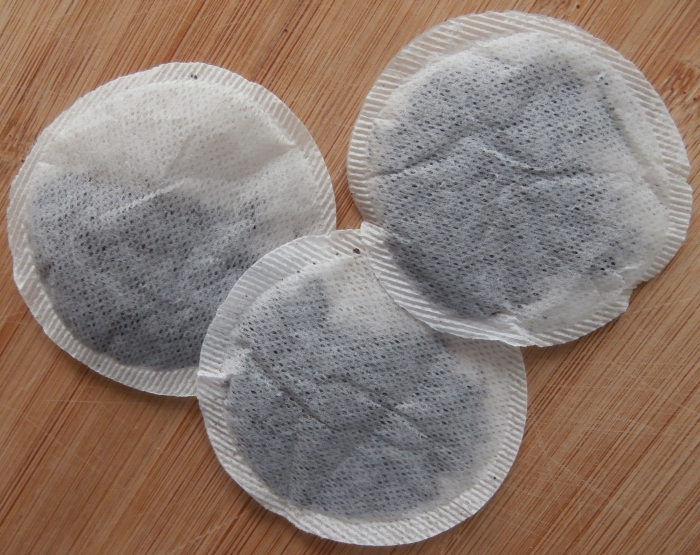
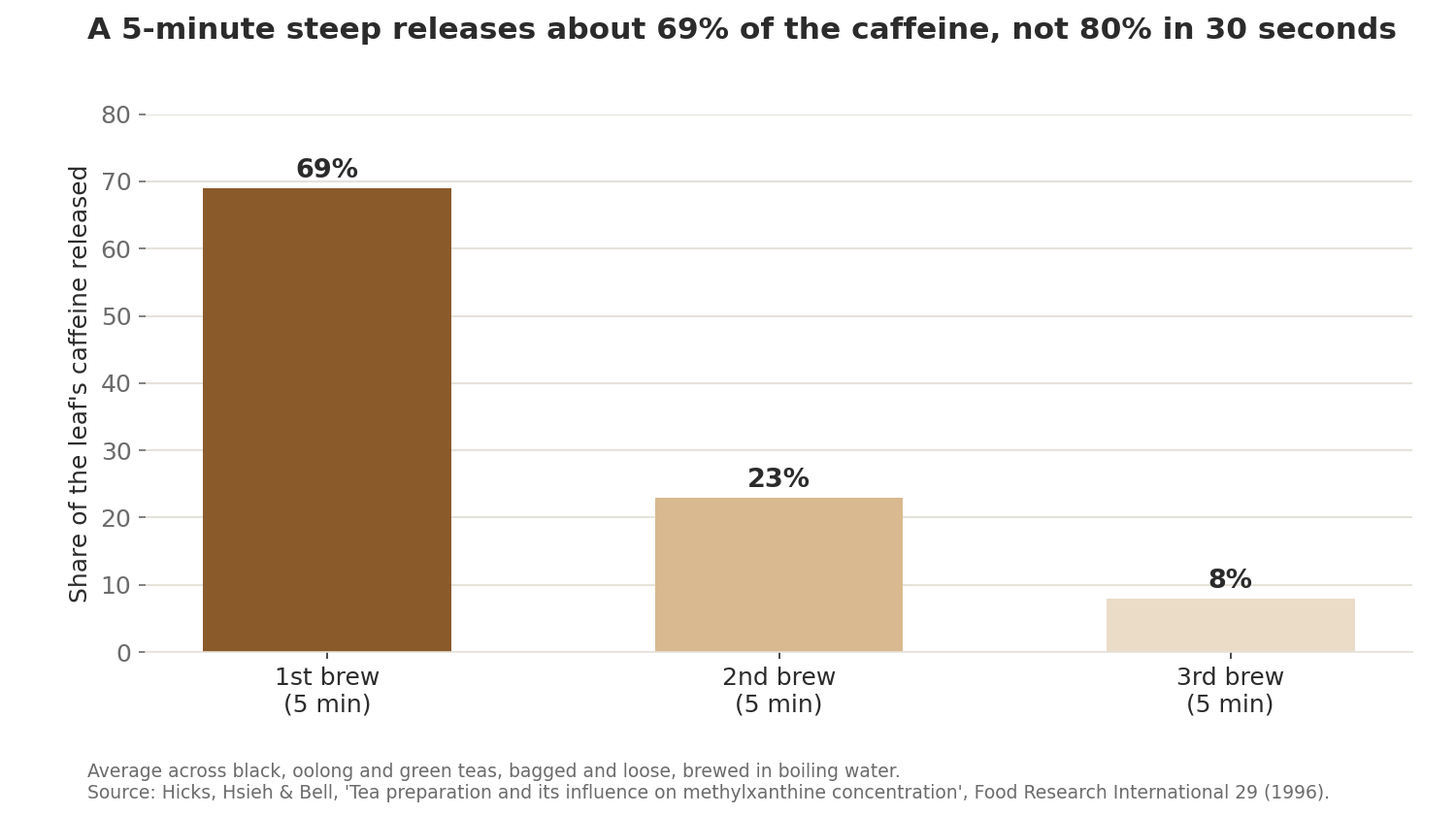
You cannot properly decaffeinate tea at home. The popular trick of steeping the leaves for 30 seconds, pouring that water away and brewing again does not remove 80% of the caffeine. In the study that tested it, a full 5-minute steep in boiling water released only about 69% of it, so a 30-second rinse takes out a small fraction. To drink less caffeine, cold brew, brew shorter and cooler, buy commercial decaf, or switch to a herbal tea.
The home decaf method has been passed around tea shops, packaging and advice columns for decades. The appeal is obvious: keep the leaf you like, lose the caffeine, and pay nothing. Caffeine is highly soluble in hot water, so the idea sounds plausible. But caffeine does not leave the leaf all at once, and the one study that measured the timing properly found it comes out steadily over many minutes.
Where the 30-second claim came from
The claim usually runs like this: “80% of the caffeine is released in the first 30 seconds, so discard the first infusion.” The advice rarely comes with a source. When food scientists measured caffeine release across repeated brews, the numbers were very different.
What the 1996 study measured
Monique Hicks, Peggy Hsieh and Leonard Bell published “Tea preparation and its influence on methylxanthine concentration” in Food Research International in 1996. They brewed black, oolong, green and herbal teas, both bagged and loose, in boiling water. They then steeped the same leaves three times in a row and measured caffeine and the related compounds theobromine and theophylline in each brew.
Averaged across the caffeinated teas, the first 5-minute brew released about 69% of the caffeine in the leaf. The second brew released about 23% and the third about 8%. So one full-length, near-boiling steep still left almost a third of the caffeine behind. A 30-second rinse, a tenth as long, releases far less than that. People who have plotted the study’s release curve back to the 30-second mark put it at about a tenth of the total. That figure is an estimate from the curve, not a direct measurement, but it is nowhere near 80%.
The rinse method also costs flavour. The first seconds of a steep carry off aroma compounds and some of the tea’s catechins along with a little caffeine. You pour away much of what makes the tea taste of anything, and the second brew still has most of the caffeine.
Home methods that do lower caffeine
Caffeine extraction depends on time, temperature and how much leaf you use. You can use all three at home. None of them makes tea caffeine-free, but together they make a real difference.
| Method | Effect on caffeine | Trade-off |
|---|---|---|
| 30-second rinse, then rebrew | Small; most caffeine stays | Loses aroma and flavour |
| Shorter steep (2 min instead of 5) | Moderate; caffeine release builds with time | Lighter cup |
| Cooler water (70 to 80°C) | Moderate; less caffeine than boiling water | Suits green and white teas; flat for black |
| Cold brew in the fridge | About half as much caffeine in green tea at 10°C; under 20% in iced water | Takes hours; different taste |
| Less leaf per cup | Proportional to the leaf removed | Weaker cup |
| Second or third infusion only | Lower, but the first brew already held most of it | Wastes the best brew |
| Commercial decaf tea | Large; usually under 12 mg per cup | Some flavour and catechin loss |
| Herbal tea (rooibos, chamomile, mint) | None to begin with | Not true tea |
Cold brewing is the strongest home method. Japan’s national tea research institute found that sencha steeped for an hour in 10°C water released about half the caffeine of a 2-minute brew at 80°C. In iced water at 0.5°C, it released less than 20%, while most of the sweet amino acids still came out (Monobe, 2018). Our cold brew tea guide gives ratios and times.
How commercial decaf tea is made
Factory decaffeination works on the dry leaf, before it reaches you. The two main methods for tea use supercritical carbon dioxide or the solvent ethyl acetate to pull caffeine out of moistened leaf. The caffeine is then removed and the leaf is dried again. Both remove most of the caffeine, and neither is selective enough to leave everything else behind.
A 2022 study in Foods by Wang and colleagues measured what CO2 decaffeination did to green and black tea made from the same fresh leaves. The process removed 98.2% of the caffeine from the green tea and 97.1% from the black. It also stripped 87.2% of the green tea’s catechins, including about 91% of its EGCG, but only 39.3% of the black tea’s. The authors note that other research using different pressures and temperatures kept far more of the catechins. How much a decaf tea keeps depends heavily on the process, and packets rarely say.
How much caffeine is in decaf tea?
Decaf is not zero. When Chin and colleagues tested 20 commercial teas for the Journal of Analytical Toxicology in 2008, regular white, green and black teas ranged from 14 to 61 mg of caffeine per 6 to 8 oz serving. The decaffeinated teas contained less than 12 mg per serving, and the herbal teas had none they could detect. For most people, a few milligrams makes no difference. For anyone told to avoid caffeine completely, only a herbal tea is truly caffeine-free.
Decaf changes caffeine, not tannins. As our guide to tea and iron absorption explains, decaf tea with a meal still reduces non-heme iron uptake.
Choosing the right route
- For an evening cup without much caffeine: commercial decaf, or a herbal tea from our list of the best caffeine-free teas.
- To keep your favourite leaf and cut the dose: cold brew it, or brew it for 2 minutes at a lower temperature with a little less leaf.
- For medical or pregnancy-related caffeine limits: go by measured figures, not home tricks. Decaf is low but not zero, and your clinician can tell you whether that matters for you.
- For sleep: timing matters more than method. A regular cup late in the afternoon affects sleep more than a decaf at 9 pm. The best tea for sleep guide covers the caffeine cut-off.
Frequently asked questions
Does the 30-second rinse remove any caffeine?
A little, roughly a tenth of it on the study’s release curve. The rest stays in the leaf and comes out in your second brew. The trick also removes much of the flavour.
Does a second infusion have less caffeine?
Yes. In the 1996 study, a second 5-minute brew released about 23% of the leaf’s caffeine, compared with 69% in the first. Many drinkers re-steep good leaf anyway, especially oolong. That lowers the caffeine per cup, but it depends on having already drunk or thrown away the strongest brew.
Is decaf tea completely caffeine-free?
No. Tested decaf teas contained up to about 12 mg per serving. Herbal teas made from plants other than Camellia sinensis, such as rooibos, chamomile or peppermint, are the only naturally caffeine-free option.
Is green tea lower in caffeine than black tea?
Often, but not always. Chin and colleagues found no consistent pattern by type in the teas they tested. Leaf grade, steep time and the amount of leaf matter more than the colour of the tea. Our tea caffeine comparison sets out typical ranges.
Does adding milk reduce caffeine?
Milk dilutes the cup, so a mug that is one-fifth milk has one-fifth less tea in it. It does not neutralise the caffeine in the tea that remains.
The bottom line
The 30-second decaf trick does not work. A full 5-minute steep in boiling water releases about 69% of a tea’s caffeine, so a brief rinse takes out only a small share and pours away much of the flavour. To cut caffeine, cold brew, brew shorter and cooler, use less leaf or buy decaf. Commercial decaf is usually under 12 mg a cup, and herbal teas have none. Tea does not dehydrate you either way; see does tea dehydrate you for the trials.
Sources
- Hicks MB, Hsieh YHP, Bell LN. Tea preparation and its influence on methylxanthine concentration. Food Res Int 1996;29(3-4):325-30.
- Chin JM, Merves ML, Goldberger BA, Sampson-Cone A, Cone EJ. Caffeine content of brewed teas. J Anal Toxicol 2008;32(8):702-4.
- Wang et al. Multi-metabolomics coupled with quantitative descriptive analysis revealed key alterations in phytochemical composition and sensory qualities of decaffeinated green and black tea from the same fresh leaves. Foods 2022;11(20):3269.
- Monobe M. Health functions of compounds extracted in cold-water brewed green tea from Camellia sinensis L. JARQ 2018;52(1):1-6.