The Best Caffeine-Free Tea, From Herbal to True Tea — At a Glance
| Field | Value | Source |
|---|---|---|
| Categories covered | Herbal tisanes (chamomile, rooibos, peppermint), decaffeinated true teas (black, green, oolong) | FDA labelling standards |
| True teas naturally caffeine-free | None (all Camellia sinensis teas contain caffeine) | Tea chemistry |
| Herbal teas always caffeine-free | Yes (chamomile, rooibos, peppermint, hibiscus, ginger — none from Camellia sinensis) | Botanical classification |
| Decaf standards (US) | ≥97% caffeine must be removed for “decaffeinated” label | FDA 21 CFR §170.40 |
| Three decaffeination methods | CO₂ extraction (premium), ethyl acetate (mid), methylene chloride (mass-market) | Science Insights 2026 review |
| Antioxidant loss in decaf | CO₂ extraction removes ~38% of EGCG from green tea; solvent methods similar | U. Wisconsin-Stout study |
| Best caffeine-free options | Rooibos, chamomile, peppermint, ginger, hibiscus, lemongrass (tisanes); decaf black or green (true teas) | Author synthesis |
“Caffeine-free tea” is two distinct categories that are often conflated. The first is herbal tisanes — chamomile, rooibos, peppermint, hibiscus, ginger . Which come from plants that never contained caffeine in the first place. These are genuinely caffeine-free. The second is decaffeinated true teas . Black, green, oolong . Which are made from Camellia sinensis and have had 97%+ of the caffeine removed through one of three commercial processes.
The two categories are not interchangeable. Herbal tisanes have different flavour profiles, different brewing parameters, and different evidence bases for health effects. Decaffeinated true teas preserve the flavour and antioxidant profile of true teas, with a small residual caffeine content (typically 5-10mg per cup versus 40-100mg for regular tea). This article walks through both categories, the three commercial decaffeination methods, the caffeine content of each option, and how to choose between them for sleep, anxiety, pregnancy, and other use cases.
The Botany Behind Caffeine-Free Teas
Caffeine is a methylxanthine alkaloid produced primarily by plants in the Coffea genus (coffee), Camellia genus (tea, including Camellia sinensis), and a small number of other plants including cacao (Theobroma cacao), guarana (Paullinia cupana), yerba mate (Ilex paraguariensis), and kola nut (Cola nitida). The function in the plant is believed to be antimicrobial and insecticidal — caffeine is bitter and toxic to many insects and fungi.
True teas — black, green, white, oolong, pu-erh, yellow, matcha, yellow tea . Are all made from Camellia sinensis (or close relatives in the Camellia genus). They all contain caffeine. The caffeine content varies by leaf age (younger leaves have more), cultivar, growing conditions, and processing, but it is always present.
Herbal tisanes — chamomile, rooibos, peppermint, hibiscus, ginger, lemongrass, rose hip, lemon balm, and the dozens of other “tea” ingredients that are not Camellia sinensis . Do not contain caffeine as a native compound. They are genuinely caffeine-free.
The Three Decaffeination Methods
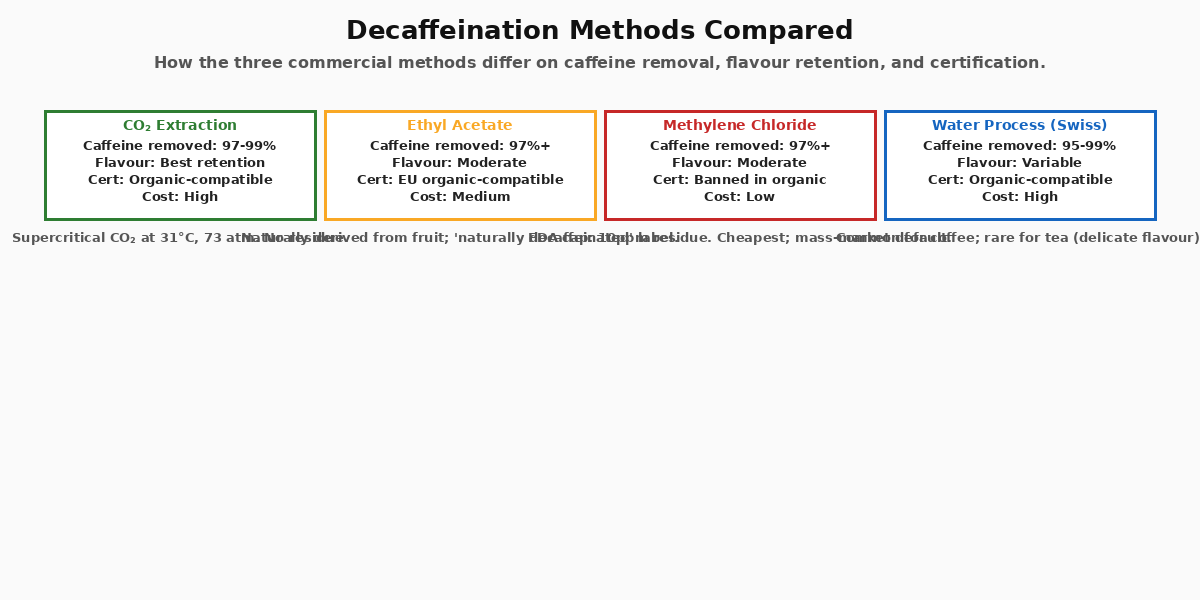
Three commercial methods are used to decaffeinate true teas (and coffees). The US FDA requires 97% caffeine removal for the “decaffeinated” label.
CO₂ extraction (also called supercritical CO₂ extraction) is the premium method. It uses carbon dioxide at its supercritical point , approximately 31°C and 73 atmospheres . Where CO₂ behaves as both liquid and gas. The supercritical CO₂ selectively binds caffeine while leaving most flavour compounds behind. The CO₂ simply evaporates when pressure is released, leaving no residue. Caffeine removal is 97-99%. Flavour retention is the best of the three methods. CO₂ is compatible with organic certification.
Ethyl acetate extraction is the middle option. Ethyl acetate is a solvent that occurs naturally in fruits like apples and bananas, which is why teas decaffeinated this way are sometimes marketed as “naturally decaffeinated.” Caffeine removal is 97%+. Flavour retention is moderate. Ethyl acetate is also organic-compatible in many certification schemes.
Methylene chloride extraction is the mass-market default. Methylene chloride is a synthetic solvent that effectively dissolves caffeine from moistened tea leaves. Caffeine removal is 97%+. Flavour retention is moderate. Methylene chloride is not permitted under organic certification. The FDA caps allowable residue in decaffeinated products at 10 parts per million, and finished products typically test far below that limit.
Water processing (Swiss Water Process) is borrowed from coffee decaffeination and is less common for tea because tea’s delicate flavour profile is harder to fully restore after a hot water soak. The method is organic-compatible and produces variable flavour retention.
What Decaffeination Does to the Tea
No decaffeination method removes only caffeine. All three strip away some of the beneficial plant compounds that give tea its health reputation, particularly the antioxidants known as catechins. Research at the University of Wisconsin-Stout found that even CO₂ extraction, generally considered the gentlest method, reduced EGCG (the most studied catechin in green tea) by about 38% while cutting caffeine to 2.6% of its original level.
Solvent-based methods tend to remove a similar or greater share of these compounds, though exact numbers vary by tea type and processing conditions. The L-theanine content is largely preserved across all three methods, which means the “calm alertness” effect of true tea survives decaffeination.
Flavour loss follows a similar pattern. The more aggressive the decaffeination process, the more flavour compounds are extracted alongside caffeine. CO₂ extraction preserves the most flavour; methylene chloride extraction tends to leave the tea with a slightly flatter flavour profile.

The Best Herbal Tisanes
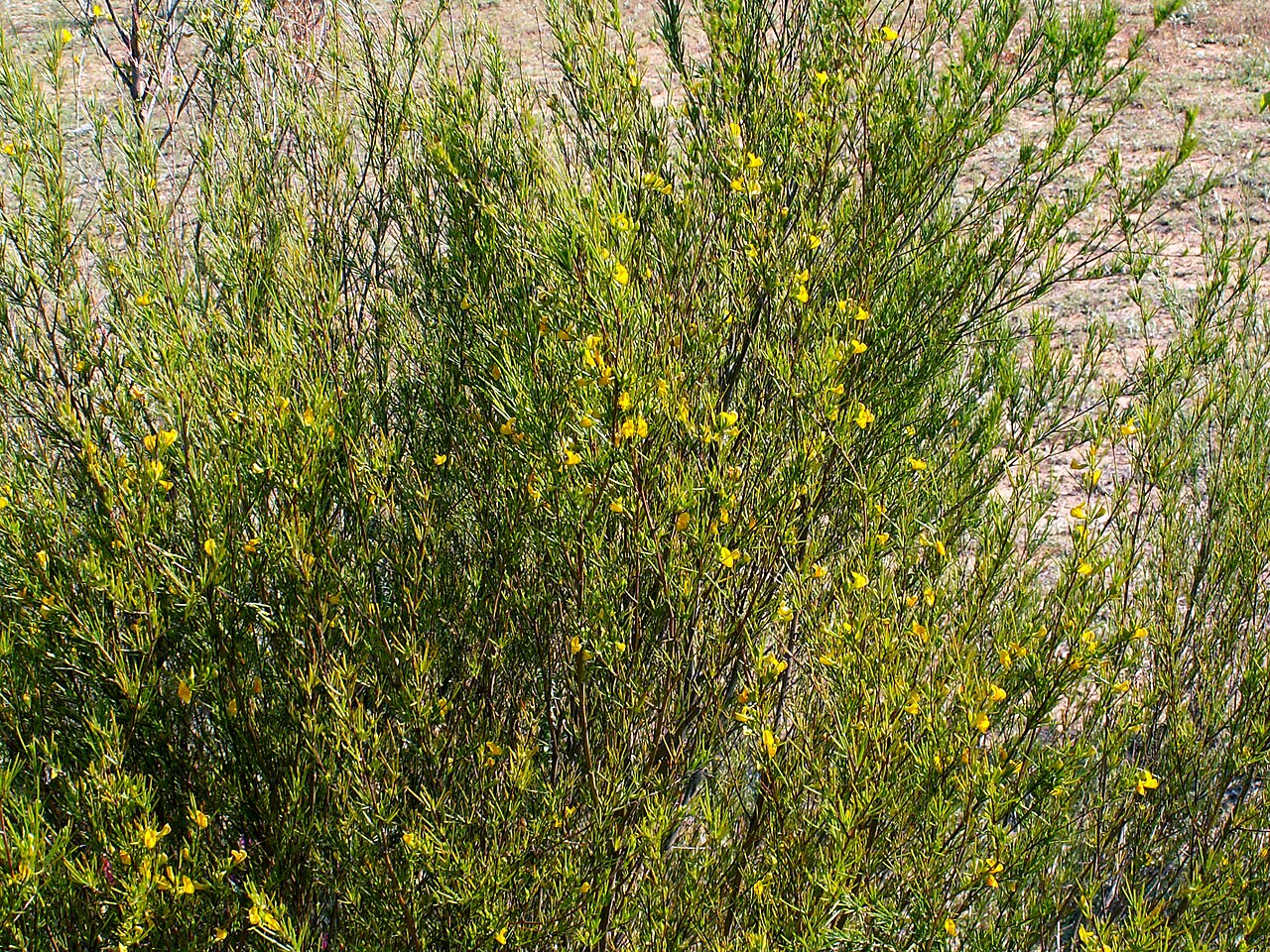
Rooibos (Aspalathus linearis) is a South African shrub, fermented and oxidised like tea but from a completely different plant family. It is naturally caffeine-free, low in tannins, and rich in antioxidants including aspalathin (a unique dihydrochalcone). The flavour is naturally sweet, slightly woody, and works well as a base for blends with vanilla, honey, or fruit. Rooibos has documented antioxidant and anti-inflammatory effects in preclinical studies.
Chamomile (Matricaria chamomilla) is the classic caffeine-free herbal tea. It has documented anxiolytic and mild sedative effects, attributed to apigenin (a flavonoid that binds to benzodiazepine receptors in the brain). Chamomile is one of the most widely consumed herbal teas globally and is considered safe for most populations, including pregnant women (though caution is advised about consumption levels).
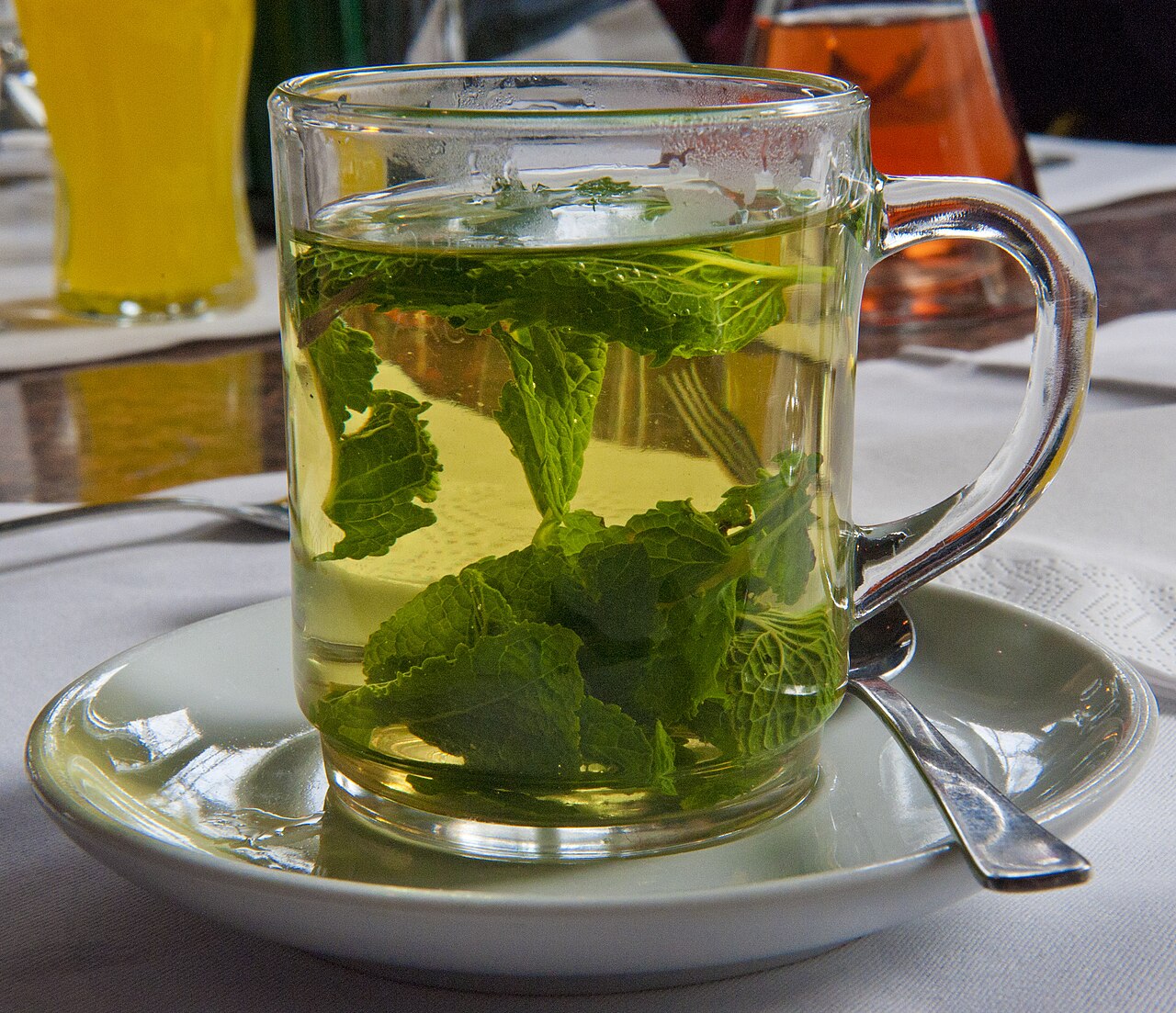
Peppermint (Mentha piperita) is a caffeine-free herbal with menthol as the active compound. Peppermint tea has documented digestive benefits (relaxation of the gastrointestinal smooth muscle) and is used for nausea, indigestion, and cold symptom relief. The flavour is bright, menthol-cool, and works well as a digestive after meals.
Ginger (Zingiber officinale) as a caffeine-free tisane is made from the root, not the leaves. It has documented anti-nausea and anti-inflammatory effects. Ginger is particularly useful during acute illness (stomach flu, respiratory infection) for nausea relief.
Hibiscus (Hibiscus sabdariffa) is a caffeine-free tisane with a tart, cranberry-like flavour and documented blood-pressure-lowering effects in multiple RCTs. Hibiscus is rich in anthocyanins and has one of the highest antioxidant capacities of any herbal tea.
The Best Decaf True Teas
Decaf black tea preserves the familiar English Breakfast / Earl Grey / Irish Breakfast flavour profile at a fraction of the caffeine. Decaf English Breakfast contains approximately 5-10mg of caffeine per cup versus 40-70mg in regular English Breakfast. This is enough to retain some of the L-theanine calm-alertness effect while being safe for evening consumption for most people.
Decaf green tea preserves the catechins (with 38% loss per the Wisconsin-Stout study) and the L-theanine. The EGCG that survives is still bioactive, and the L-theanine survives nearly intact. Decaf green tea is a good choice for the L-theanine + modest antioxidant combination at any time of day.
Decaf oolong and decaf white tea exist but are less common in the mainstream market. They preserve the flavour profile of the parent tea at reduced caffeine.
How to Choose
For sleep: herbal tisanes (chamomile, lemon balm, passionflower) have the strongest evidence for sleep support. Rooibos is a good neutral option. Decaf true teas are a secondary choice , the residual caffeine may still affect light sleepers.
For pregnancy: herbal tisanes are the standard recommendation, but with cautions. Raspberry leaf tea is the traditional third-trimester tea (with weak evidence for labour preparation). Ginger tea is the standard for morning sickness. Chamomile and peppermint are safe in moderation. Decaf true teas are a safer alternative to regular teas for daily consumption.
For anxiety: chamomile, lemon balm, and lavender teas have the strongest evidence. L-theanine-containing true teas (decaf green, decaf black) provide the calm-alertness combination without the anxiety that caffeine can produce in sensitive individuals.
For daily drinking: rooibos (naturally caffeine-free, no tannin concerns), decaf green or black tea (preserved antioxidant profile), or chamomile (long traditional history, mild evidence base).
The Cautions
“Caffeine-free” labelling is regulated differently in different markets. In the US, “decaffeinated” requires 97% caffeine removal, but “caffeine-free” labelling on herbal teas is not regulated. Read the ingredients list: if it says “tea” (without specifying decaf), assume caffeine.
Herbal teas can have drug interactions. St John’s wort, ginkgo, and ginseng teas have well-documented interactions with prescription medications. Chamomile has mild interactions with blood thinners. Even “safe” herbs in concentrated form can be problematic.
Pregnancy and lactation have specific cautions for some herbal ingredients. The standard guidance is to limit herbal tea consumption during pregnancy and to discuss specific herbs with a healthcare provider.
Fact-vs-Claim Verdict
| Claim | Verdict | Source / note |
|---|---|---|
| All true teas (Camellia sinensis) contain caffeine | Verifiable | Tea chemistry; confirmed across all categories |
| All herbal tisanes are caffeine-free | Verifiable | Botanical classification; chamomile, rooibos, peppermint, etc. |
| FDA requires 97% caffeine removal for “decaffeinated” label | Verifiable | FDA 21 CFR §170.40 |
| CO₂ extraction removes ~38% of EGCG from green tea | Verifiable | University of Wisconsin-Stout study |
| CO₂ extraction preserves flavour best | Industry consensus | Multiple specialty tea sources |
| Chamomile has anxiolytic effects | Moderate | Apigenin mechanism; modest RCT support |
| Hibiscus tea lowers blood pressure | Moderate | Multiple RCTs; effect size modest |
| Rooibos is rich in unique antioxidants (aspalathin) | Verifiable | Preclinical studies |
| Peppermint tea aids digestion | Moderate | Menthol smooth muscle relaxation; clinical observations |
| Decaf tea contains 5-10mg caffeine per cup | Industry standard | Spice and Tea Exchange; Bird and Blend Tea Co. |
| “Caffeine-free” label on herbal teas is unregulated | Verifiable | FDA labelling standards |
Reading the decaf label
Two certifications worth knowing on the shelf: “Swiss Water” and “CO₂ process”. Both are decaffeination methods, not quality grades, but they signal what is left behind. The Swiss Water process uses water and activated carbon to remove caffeine, leaving the polyphenols mostly intact. The CO₂ process (used by many mainstream UK brands including some PG Tips decaf and most Tetley decaf) uses supercritical carbon dioxide and is similarly gentle on the leaf. Ethyl acetate and methylene chloride methods are older and more common on cheap teabag decafs; both leave trace residues in the parts-per-million range, well below safety thresholds, but the labelling rarely tells you which method was used.
For the pregnant or caffeine-sensitive, the practical question is how much caffeine is left. The US FDA threshold for “decaffeinated” is below 2.5% of original caffeine by weight, which on a typical black tea means about 5 mg per cup. Real measured values across UK supermarket decafs cluster between 1 mg and 5 mg per 200 ml cup, so the label does its job; the gap between “decaf” and “zero caffeine” matters only at the extreme end of sensitivity.
Two more caffeine-free options have their own guides: turmeric tea, best made with black pepper and a little milk, and lemon balm tea, the herb with the most trial evidence for stress.
Valerian root is also caffeine-free and is sold mainly for sleep. Our valerian tea guide covers how to brew it and who should avoid it.
Frequently Asked Questions
The Difference Between Caffeine-Free and Decaffeinated
“Caffeine-free” describes herbal tisanes (chamomile, rooibos, peppermint, etc.) that come from plants that never contained caffeine. “Decaffeinated” describes true teas (black, green, oolong) that have had 97%+ of their caffeine removed through one of three commercial processes. Decaffeinated teas still contain a small amount of caffeine (typically 5-10mg per cup). True teas are never naturally caffeine-free.
The Three Decaffeination Methods
CO₂ extraction (supercritical carbon dioxide) is the premium method; preserves flavour best and is organic-compatible. Ethyl acetate is the middle option; naturally derived from fruits and organic-compatible in many schemes. Methylene chloride is the mass-market default; banned in organic and leaves a small residue (FDA cap 10ppm). Water processing (Swiss Water Process) is less common for tea.
The Best Caffeine-Free Options
For sleep: chamomile, lemon balm, passionflower. For anxiety: chamomile, lavender, lemon balm. For pregnancy: raspberry leaf (third trimester), ginger (morning sickness), chamomile and peppermint (in moderation). For daily drinking: rooibos (naturally sweet, low tannin), decaf green or black (preserved antioxidant profile), chamomile.
What Decaffeination Does to Antioxidants
All three commercial methods strip some antioxidants. The University of Wisconsin-Stout study found CO₂ extraction removes about 38% of EGCG (the most studied catechin in green tea) while cutting caffeine to 2.6% of its original level. L-theanine content is largely preserved across all three methods. The more aggressive the process, the more flavour compounds are extracted alongside caffeine.
Rooibos vs Decaf Tea
Rooibos is a naturally caffeine-free herbal from South Africa with a sweet, slightly woody flavour and unique antioxidants including aspalathin. It has lower tannin content than true teas and is naturally sweet. Decaf true tea preserves the flavour and antioxidant profile of black or green tea at a fraction of the caffeine. Both are valid caffeine-free choices; rooibos is the herbal option and decaf is the true-tea option.
The Best Decaf Black Tea
Decaf English Breakfast, decaf Earl Grey, and decaf Irish Breakfast are widely available and preserve the familiar black tea flavour profile at 5-10mg of caffeine per cup. The premium options use CO₂ extraction to preserve flavour and antioxidant content. Look for “naturally decaffeinated” (often CO₂) or “100% CO₂ decaffeinated” on the label for the best results.
Herbal Tea Drug Interactions
St John’s wort, ginkgo, and ginseng teas have well-documented interactions with prescription medications. Chamomile has mild interactions with blood thinners. Even “safe” herbs in concentrated form can be problematic. Pregnant and lactating women should limit herbal tea consumption and discuss specific herbs with a healthcare provider. The standard caution is to consult a doctor or pharmacist before regular consumption of medicinal-grade herbal teas.
Sources
- FDA 21 CFR §170.40 — Requirements for foods named by use of a nutrient content claim , Primary source for the 97% caffeine removal requirement for “decaffeinated” labelling.
- Science Insights , How Do They Decaffeinate Tea? Methods and Effects (March 2026) , Primary source for the three decaffeination methods and their effects on flavour and antioxidants.
- University of Wisconsin-Stout study on EGCG loss in CO₂ decaffeination , Primary source for the 38% EGCG loss figure.
- Cochrane Library reviews on chamomile, peppermint, and rooibos , Primary source for the evidence base on common herbal tea ingredients.
- Bird and Blend Tea Co. , Caffeine Free Tea Guide , Secondary source for the caffeine content in decaf tea (5-10mg per cup).
Last updated: 9 October 2026. Sources are linked in the text.