Tea Caffeine Content, From Black Tea to White — At a Glance
| Field | Value | Source |
|---|---|---|
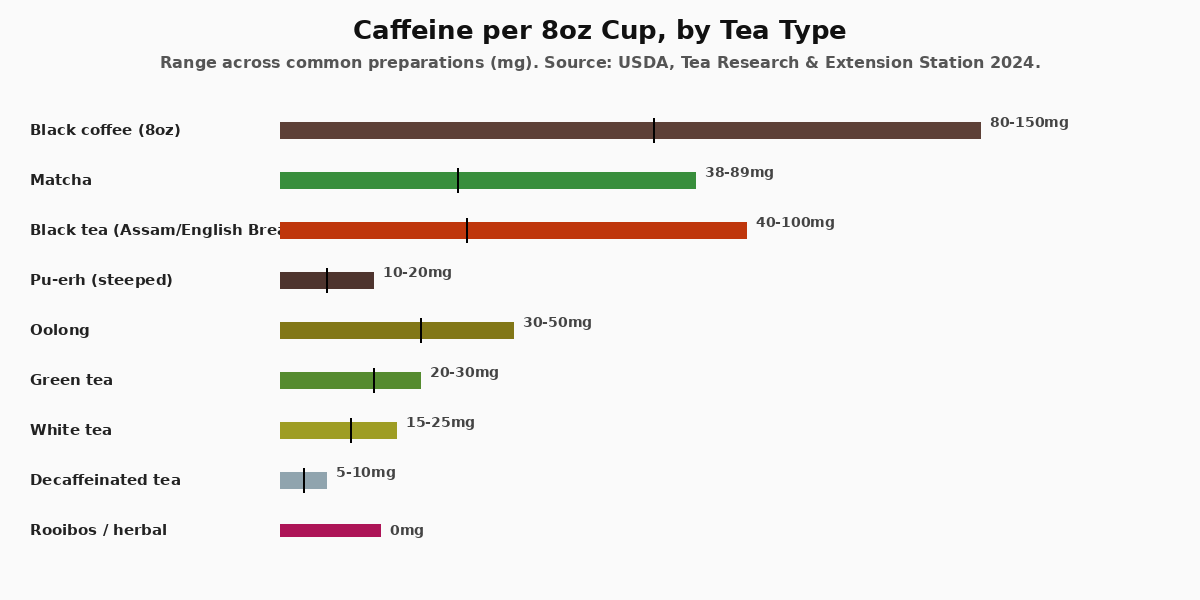
| Caffeine per 8oz cup (range) | Matcha 38-89mg, Black 40-70mg (Assam up to 100mg), Oolong 30-50mg, Green 20-30mg, White 15-25mg, Pu-erh 10-35mg | Harvard Health; Tea Research & Extension Station 2024 |
| Highest common caffeine | Matcha (whole-leaf consumption), Assam black tea, yerba mate | Caffeine park; Paper and Tea |
| Lowest caffeine in true teas | White tea (15-25mg), Pu-erh (10-35mg) | ChayanSo guide; Science Insights 2026 |
| Herbal tisanes | 0mg (chamomile, rooibos, peppermint) | Botanical classification |
| Brewing factors that affect caffeine | Temperature (hotter = more), time (longer = more), leaf grade (smaller/finer = more), leaf-to-water ratio | Science Insights 2026; multiple brewing studies |
| USDA figure for black tea | ~50mg per 8oz (commonly cited but varies) | USDA FoodData Central |
| Decaf tea | 5-10mg per cup (97% removed) | FDA standards |
Per-cup caffeine content varies more across individual teas than across broad categories. The common claim that “black tea has more caffeine than green tea” is a useful generalisation but not a precise one. A strong Assam black tea can have 100mg per cup while a delicate Darjeeling can have 26mg — a difference that overlaps with green tea entirely.
This article walks through the per-cup caffeine content by tea type, the brewing factors that affect caffeine extraction, the differences between whole-leaf and broken-leaf processing, and how to choose a tea by caffeine intent (morning energy, afternoon focus, evening wind-down). The goal is to replace the “black tea has more caffeine than green” myth with a more useful per-tea-type framework.
The Per-Cup Caffeine, by Tea Type
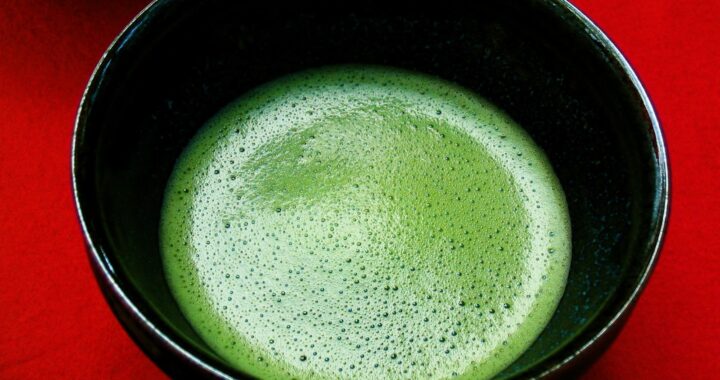
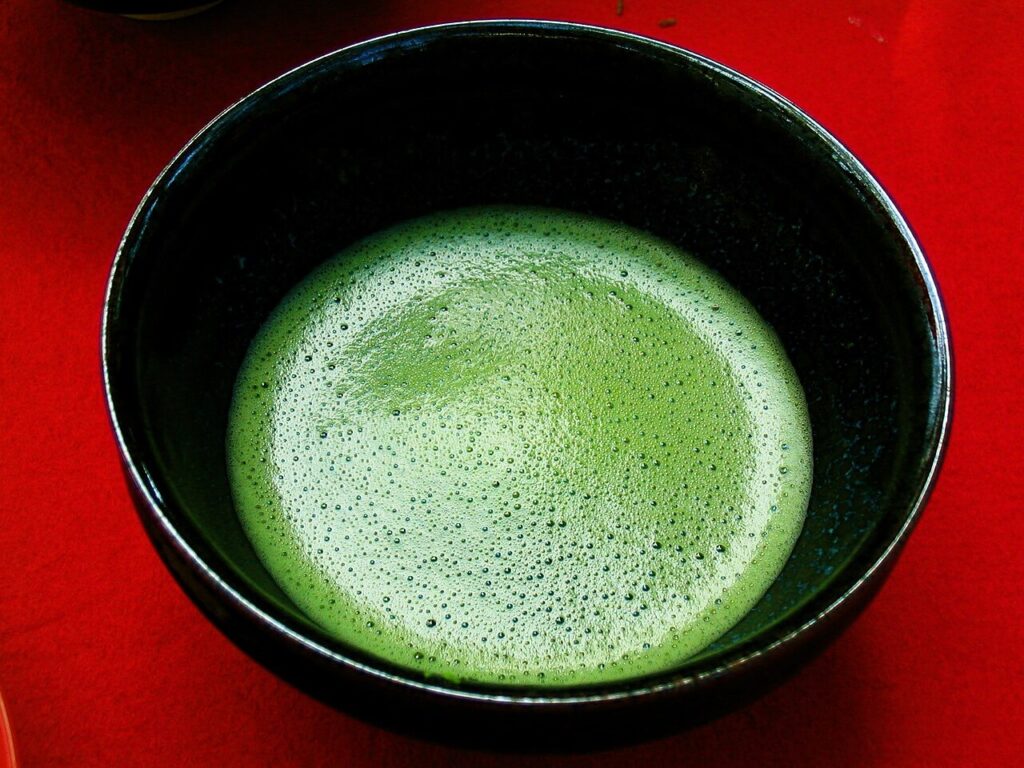
Matcha is the highest-caffeine common tea at 38-89mg per 8oz serving. The reason is mechanical: matcha is powdered green tea, and the consumer drinks the entire leaf rather than steeping and discarding it. The caffeine that would otherwise remain in the spent leaf is fully consumed.
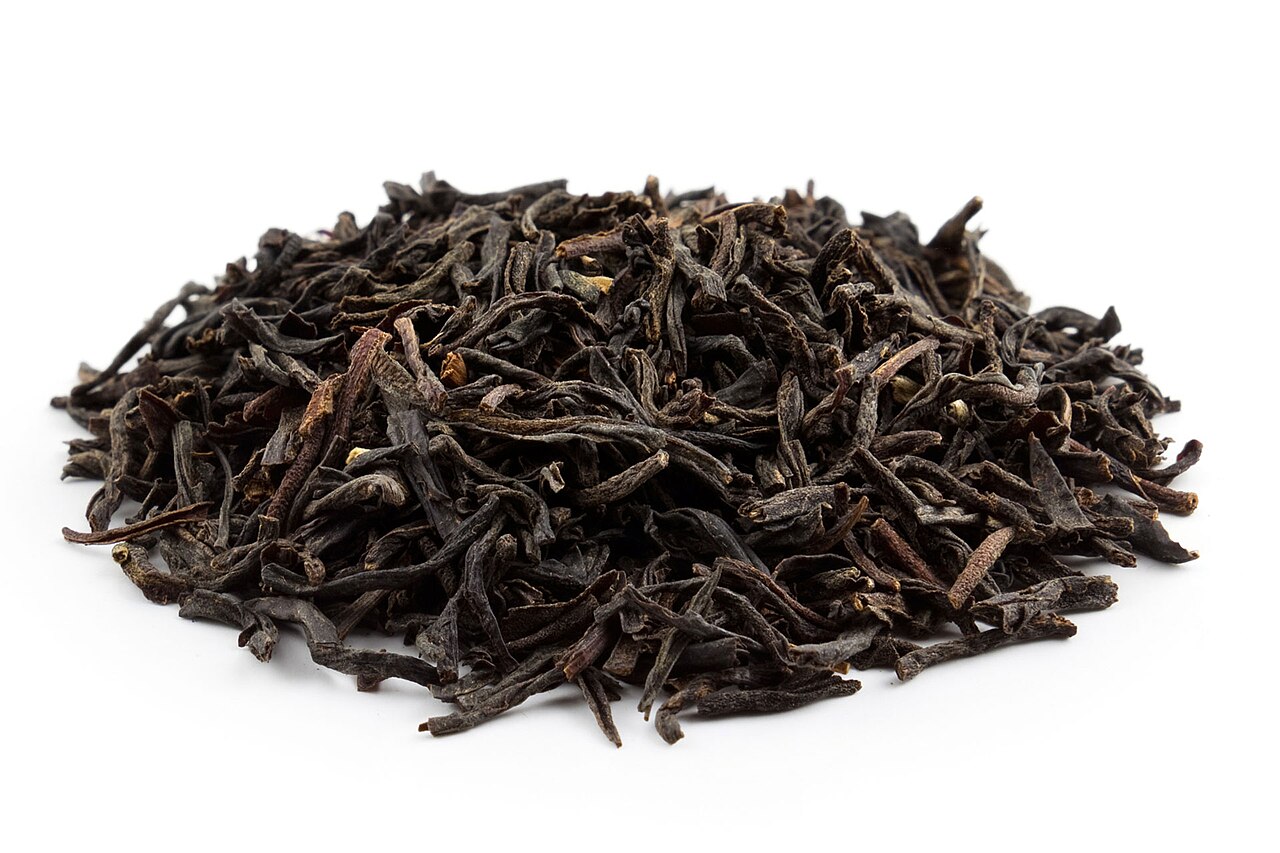
Black tea is the standard “high caffeine” category with 40-70mg per cup on average. The range is wide: English Breakfast lands at 30-60mg per cup, while Assam — one of the strongest common black teas . Can hit 60-100mg. The variation comes from cultivar (Assam vs Ceylon vs Kenyan), growing conditions, and processing. Mass-market black teas use smaller, broken leaf particles (the kind in tea bags) that release caffeine quickly. Whole-leaf black teas extract more slowly but can deliver comparable total caffeine with longer steeping.
Oolong tea sits at 30-50mg per cup, in the middle of the true tea range. Oolong’s wide range comes from the oxidation spectrum: lightly oxidised oolongs (closer to green tea) have less caffeine; heavily oxidised oolongs (closer to black tea) have more.
Green tea averages 20-30mg per cup but has a wide range. The Tea Research and Extension Station (Taiwan) puts the green tea range at 20-30mg per cup, with the lower end reflecting the cooler brewing temperatures and shorter steeping times common for green tea. Hotter water and longer steeping push green tea caffeine upward; cooler water and shorter steeping push it down.
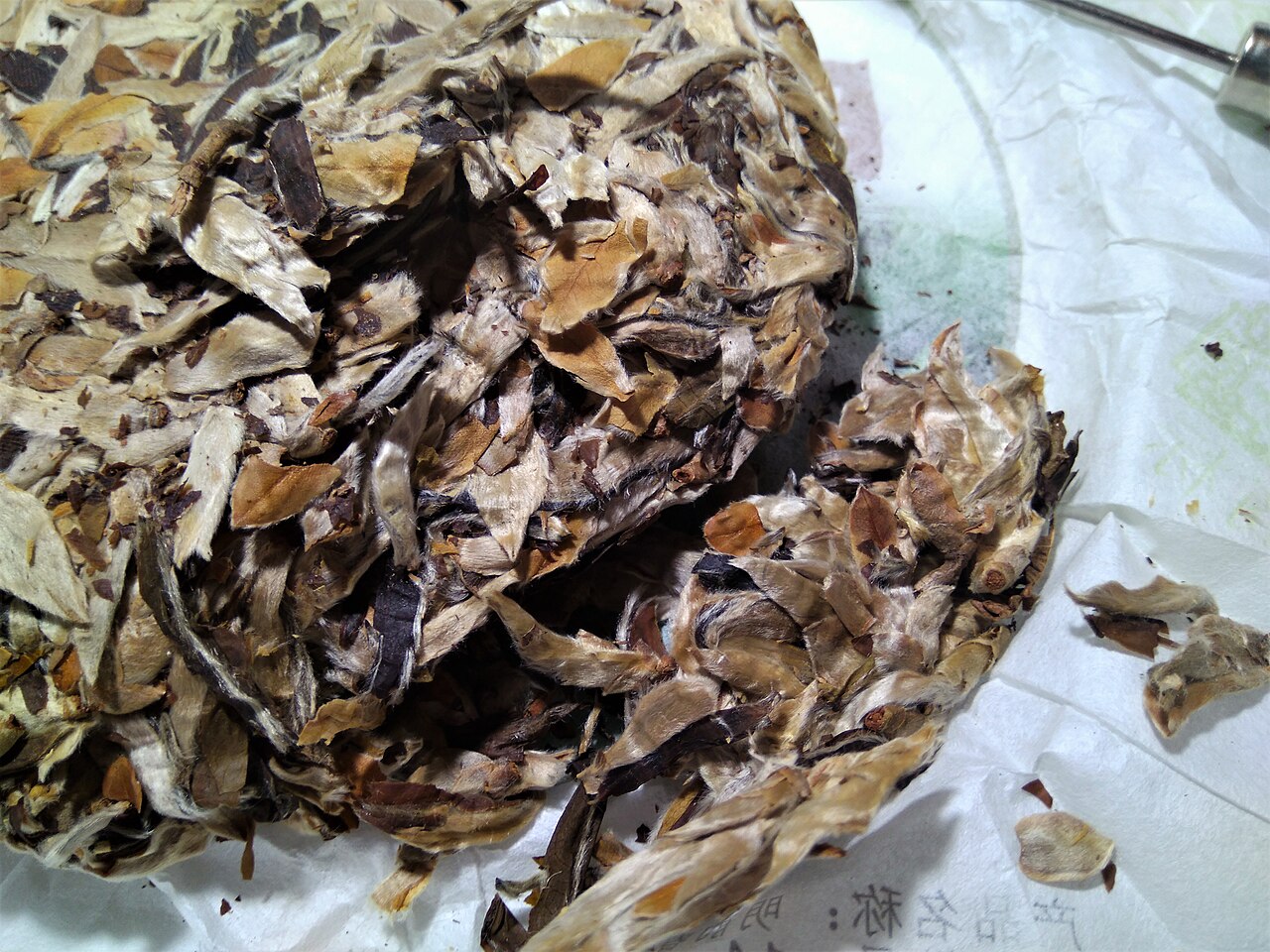
White tea has the lowest caffeine among common true teas at 15-25mg per cup. The unrolled and lightly processed leaves extract more slowly, and the standard brewing parameters (lower temperature, shorter time) limit caffeine extraction.
Pu-erh tea is variable. Ripe pu-erh has lower caffeine (10-20mg per cup) because the microbial fermentation partially breaks down caffeine. Raw pu-erh has higher caffeine (closer to green tea) because the post-fermentation is less complete.
Yellow tea sits between green and white tea at 20-30mg per cup, similar to green tea. The processing is similar to green tea with an additional slow oxidation step that gives the yellow colour.
Herbal tisanes (chamomile, rooibos, peppermint, etc.) contain 0mg caffeine. These are not Camellia sinensis and do not contain native caffeine compounds.
What Affects Caffeine Extraction
The per-cup figures above are useful averages, but the actual caffeine in any specific cup depends on brewing factors that can shift the result by 2-3x. Four variables matter most:
Water temperature: hotter water extracts more caffeine. Research published in the journal Foods found a general trend of increased caffeine extraction at higher temperatures across all tea types. In oolong specifically, caffeine levels more than tripled when brewing temperature jumped from 175°F to 212°F. The standard recommendation is cooler brewing temperatures for teas you want lower in caffeine (green, white) and hotter for teas you want higher (black, pu-erh).
Steeping time: longer steeping extracts more caffeine. A 30-second steep delivers a fraction of the caffeine of a 5-minute steep. The “rinse” trick — discarding the first 30-second steep . Can reduce subsequent caffeine by 30-40%.
Leaf grade: smaller, broken leaf particles (typical of mass-market tea bags) release caffeine faster than whole leaves. A whole-leaf Assam in a teapot may deliver similar total caffeine to a broken-leaf Assam in a tea bag, but the bag delivers it faster and more concentrated in the first 2 minutes.
Leaf-to-water ratio: more leaves per cup means more caffeine. The standard ratio is 1 teaspoon (2-3g) per 8oz cup. Doubling the leaves doubles the caffeine (roughly), assuming you have the steeping time to extract it.
Matcha vs Other Teas
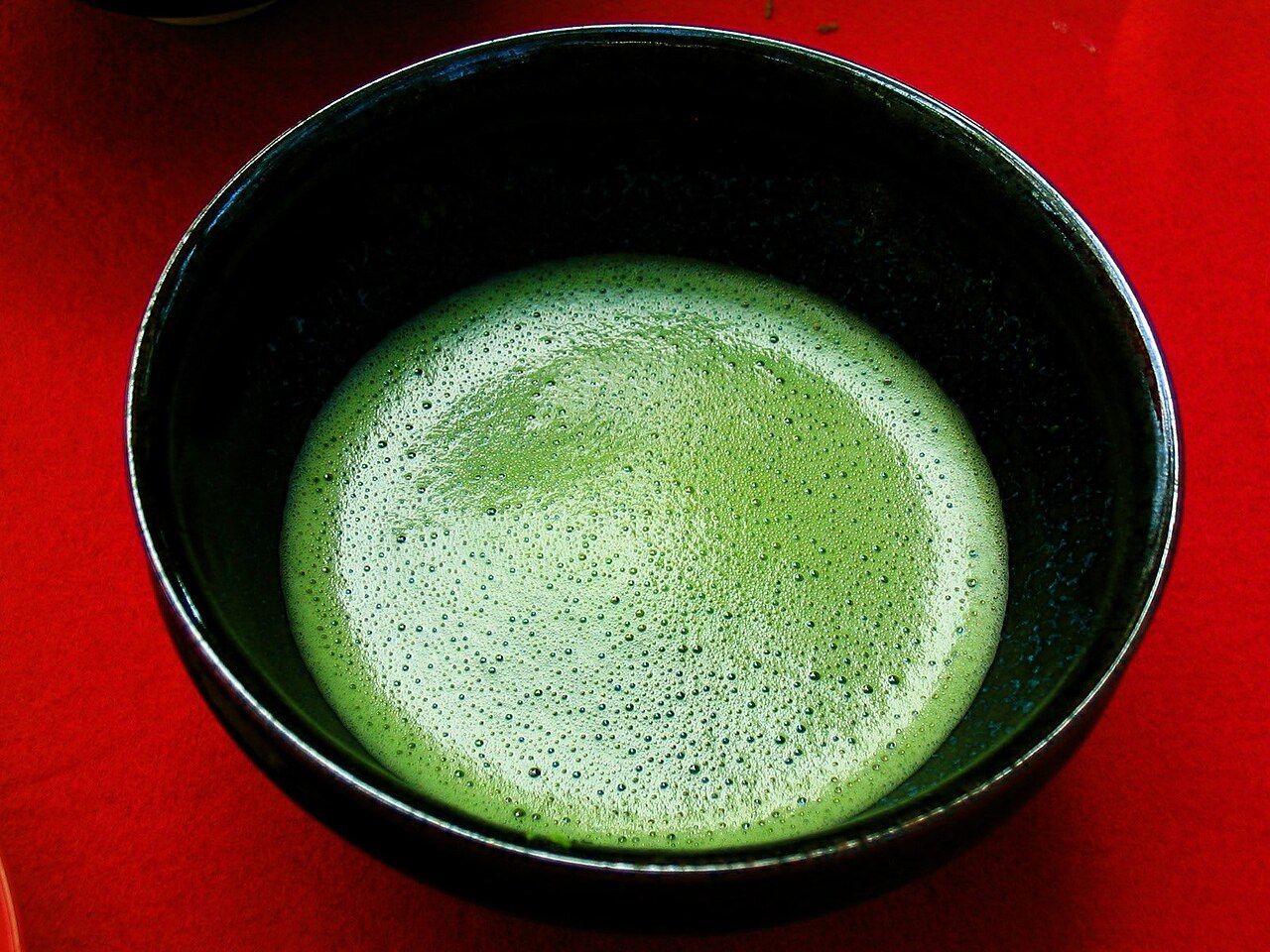
Matcha deserves its own section because the caffeine mechanics are different from steeped teas. With steeped teas, the consumer drinks the extracted liquid and discards the leaf. With matcha, the consumer drinks the powdered leaf suspended in water, consuming everything in the leaf including all the caffeine.
The result is that matcha’s caffeine content is higher than steeped green tea of equivalent leaf weight. Per Harvard Health, matcha delivers 38-89mg per 8oz serving, depending on the amount of powder used (typically 1-2 grams). Steeped green tea of the same leaf weight would deliver 30-50mg of caffeine, with the rest remaining in the spent leaves.
Matcha also delivers the L-theanine + caffeine combination at a higher concentration, which produces a more pronounced calm-alertness effect than steeped green tea. For consumers who want both the caffeine benefit and the L-theanine calm, matcha is the most efficient format.
The L-Theanine Factor
Tea is unique among caffeinated beverages in its L-theanine content. L-theanine is an amino acid that promotes alpha brainwave activity (associated with relaxed but alert states) and reduces the anxiety that caffeine can produce. The combination is sometimes called “calm alertness” or “focused calm.”
The L-theanine content varies by tea type but is roughly similar across true teas (green, black, oolong, white). Matcha has the highest concentration per cup because the whole leaf is consumed. Decaf teas retain most of their L-theanine because decaffeination methods selectively target caffeine, not L-theanine.
This is why many tea drinkers describe the caffeine effect from tea as qualitatively different from the caffeine effect from coffee, despite tea containing less caffeine per cup. Coffee delivers caffeine alone, producing the familiar spike-and-crash pattern. Tea delivers caffeine + L-theanine, producing the calm-alertness pattern that coffee cannot replicate.
How to Choose, by Caffeine Intent
For morning energy (5-9am): matcha, Assam black, English Breakfast, or yerba mate. Caffeine range 50-100mg per cup.
For afternoon focus (1-4pm): oolong, black tea (mid-range), or green tea. Caffeine range 25-50mg per cup. Avoid higher-caffeine options to prevent sleep disruption.
For evening wind-down (after 6pm): herbal tisanes (zero caffeine) or decaf true teas (5-10mg per cup). Regular teas are off the table for caffeine-sensitive consumers.
For pregnancy: herbal tisanes (with physician guidance), decaf tea, or low-caffeine white tea. Limit total caffeine intake to under 200mg per day per most guidelines.
For caffeine sensitivity: herbal tisanes, decaf tea, white tea (low end), or green tea brewed at lower temperatures and shorter steeping times.
Fact-vs-Claim Verdict
| Claim | Verdict | Source / note |
|---|---|---|
| Matcha has more caffeine than steeped green tea | Verifiable | Whole-leaf consumption; Harvard Health |
| Black tea generally has more caffeine than green tea | Mixed (generalisation with wide variation) | Darjeeling overlaps with green tea; Assam goes much higher |
| White tea has the least caffeine of true teas | Verifiable (under standard brewing) | 15-25mg per cup range; cooler brewing, shorter steeping |
| Pu-erh tea has lower caffeine than raw pu-erh | Verifiable | Microbial fermentation breaks down caffeine; 10-20mg range |
| Hotter brewing water extracts more caffeine | Verifiable | Foods journal study; oolong 3x increase from 175°F to 212°F |
| Longer steeping extracts more caffeine | Verifiable | Standard brewing studies; 30-second rinse reduces by 30-40% |
| Smaller leaf particles release caffeine faster | Verifiable | Mass-market tea bag vs whole leaf brewing |
| L-theanine produces “calm alertness” with caffeine | Verifiable | Multiple studies on L-theanine + caffeine synergy |
| Decaf tea contains 5-10mg per cup | Industry standard | FDA 97% removal requirement; common lab tests |
| Herbal teas contain 0mg caffeine | Verifiable | Chamomile, rooibos, peppermint, etc. are not Camellia sinensis |
How caffeine is measured, and why two brands disagree
Caffeine numbers on tea bags come from one of two measurement methods, and they disagree. High-performance liquid chromatography (HPLC) measures caffeine directly in the leaf or infusion. UV-visible spectrophotometry is faster but less specific. The British Standard BS EN 16612:2023 specifies HPLC-UV for tea. Lab-to-lab variation on the same sample runs about ±5% for HPLC and wider for spectrophotometry, so when two brands claim 40 mg and 47 mg per cup of the same nominal leaf, the gap is measurement error rather than agricultural difference.
The USDA National Nutrient Database lists caffeine per 100 ml of brewed tea at 11 mg for black, 12 mg for green, 15 mg for oolong, and 32 mg for matcha. Earl Grey sits at the black-tea baseline. White tea, often marketed as low-caffeine, actually overlaps with green. Decaf black is 0.5-2 mg. The bigger lever than cultivar is brewing temperature and time: a 30-second 70°C steep extracts roughly half the caffeine of a 3-minute 95°C steep on the same leaf.
Caffeine also degrades during storage. A six-month-old teabag has measurably less caffeine than a fresh one, by about 10-15%, with the rest of the cup compensating through leaf volume if the drinker shortens the leaf to compensate for flavour loss. This is why supermarket own-label decafs, which spend longer on shelves, sometimes test lower than the same recipe brewed from fresh leaf.
Practical table: caffeine per cup by tea type
The USDA values cluster tightly enough that a useful at-a-glance table fits on one line per tea type. The ranges below combine USDA, UK Tea & Infusions Association, and peer-reviewed measurement studies.
| Tea type | Caffeine per 200 ml cup | Notes |
|---|---|---|
| Black tea | 40-70 mg | Assam, Ceylon, English Breakfast |
| Green tea | 20-45 mg | Lower extraction at lower temperature |
| Oolong | 30-50 mg | Mid-oxidation, mid-caffeine |
| White tea | 15-30 mg | Often mis-marketed as caffeine-free |
| Matcha | 60-80 mg | Whole leaf consumed; higher per-gram |
| Herbal tisanes | 0 mg | Chamomile, rooibos, peppermint |
| Decaf black | 1-5 mg | Below 2.5% of original by FDA standard |
| Pu-erh | 30-60 mg | Similar to black; aged leaf varies |
| Yerba mate | 70-85 mg | Strictly not tea; comparison only |
One cup of black tea sits below one cup of filter coffee (about 95 mg per 200 ml) but above green tea by roughly 2-3x. The variability within each category, driven by leaf grade, brewing time, and leaf-to-water ratio, is larger than the gap between adjacent categories.
Two common myths are worth knowing. White tea is not a low-caffeine tea, as our white tea guide explains, and ripe pu-erh keeps its caffeine through fermentation. Simmered masala chai can carry more than a quick cup. If you are pregnant, see which teas are safe during pregnancy.
Where a black tea is grown changes its caffeine too. Our guides to Darjeeling, Assam and Ceylon tea give the measured figures for each. If you want the most caffeine per cup, see the best tea to stay awake.
For measured figures on black tea alone, by bag, loose leaf and steep time, see how much caffeine is in black tea.
Frequently Asked Questions
Black Tea vs Green Tea Caffeine
The common claim that black tea has more caffeine than green tea is a useful generalisation but not a precise one. Black tea averages 40-70mg per cup, with Assam up to 100mg. Green tea averages 20-30mg per cup. The ranges overlap: a delicate Darjeeling can be 26mg (green tea territory), and a heavily brewed sencha can be 40mg. The brewing variables matter as much as the tea type.
Matcha vs Other Teas
Matcha has the highest caffeine content among common teas (38-89mg per 8oz serving) because the whole leaf is consumed rather than steeped and discarded. Matcha also delivers the highest L-theanine concentration per cup, producing the most pronounced calm-alertness effect.
What Brewing Factors Affect Caffeine
Four variables matter most: water temperature (hotter = more caffeine), steeping time (longer = more), leaf grade (smaller particles release faster), and leaf-to-water ratio (more leaves = more caffeine). Cooler brewing and shorter steeping can reduce caffeine by 30-50% for the same tea.
Why Tea Feels Different from Coffee
Tea contains L-theanine, an amino acid that promotes alpha brainwave activity and reduces anxiety. Coffee contains caffeine alone. The combination of caffeine + L-theanine in tea produces a calm-alertness effect that coffee cannot replicate. This is the qualitative difference, not the absolute caffeine difference.
The Lowest Caffeine True Tea
White tea has the lowest caffeine among common true teas at 15-25mg per cup, brewed under standard parameters (lower temperature, shorter steeping). Pu-erh tea (ripe) is similar at 10-20mg per cup. Both can be brewed for higher caffeine if desired.
Decaf Tea Caffeine Content
Decaf tea retains approximately 5-10mg of caffeine per cup after the 97%+ removal required by the FDA. This is enough to affect very sensitive individuals but is generally considered safe for evening consumption. The L-theanine content survives decaffeination largely intact.
Herbal Tea vs Decaf
Herbal teas (chamomile, rooibos, peppermint) contain zero caffeine and have no caffeine-related concerns. Decaf tea contains 5-10mg per cup. For most consumers this difference is negligible, but for very caffeine-sensitive individuals (or pregnant women under physician guidance), the herbal option is the safer choice.
Sources
- Harvard Health Publishing , Caffeine in tea , Primary source for the 38-89mg per serving matcha caffeine figure.
- USDA FoodData Central , Tea, brewed , Primary source for the USDA FoodData Central figures commonly cited for tea caffeine content.
- Foods journal , Brewing temperature and caffeine extraction , Primary source for the temperature-caffeine relationship, including the 3x increase in oolong caffeine from 175°F to 212°F.
- Science Insights , Green Tea vs Black Tea: Which Has More Caffeine? (March 2026) , Primary source for the per-tea-type caffeine range and brewing factors.
- RateTea , Caffeine Content of Tea , Secondary source for the per-cup caffeine ranges and the myth-busting on broad categories.
- Paper and Tea , High-Caffeine Teas , Secondary source for the per-type caffeine ranking.
- ChaYanSo , Tea Caffeine Content 2026 Complete Guide , Secondary source for the per-tea-type caffeine comparison and brewing-method sensitivity.
A note on caffeine withdrawal
Regular caffeine consumers who stop abruptly report headaches, fatigue, and reduced alertness within 12-24 hours. The mechanism is straightforward: regular caffeine intake up-regulates adenosine receptors, and sudden withdrawal leaves the brain temporarily over-sensitive to adenosine’s sleep-promoting signal. Stepping down over a week, by substituting one daily cup with a decaf or herbal, is the standard clinical recommendation; the underlying adenosine adjustment takes about 7-10 days to re-equilibrate.
For the reader considering switching from coffee to tea for any reason, the relevant number is that a 200 ml cup of black tea delivers roughly a third to a half of the caffeine in the same volume of filter coffee. The transition is gentle enough that most regular coffee drinkers can swap two cups of coffee for two cups of tea without an abrupt change in their daily load.
Last updated: 11 October 2026. Sources are linked in the text.