Chamomile tea’s best-supported benefit is better sleep quality. A 2019 review of 12 trials found a clear improvement, though it did not cure insomnia. Chamomile extract also eased generalised anxiety in a US trial. The tea is caffeine-free and safe for most people. The main risks are an allergy in people sensitive to ragweed or mugwort, and an interaction with warfarin.

Chamomile tea benefits at a glance
| Claim | Best evidence | Verdict |
|---|---|---|
| Better sleep quality | Meta-analysis of trials, 2019 | Likely, modest |
| Treats insomnia | One small trial, no effect | Not shown |
| Eases generalised anxiety | Two US trials of extract | Promising |
| Settles the stomach | Traditional use, little trial data | Unproven |
| Soothes a sore throat | No good trials of chamomile alone | Unproven |
What is chamomile tea?
Most chamomile tea is made from the dried flower heads of German chamomile, Matricaria chamomilla, a small daisy that grows wild along field edges across Europe and western Asia. Roman chamomile, Chamaemelum nobile, is a different plant with a more bitter taste and is used far less often.
The flowers contain apigenin, a flavonoid that binds to the same brain receptors as some anti-anxiety drugs in laboratory studies. That is the usual explanation for chamomile’s calming reputation. Whether a cup of tea delivers enough apigenin to matter has not been measured in people.
Does chamomile tea help you sleep?
It seems to improve how well people feel they sleep, but it is not a treatment for insomnia. The trials split along that line.
The most realistic test used the tea itself. In a 2016 Taiwanese trial, 80 new mothers with poor sleep either drank chamomile tea every day for two weeks or got usual care. The tea group reported fewer sleep problems linked to physical symptoms and fewer signs of depression. Four weeks after they stopped, the two groups were the same again, so the effect only lasted while they kept drinking it.
For diagnosed insomnia the picture is weaker. A 2011 University of Michigan pilot trial gave 34 adults with long-term insomnia 270 mg of chamomile extract twice a day for 28 days. Total sleep time, time to fall asleep and night waking were no different from placebo.
A 2019 meta-analysis pooled 12 randomised trials. Sleep quality improved significantly with chamomile, but the one trial that measured insomnia severity found no change. Our ranking of the best teas for sleep puts chamomile near the top for this reason. It is a gentle aid, not a sleeping pill.
Can chamomile help with anxiety?
This is where the strongest trial sits. At the University of Pennsylvania, Jun Mao and colleagues gave 179 adults with moderate to severe generalised anxiety disorder 1,500 mg of chamomile extract a day for 12 weeks. About half improved enough to go on to the second stage, where they either stayed on chamomile or were quietly switched to a placebo for 26 weeks.
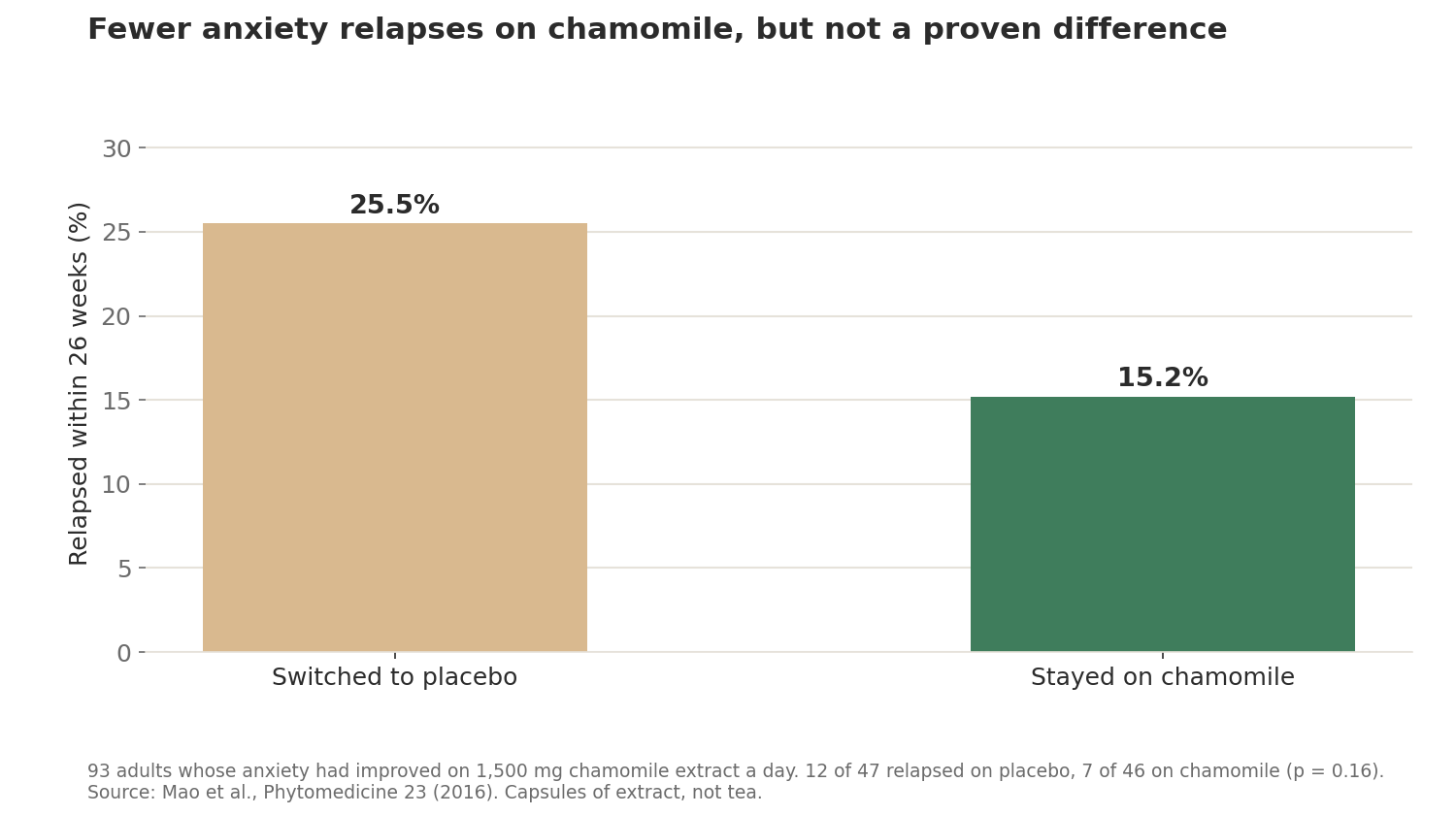
In the published results, 25.5% of the placebo group relapsed against 15.2% of the chamomile group. That gap was not statistically significant, partly because fewer people relapsed on placebo than expected. Anxiety scores did stay significantly lower on chamomile. The dose was 1,500 mg of concentrated extract, much more than a teabag provides, so the tea should be seen as a calming ritual rather than a replacement for treatment.

Is chamomile tea good for your stomach?
Chamomile has been used for indigestion, wind and colic for centuries, and many people find a warm cup comforting after a heavy meal. There are no good trials of chamomile tea alone for digestive symptoms, though. If bloating is the problem, peppermint and ginger have better evidence. Our guide to the best tea for bloating goes through the trials, and ginger tea is the better-tested choice for nausea.
Chamomile tea side effects
Chamomile is one of the safest herbal teas. A few groups should take care.
- Ragweed, mugwort or daisy allergy. Chamomile belongs to the same plant family. In a 1989 case report, an 8-year-old boy with hay fever had a severe allergic reaction after his first cup. If you react to these pollens, start with a weak cup or skip it.
- Warfarin. A 2021 systematic review of warfarin interactions lists chamomile tea among the foods and herbs linked to a higher bleeding risk. Check with your pharmacist before drinking it regularly.
- Sedatives. Taking it alongside sleeping tablets or alcohol may add to drowsiness.
- Pregnancy. There is little safety data for large amounts. An occasional cup is widely considered fine, but ask your midwife if you plan to drink it daily.
How to make chamomile tea
- Amount: one teabag, or 1 to 2 teaspoons of dried flowers per mug.
- Water: just off the boil.
- Time: 5 minutes, with a saucer over the mug to keep the aroma in. Longer makes it stronger but rarely bitter.
- Fresh flowers: use about twice the volume of dried, and only from plants you are sure are chamomile.
- Storage: dried flowers lose their scent quickly. Keep them airtight and away from light, as in our tea storage guide.
With no caffeine, chamomile is also one of the easiest swaps on our list of caffeine-free teas. With honey it makes a soothing drink for a cold, though honey is what the sore throat trials actually support.
Quick answers
Is it OK to drink chamomile tea every night?
Yes, for most people. Nightly use is common and no problems have been reported in healthy adults. Take care if you take warfarin or have a ragweed allergy.
How long before bed should I drink chamomile tea?
About 30 to 45 minutes before bed gives you time to finish it and use the bathroom before you lie down.
Does chamomile tea have caffeine?
No. It is a herbal infusion with no tea leaves in it, so it is naturally caffeine-free.
Can chamomile tea help you lose weight?
There is no evidence that it does. The anxiety trial noted a small drop in body weight, but that was not what the study set out to test.
Last updated: 7 October 2026. Sources are linked in the text.
This article is general information, not medical advice. Talk to your doctor or pharmacist before using tea or herbs for a health condition, especially if you are pregnant, breastfeeding or take regular medication.