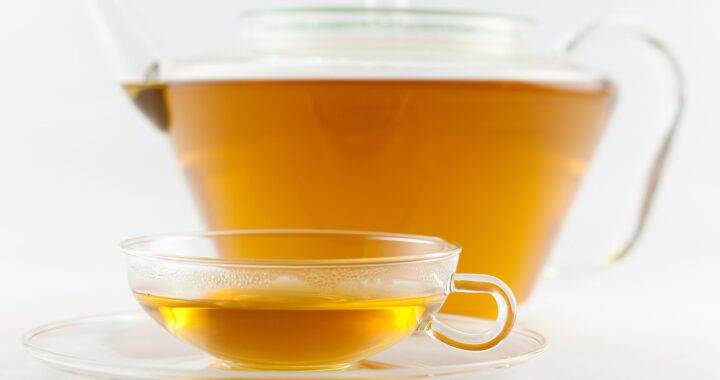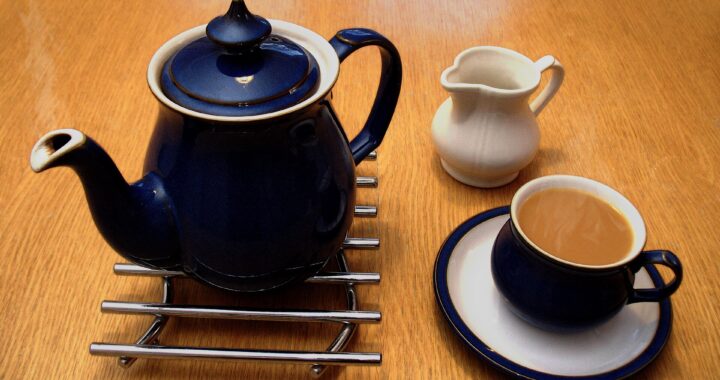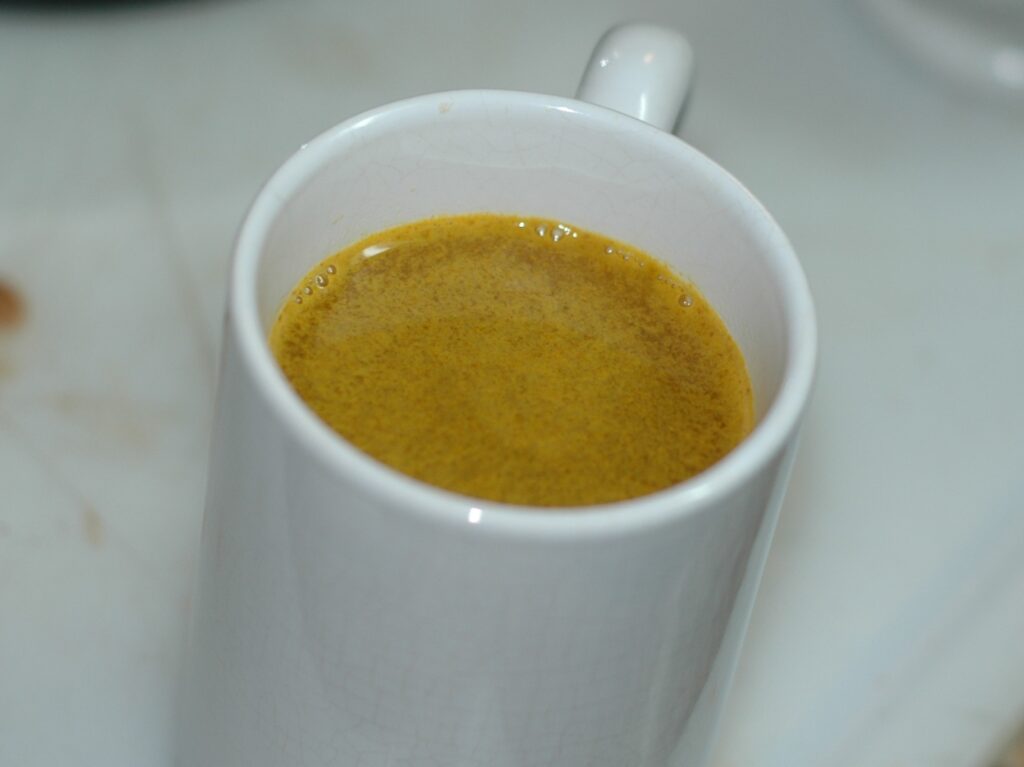
Turmeric tea is a caffeine-free drink made by simmering ground or fresh turmeric in water, often with black pepper, ginger and a little milk. Its main active compound, curcumin, eased knee arthritis pain in clinical trials. Those trials used concentrated capsules, though, and a teaspoon of turmeric in a mug delivers only a small fraction of that dose. Treat turmeric tea as a warm, pleasant drink with a modest upside, not as a medicine.
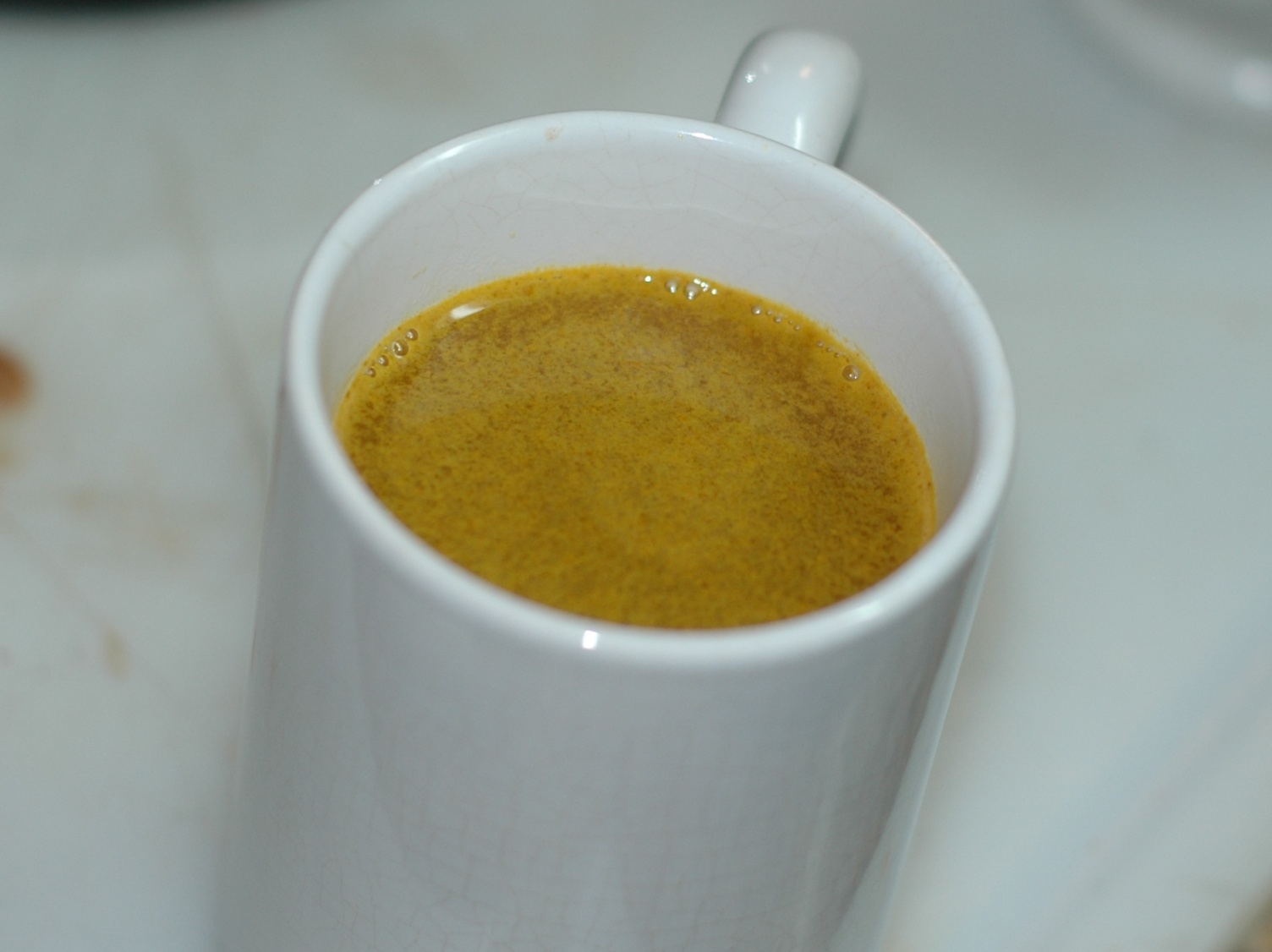
What is turmeric tea?
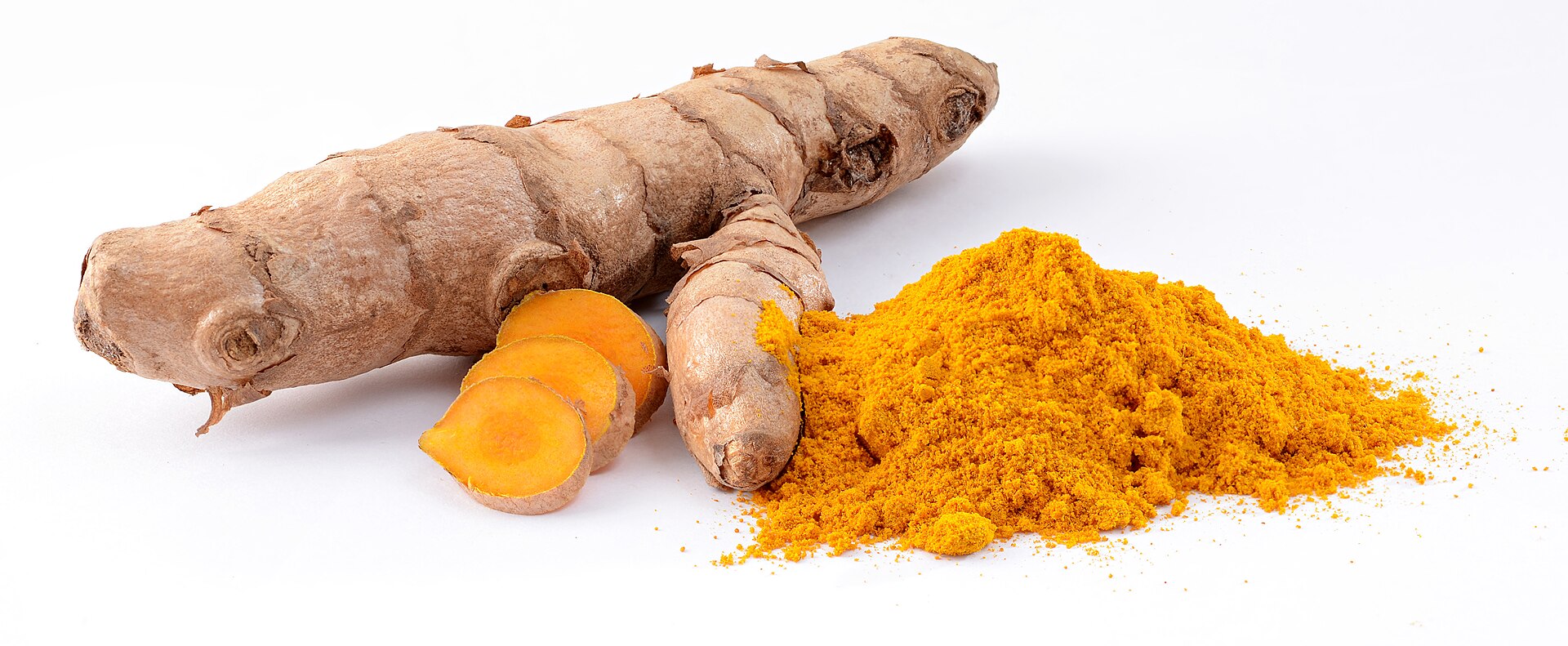
Turmeric is the root-like stem, or rhizome, of Curcuma longa, a plant in the ginger family grown mainly in India. Dried and ground, it gives curry its yellow colour. Turmeric tea is simply the spice steeped or simmered in hot water. It is not a true tea, because it contains no leaf from the tea plant, so it has no caffeine. That makes it one of the options in our guide to caffeine-free teas.
There are two common versions. Plain turmeric tea is turmeric, water and often lemon or honey. Golden milk, known in India as haldi doodh, is turmeric warmed in milk, usually with black pepper, cinnamon or ginger. Cafes sell a sweeter version as a turmeric latte. The difference matters more than it seems, because curcumin dissolves poorly in water but much better in fat.
How much curcumin is in a cup?
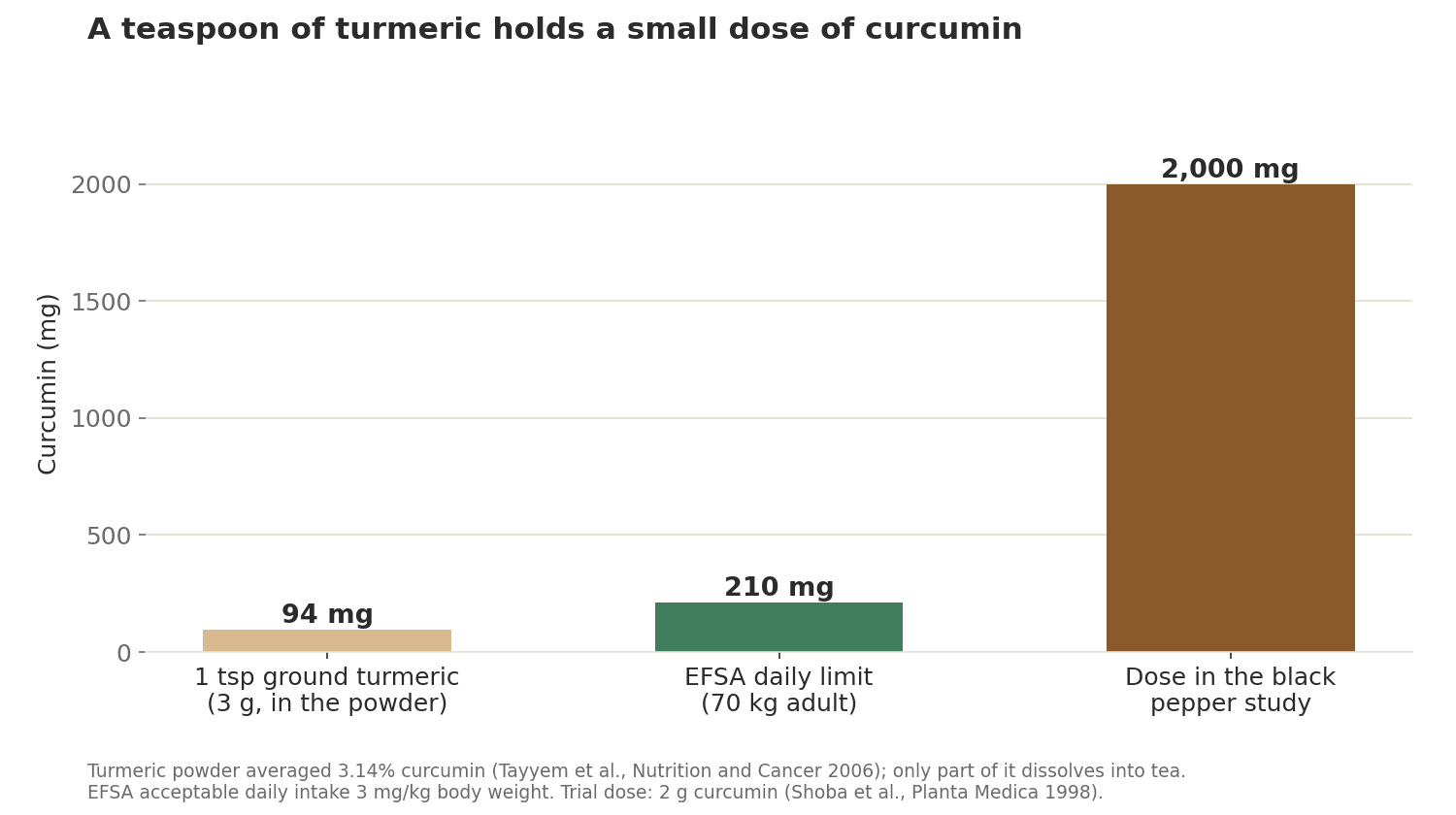
Less than most people assume. When researchers in California tested 28 spice products, pure turmeric powder averaged 3.14% curcumin by weight. Curry powders held far less. A more recent Brazilian analysis of commercial samples found turmeric powders ranging from 0.06% to 2.06% curcumin, which shows how much the spice varies from jar to jar.
A level teaspoon of ground turmeric weighs about 3 g. At 3% curcumin, that is roughly 90 mg in the powder. Only part of it ends up in your mug. Curcumin is close to insoluble in plain water, so much of it stays in the sediment at the bottom of the cup. Then your gut absorbs very little of what you swallow, and your liver clears it quickly.
Why black pepper matters
The most cited curcumin study is small but striking. In a 1998 study published in Planta Medica, healthy volunteers took 2 g of pure curcumin. On its own, it left blood levels undetectable or very low. When the same dose came with 20 mg of piperine, the active compound in black pepper, the amount reaching the blood rose by 2,000%. Piperine slows the liver and gut enzymes that tag curcumin for removal.
Two cautions apply. First, the volunteers took far more curcumin than any cup of tea provides, so the 2,000% figure does not mean your tea becomes 20 times more powerful. Later studies have often found smaller boosts. Second, the same effect that keeps curcumin in the body longer may also affect some medicines, which is one reason supplements combining the two deserve care. A pinch of pepper in a cup of tea is a culinary amount and is fine for most people.
Turmeric tea benefits, sorted by evidence
| Claim | What the research shows | Strength |
|---|---|---|
| Joint pain from knee arthritis | Curcumin capsules beat placebo and matched ibuprofen in trials | Moderate, for capsules |
| Inflammation markers | Lower CRP and TNF-alpha in arthritis trials, no change in several others | Limited |
| Digestion and bloating | Traditional use, few good trials of the tea itself | Weak |
| Immunity, colds | Lab and animal studies only | Very weak |
| Weight loss, detox | No reliable evidence for the tea | None |
Knee arthritis pain
This is where the evidence is strongest. A 2022 meta-analysis pooled 15 randomised trials with 1,670 people who had knee osteoarthritis. Curcuminoid supplements reduced pain and improved function scores more than placebo, and they were no worse than common anti-inflammatory painkillers. Side effects were no more frequent than with placebo.
One of the largest single trials, run across several hospitals in Thailand, gave 367 people either 1,500 mg of turmeric extract or 1,200 mg of ibuprofen a day for four weeks. Both groups improved by a similar amount, and the turmeric group reported fewer stomach pains. A 2025 network analysis of 17 trials agreed that every turmeric preparation tested reduced knee pain, while rating the certainty of the evidence as low because many trials were small or short.
The catch for tea drinkers is the dose. The trials used hundreds to thousands of milligrams of concentrated curcuminoids a day. A daily cup of turmeric tea is unlikely to come close. If you have arthritis and want to try turmeric for pain, talk to your doctor about a standardised supplement rather than relying on tea.
Inflammation
Curcumin blocks several inflammatory signals in lab studies, which is the basis for its anti-inflammatory reputation. In people, the picture is narrower. A 2025 review of 21 trials in knee arthritis found curcumin lowered two blood markers of inflammation, C-reactive protein and TNF-alpha, but did not change four others, including interleukin-6. That is a real but patchy signal, again from supplements.
Digestion, colds and immunity
Turmeric has a long history in Ayurvedic and Southeast Asian home remedies for indigestion and coughs. Good trials of turmeric tea for these uses are scarce. A warm drink can soothe a sore throat regardless of what is in it, and our best tea for a sore throat guide covers the options with better evidence. For colds, see our best tea for immunity guide. For an upset stomach, ginger tea, turmeric’s close relative, has much stronger trial support.
Weight loss and detox
There is no good evidence that turmeric tea helps you lose weight or cleanses the liver. Some small supplement trials have reported changes in body weight, but they used doses and formulations that bear no resemblance to a mug of tea. Your liver and kidneys handle detoxification without help from any drink.
Side effects and who should be careful
Turmeric used as a spice or in a daily cup of tea is very unlikely to cause harm in healthy adults. The concerns below apply mainly to concentrated supplements or to people with specific health conditions.
Liver injury from supplements
This is the most serious risk, and it has grown in recent years. The US Drug-Induced Liver Injury Network described 10 cases of turmeric-linked liver injury, all since 2011 and six since 2017. Eight were women, the median age was 56, five were admitted to hospital and one died of liver failure. Liver damage typically appeared one to four months after starting the product. Seven of the ten carried a gene variant called HLA-B*35:01, and three of the seven products tested also contained black pepper extract.
The US National Center for Complementary and Integrative Health says conventional turmeric and curcumin products are likely safe for two to three months at recommended amounts, but liver damage has been reported with high-absorption formulations. Stop and see a doctor if you notice tiredness, nausea, poor appetite, dark urine or yellowing of the skin or eyes.
Kidney stones
Turmeric is high in oxalate, and most of it is the soluble kind your body absorbs. In a crossover study of 11 healthy adults, 91% of the oxalate in turmeric was water soluble, compared with 6% in cinnamon, and supplemental turmeric raised the amount of oxalate passed in urine. If you have had calcium oxalate kidney stones, keep turmeric to food amounts and check with your doctor before drinking it daily.
Other cautions
- Pregnancy and breastfeeding. Turmeric in food is fine, but NCCIH says supplements may be unsafe in pregnancy. Our guide to tea during pregnancy covers which herbal teas are sensible.
- Medicines. If you take blood thinners, diabetes drugs or any long-term medicine, ask a pharmacist before using turmeric supplements. A cup of tea is a much smaller dose, but it is still worth mentioning.
- Gallbladder problems. Turmeric may stimulate bile flow, so the European Medicines Agency advises against medicinal use with gallstones, a blocked bile duct or liver disease.
- Stomach upset. Nausea, reflux and diarrhoea are the most common complaints at higher doses.
For long-term intake, the European Food Safety Authority set an acceptable daily intake for curcumin of 3 mg per kg of body weight, or about 210 mg a day for a 70 kg adult, from all sources. A cup or two of turmeric tea stays well within that. A high-dose supplement on top of it may not.
How to make turmeric tea
This version is built around what helps curcumin reach your body: heat, a little fat and a pinch of black pepper.
Ingredients for one large mug
- 250 ml water
- 1 level teaspoon ground turmeric, or a 2 to 3 cm piece of fresh turmeric, grated
- A small pinch of freshly ground black pepper
- 2 to 3 thin slices of fresh ginger (optional)
- 1 to 2 tablespoons milk, oat milk or coconut milk, or half a teaspoon of coconut oil
- Honey and a squeeze of lemon, to taste
- Bring the water to a simmer in a small pan.
- Add the turmeric, pepper and ginger. Simmer gently for 8 to 10 minutes. Stir once or twice so the powder does not stick.
- Take the pan off the heat and stir in the milk or oil.
- Strain through a fine sieve into a mug, or let the sediment settle and pour carefully.
- Sweeten with honey once it has cooled slightly, and add lemon if you like.
For golden milk, swap the water for 250 ml of milk and warm it gently without boiling, adding a pinch of cinnamon. It is richer and makes a good evening drink. Pair it with the ideas in our best tea for sleep guide if that is when you plan to drink it. Turmeric also works well with the spices in masala chai.
| Option | Pros | Cons |
|---|---|---|
| Ground turmeric | Cheap, easy to measure, keeps for months | Gritty, quality varies a lot |
| Fresh turmeric root | Bright, peppery flavour | Stains hands and boards, shorter shelf life |
| Turmeric tea bags | Convenient, no sediment | Often blended with other herbs, small dose |
- Turmeric stains. Rinse pans and mugs straight away, and use a glass or steel sieve rather than a cloth one.
- Buy ground turmeric from a brand that publishes testing. Stanford researchers found turmeric in Bangladesh adulterated with lead chromate to brighten its colour.
- Keep ground turmeric in a sealed jar away from light. Like loose tea, it fades, as our storage guide explains.
Quick answers
Does turmeric tea have caffeine?
No. Turmeric is not from the tea plant, so plain turmeric tea is caffeine free. Blends that add green or black tea do contain caffeine, so check the label.
Can I drink turmeric tea every day?
Yes, one or two cups a day is fine for most healthy adults. Take more care if you have had kidney stones, have gallbladder disease or take regular medicines. Our how many cups of tea a day guide covers fluid and caffeine limits for other teas.
When is the best time to drink turmeric tea?
Any time suits it, since it has no caffeine. Drinking it with a meal that contains some fat may help you absorb a little more curcumin.
Is turmeric tea better than a supplement?
For flavour and comfort, yes. For a measurable effect on joint pain, no. The trials that showed benefits used standardised capsules. Supplements also carry more risk, so they are worth discussing with a doctor first.
Does turmeric tea help with weight loss?
Not in any meaningful way. A milky, sweetened turmeric latte can add more calories than it could ever help burn.
Sources
- Tayyem et al. Curcumin content of turmeric and curry powders. Nutrition and Cancer, 2006.
- Shoba et al. Influence of piperine on the pharmacokinetics of curcumin. Planta Medica, 1998.
- Feng et al. Curcuminoids for knee osteoarthritis, a meta-analysis. BMC Complementary Medicine and Therapies, 2022.
- Kuptniratsaikul et al. Curcuma domestica extracts compared with ibuprofen in knee osteoarthritis. Clinical Interventions in Aging, 2014.
- Halegoua-DeMarzio et al. Liver injury associated with turmeric. American Journal of Medicine, 2023.
- Tang et al. Effect of cinnamon and turmeric on urinary oxalate excretion. American Journal of Clinical Nutrition, 2008.
- National Center for Complementary and Integrative Health. Turmeric.
Last updated: 8 October 2026. Sources are linked in the text.
This article is general information, not medical advice. Talk to your doctor or pharmacist before using tea or herbs for a health condition, especially if you are pregnant, breastfeeding or take regular medication.