Hibiscus tea does lower blood pressure, by a modest amount. In the best-known trial, three cups a day for six weeks cut systolic pressure by 7.2 mmHg, against 1.3 mmHg on a placebo drink. Two later meta-analyses found drops of about 7 mmHg. The effect was biggest in people whose blood pressure started highest. It is a reasonable addition to a diet, not a replacement for medication.
What hibiscus tea is
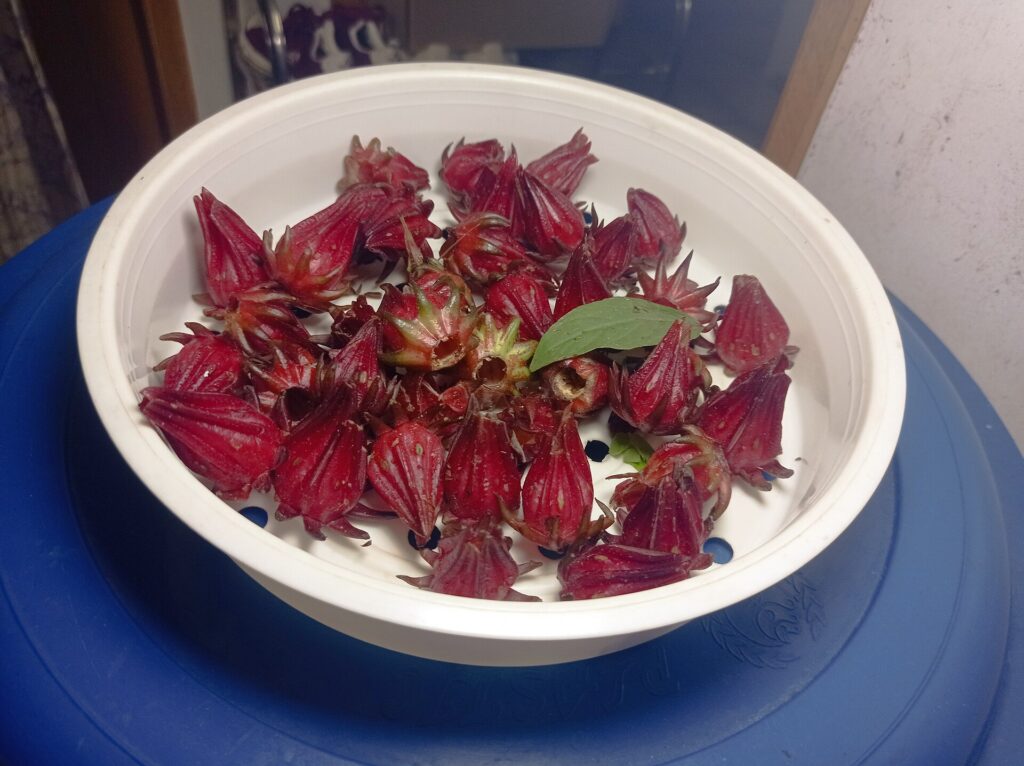
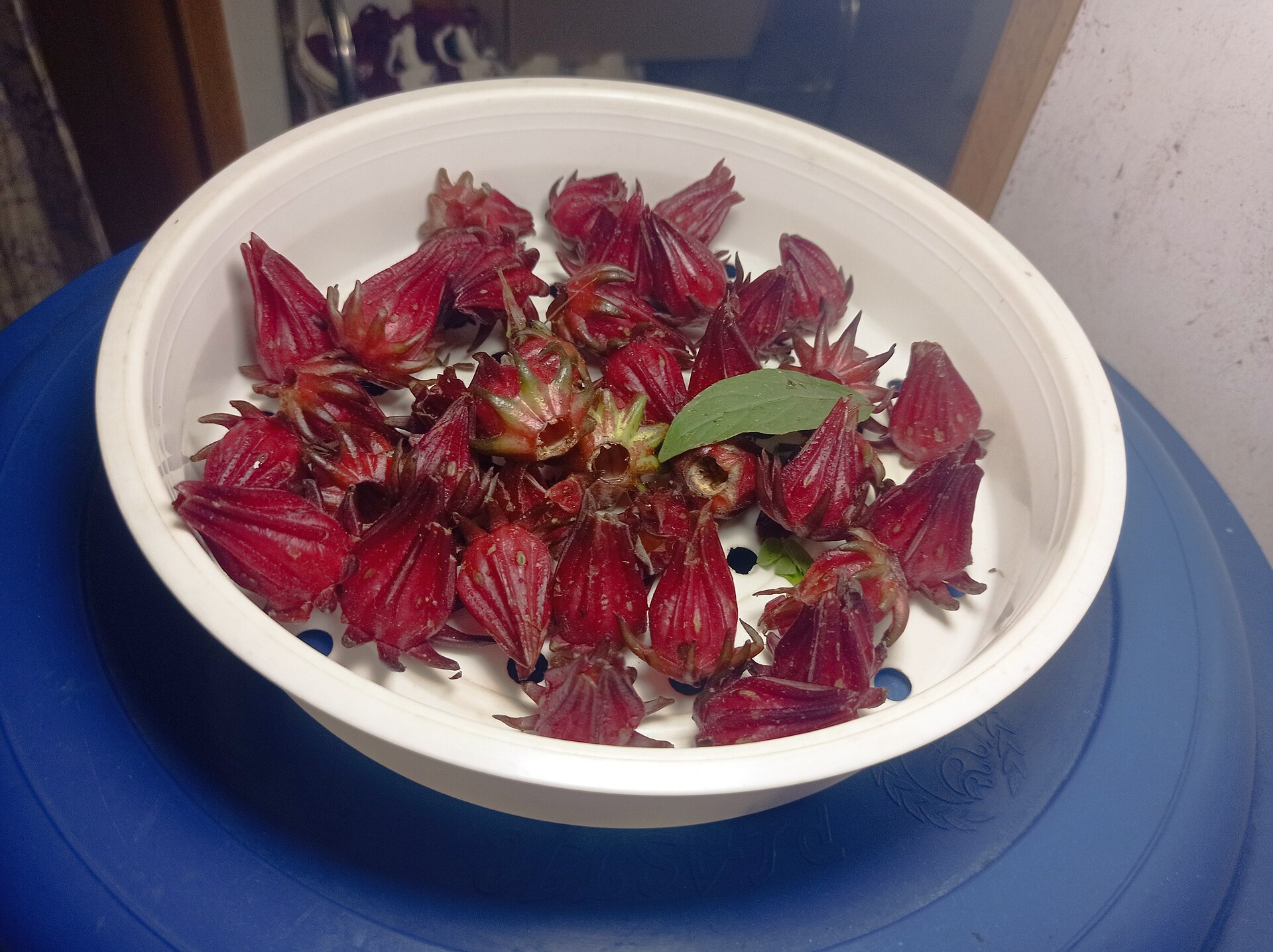
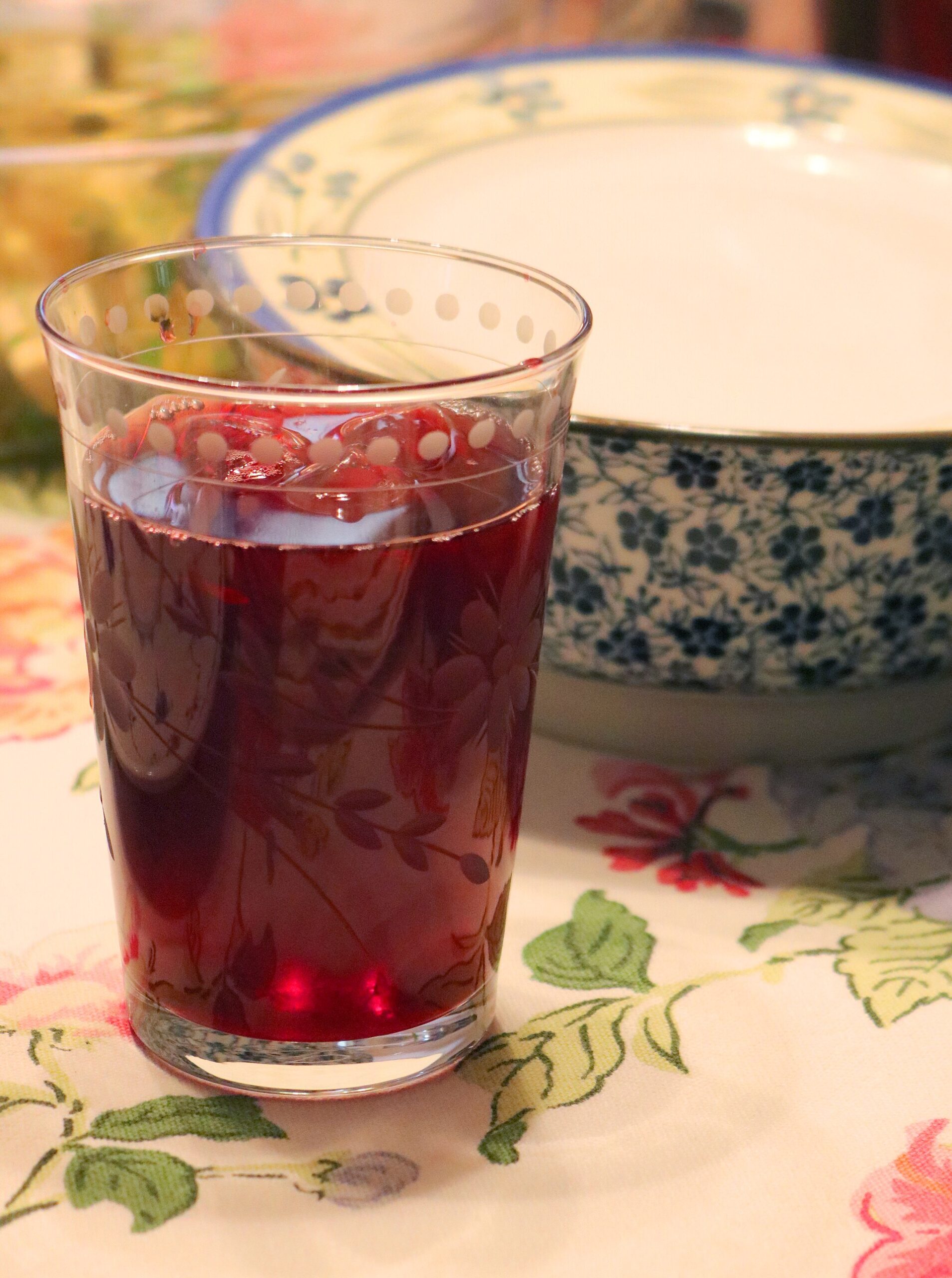
Hibiscus tea is not made from the ornamental garden hibiscus. It comes from roselle, Hibiscus sabdariffa, a tropical plant grown for the fleshy red calyces that wrap its seed pods. Dried and steeped, they give a deep crimson drink with a sharp, cranberry-like taste. It is known as karkadeh in Egypt and Sudan, bissap in West Africa, agua de jamaica in Mexico and sorrel in the Caribbean, where it is a Christmas drink.
It contains no tea leaf, so it is naturally caffeine-free and sits with the other herbal options in our caffeine-free tea guide. The colour comes from anthocyanins, the same pigments found in red berries.
The key trial
The study most often cited was run at Tufts University in Boston and published in the Journal of Nutrition in 2010. Diane McKay and colleagues recruited 65 adults aged 30 to 70 with prehypertension or mildly high blood pressure, none of them taking blood pressure medication. Half drank three 240 ml servings of brewed hibiscus tea a day for six weeks. The other half drank a placebo drink. Neither the volunteers nor the researchers knew who had which.
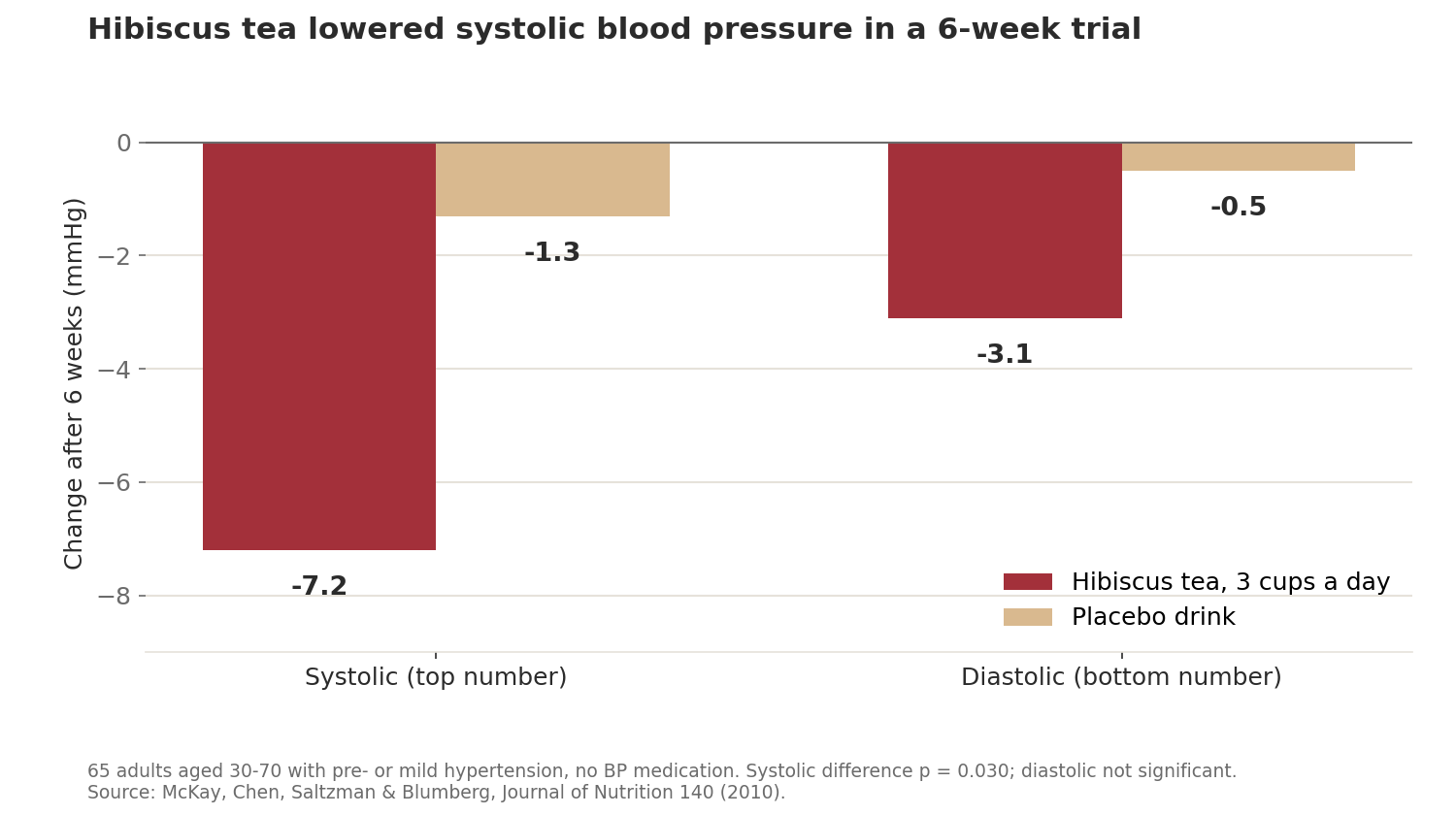
Systolic pressure, the top number, fell by 7.2 mmHg on hibiscus and 1.3 mmHg on placebo, a statistically significant difference. Diastolic pressure, the bottom number, fell by 3.1 mmHg against 0.5 mmHg, but that gap could have been chance. People who started with higher systolic readings saw the largest falls. Age, sex and supplement use made no difference.
What the meta-analyses say
One trial of 65 people is not enough on its own. Two reviews have since pooled the trials.
| Review | Trials | Result vs placebo | Caveats |
|---|---|---|---|
| Ellis et al., Nutrition Reviews, 2022 | 17 trials in adults | Systolic down 7.10 mmHg | Results varied widely between trials. Effect larger with raised baseline BP. |
| Abdelmonem et al., J Cardiovasc Pharmacol, 2022 | 13 trials, 1,205 people | Systolic down 6.67 mmHg, diastolic down 4.35 mmHg | Worked in hypertension alone, not in metabolic syndrome. |
Both reviews also compared hibiscus with blood pressure drugs such as captopril in a handful of trials. They found no significant difference. That sounds impressive, but those comparison trials were small and of mixed quality, and “no significant difference” in a small trial is not the same as proof of equal effect. Ellis and colleagues also found hibiscus slightly lowered LDL cholesterol compared with other teas and placebo.
How much does 7 mmHg matter?
For someone at 135/85, a 7-point fall in systolic pressure is noticeable on the monitor. It will not bring high blood pressure of 160 or more down to normal. The NHS counts 140/90 or higher as high blood pressure, and at that level a GP will usually discuss medicine as well as lifestyle changes.
The trials also have limits. Most lasted six weeks to three months, so the long-term effect is unknown. Several were small, run in one country, and used different brews and doses. None measured heart attacks or strokes, only blood pressure readings.
How to make hibiscus tea
- Hot: use about 1 to 2 teaspoons of dried calyces, or one hibiscus teabag, per mug. Pour on boiling water and steep 5 to 10 minutes. It gets more sour the longer it steeps.
- Cold: steep a handful of dried calyces in a litre of cold water in the fridge overnight. The method is the same as our cold brew tea guide.
- Flavour: it is tart. Cinnamon, ginger, orange peel or a little honey soften it. Many blends mix it with rooibos or rosehip.
- Dose used in the trial: three 240 ml cups a day, spread across the day.
Many fruit teas sold in supermarkets list hibiscus near the top of the ingredients because it gives the red colour. They usually contain much less hibiscus than a pure hibiscus tea, so they are not a like-for-like substitute for what was tested.
Who should be careful
- People already on blood pressure medication. The effects could add together and push your pressure too low. Tell your GP or pharmacist before drinking it daily, and watch for dizziness when standing up.
- People with low blood pressure. There is no reason to drink it for health if your pressure is already low.
- Pregnancy and breastfeeding. There is not enough safety data, so it is safest to avoid it unless your midwife or doctor says otherwise.
- People on other regular medicines. Hibiscus may change how the body handles some drugs. Ask a pharmacist, especially about diuretics.
For a comparison with other everyday caffeine-free choices, see our guide to rooibos tea, which is often blended with hibiscus. If you also drink regular tea, our guide to how many cups a day covers the upper limits.
Quick answers
How quickly does hibiscus tea lower blood pressure?
In the Tufts trial, the difference from placebo was clear by six weeks. Blood pressure was measured weekly, but the headline result is the six-week figure.
Is hibiscus tea as good as blood pressure tablets?
The evidence cannot show that. A few small trials found no significant difference from drugs such as captopril, but they were not designed to prove equal effect. Do not stop prescribed medicine to switch to hibiscus.
Does hibiscus tea have caffeine?
No. It is a herbal infusion with no tea leaf, so it is caffeine-free.
This article is for general information and is not medical advice. If you have high blood pressure, talk to your GP before changing your treatment.
Last updated: 7 October 2026. Sources are linked in the text.
This article is general information, not medical advice. Talk to your doctor or pharmacist before using tea or herbs for a health condition, especially if you are pregnant, breastfeeding or take regular medication.