The best tea for a headache depends on the cause. For a caffeine withdrawal headache, a cup of ordinary black or green tea is the fastest fix. For a tension headache, strong peppermint tea is a sensible choice, though the trials used peppermint oil rubbed on the forehead. For migraine, ginger has the most evidence, mainly as capsules. Chamomile and lavender help most when stress is the trigger. No tea replaces medical care for frequent or severe headaches.
Which tea for which headache
| Headache | Best tea to try | Evidence |
|---|---|---|
| Caffeine withdrawal | Black, green or oolong tea | Strong: caffeine reverses it within an hour |
| Tension headache | Strong peppermint tea | Moderate for peppermint oil on the skin, none for the tea itself |
| Migraine | Strong ginger tea, early in the attack | Low to moderate, mostly from ginger capsules |
| Migraine with nausea | Ginger tea, sipped slowly | Moderate for nausea |
| Stress headache | Chamomile, lemon balm or lavender | Indirect, by easing stress |
| Dehydration headache | Any tea, or water | Fluids help; tea counts |
Tea can help a headache in three ways. The caffeine in true tea narrows blood vessels and makes painkillers work a little better. Some herbs, such as peppermint and ginger, have active compounds that ease pain or nausea. And a warm drink adds fluid and a pause, which matters when dehydration or stress is behind the pain. The NHS lists dehydration, stress and skipped meals among the most common causes of headaches.
Does peppermint tea help with headaches?
Peppermint has the best evidence of any herb for tension headaches, but the research is for peppermint oil applied to the skin, not for tea. In a German crossover trial, 41 people with tension headaches treated 164 headaches with 10% peppermint oil in alcohol, spread across the forehead and temples, or a placebo. The oil cut pain significantly more than placebo within 15 minutes, and the researchers found it comparable to 1,000 mg of paracetamol.
Peppermint’s main compound, menthol, works on the same cold-sensing nerve receptors that make mint feel cool. A 2010 trial in Iran found that a 10% menthol solution on the forehead and temples relieved migraine attacks better than placebo at two hours, and also eased nausea and sensitivity to light.
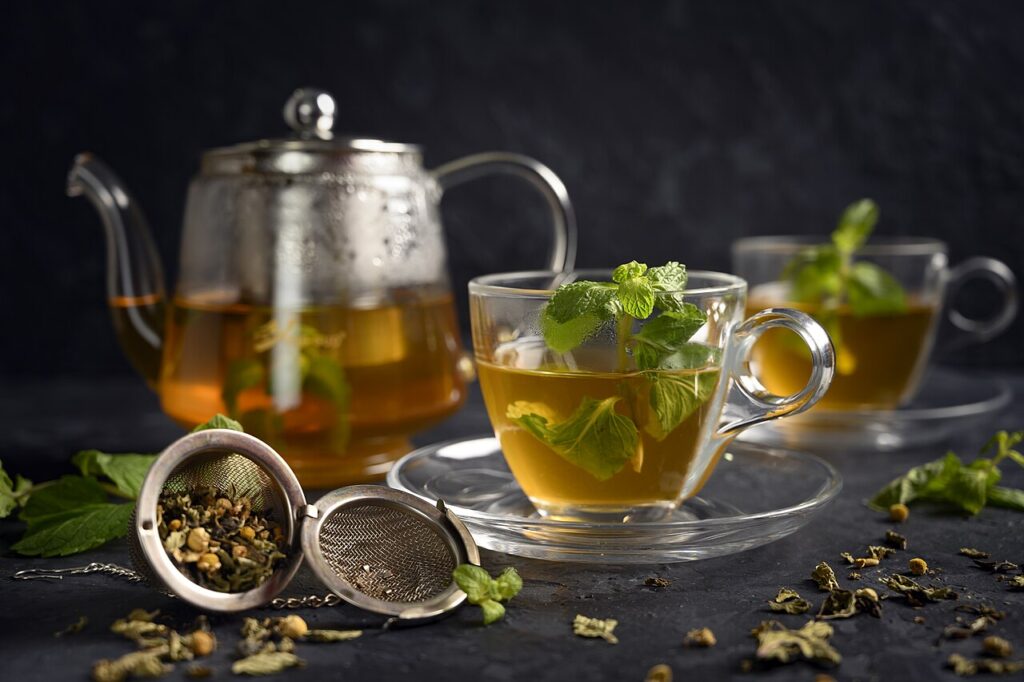
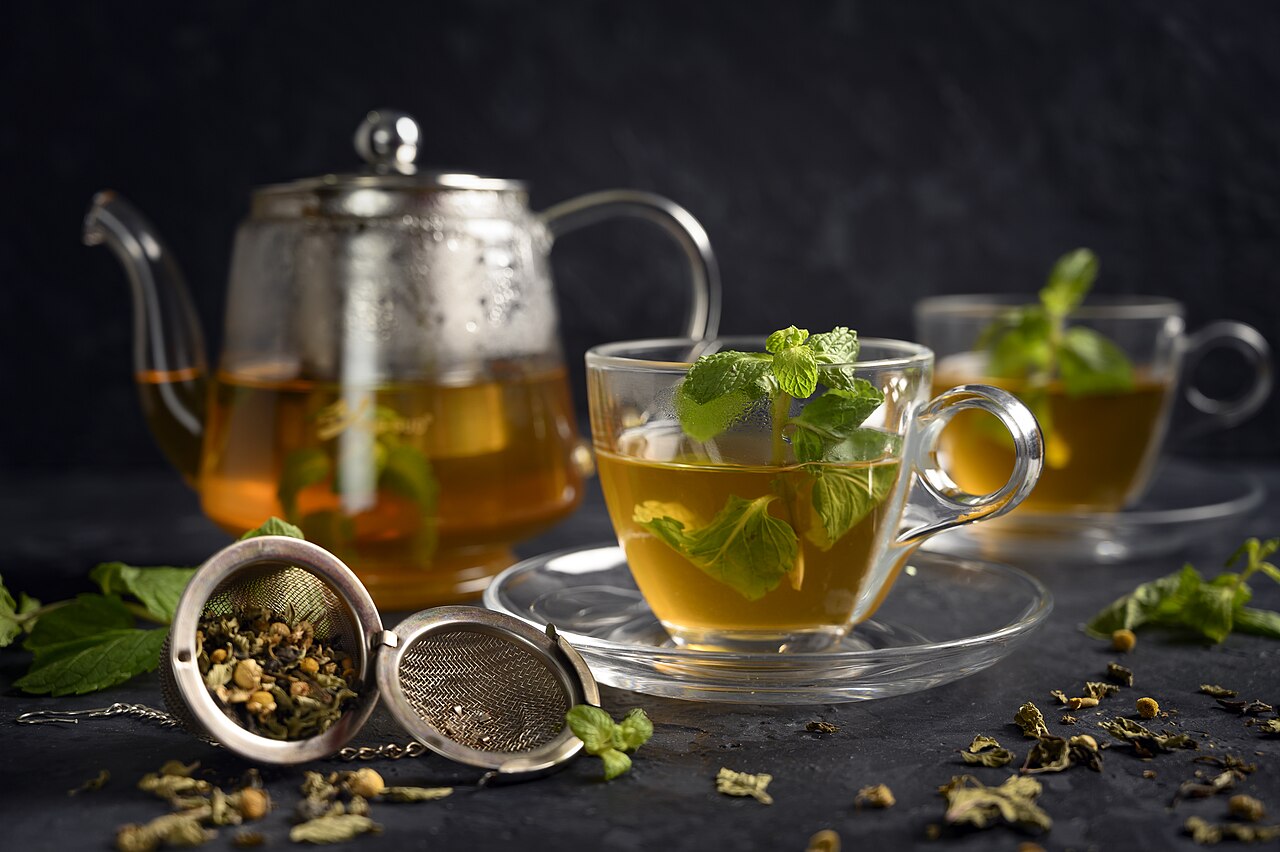
Drinking peppermint tea delivers far less menthol than these skin treatments, and no trial has tested the tea for headaches. Still, a strong cup is a low-risk thing to try, and its warmth and scent can be soothing. Use 1 to 2 teaspoons of dried leaves or a small handful of fresh leaves per cup, and steep for 7 to 10 minutes with a lid on to keep the oils in. Our peppermint tea guide covers its other uses and the heartburn caution.
Is mint tea good for headaches?
Peppermint is the mint to choose, because it contains much more menthol than spearmint. Moroccan mint tea is usually made with spearmint and green tea, so it adds caffeine, which can help or hurt depending on the headache.
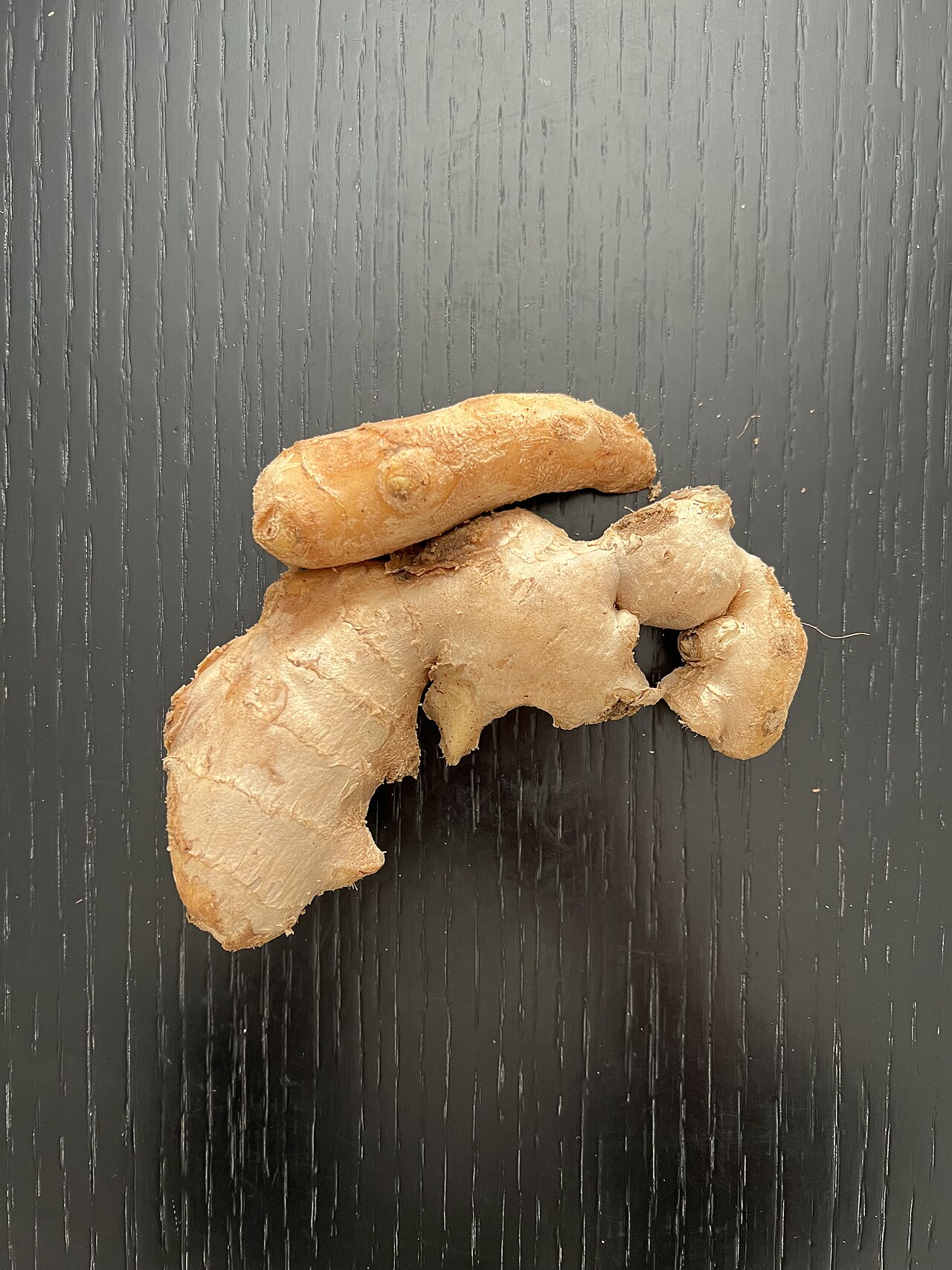
Ginger tea for migraines
Ginger is the herb with the most trial evidence for migraine. In a double-blind trial of 100 people with migraine without aura, ginger powder in capsules relieved attacks about as well as sumatriptan, a standard migraine drug, at two hours. It caused fewer side effects. A 2021 meta-analysis of three trials found ginger made people more likely to be pain-free at two hours and reduced nausea and vomiting.
A larger 2026 review in BMJ Evidence-Based Medicine was more cautious. It pooled eight trials with 594 patients and rated the certainty as low to very low. It concluded that it is still too uncertain whether ginger works, either during an attack or as prevention. So ginger is a reasonable thing to try, especially when migraine comes with nausea, but not a proven replacement for migraine medicine.
The trials used capsules of ginger powder. A weak tea made with one slice of ginger is a much smaller dose. For a stronger cup, simmer a 2 to 3 cm piece of fresh ginger, grated, in 300 ml of water for 10 minutes. Our ginger tea guide has the full recipe and the doses used for nausea. Check with your doctor first if you take blood thinners.
Does chamomile tea help headaches?
Not directly. There are no trials of chamomile tea for headache pain. The one clinical study involving migraine used a chamomile oil gel rubbed on the skin, tested in a crossover trial of 100 people, which is not the same as drinking the tea.
Chamomile is more useful when stress or poor sleep is the trigger. It has modest evidence for calming anxiety and improving sleep quality, as our chamomile tea guide explains, and a regular evening cup may help prevent stress headaches over time. For daytime stress, lemon balm tea has stronger evidence for calming effects.
Caffeine: green tea and black tea for headaches
Caffeine is the most powerful headache ingredient in tea, and it works in both directions. In small amounts it can relieve a headache. Used every day, it can cause one when you go without.
How caffeine helps
Caffeine is added to many over-the-counter headache tablets for a reason. A Cochrane review of 20 studies found that adding at least 100 mg of caffeine to a painkiller such as paracetamol or ibuprofen helped about 5 to 10% more people get good pain relief. That is roughly the caffeine in one strong or two ordinary cups of tea. If you take a painkiller for a headache, a cup of black or green tea with it may give a small boost. See our tea caffeine guide for how much each tea contains.
Caffeine withdrawal headaches
If you drink tea or coffee every day and suddenly stop, a headache is the most common result. A major review of 57 experiments found that half of people who stopped caffeine developed a headache. Symptoms usually began 12 to 24 hours after the last dose, peaked between 20 and 51 hours, and lasted two to nine days. Giving up as little as 100 mg a day was enough to cause symptoms.
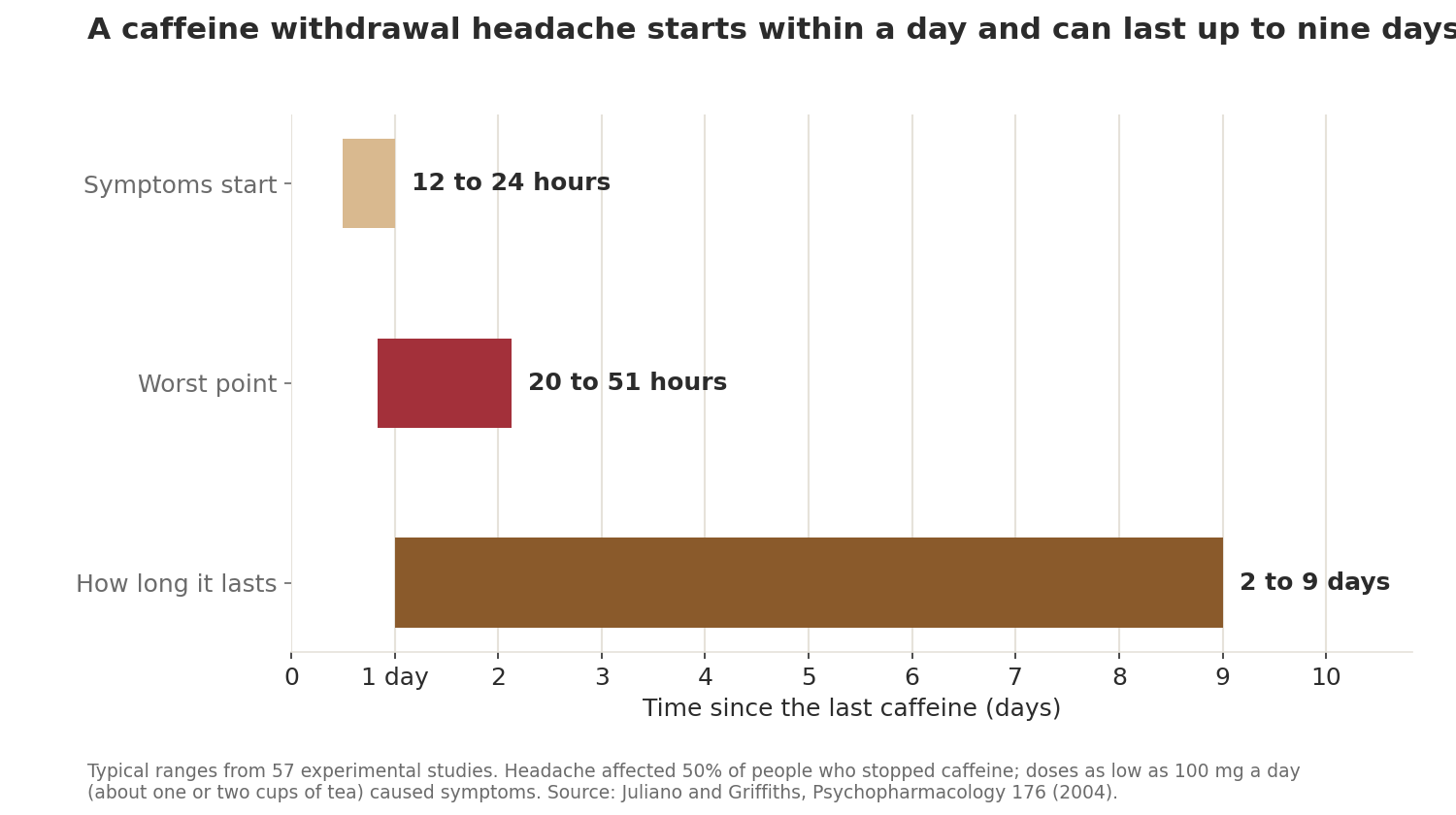
This is the one headache tea fixes reliably. A cup of your usual tea will usually ease a withdrawal headache within an hour. Herbal teas will not, because they contain no caffeine. If you want to cut down, reduce by about a cup every few days rather than stopping at once, or swap some cups for decaf.
When caffeine makes headaches worse
Too much caffeine, or caffeine at irregular times, can trigger headaches and disturb sleep, which brings more headaches. Taking painkillers very often can also cause rebound headaches. Keep your daily caffeine steady and moderate. Our how many cups of tea a day guide gives safe limits. Matcha and strong black tea count as more than an ordinary cup.
Is green tea good for headaches?
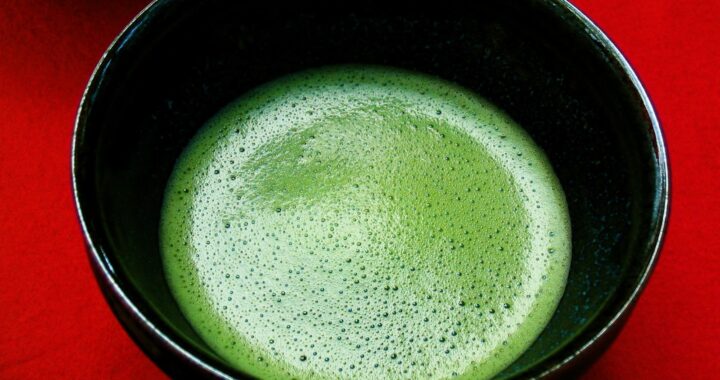
Green tea’s mix of caffeine and L-theanine improves alertness and calm in short-term studies, and its caffeine can help with withdrawal or alongside a painkiller. There are no trials of green tea for headaches specifically. Its lower caffeine than coffee makes it a gentler choice for people prone to caffeine-triggered headaches. Our best tea for focus guide covers theanine.
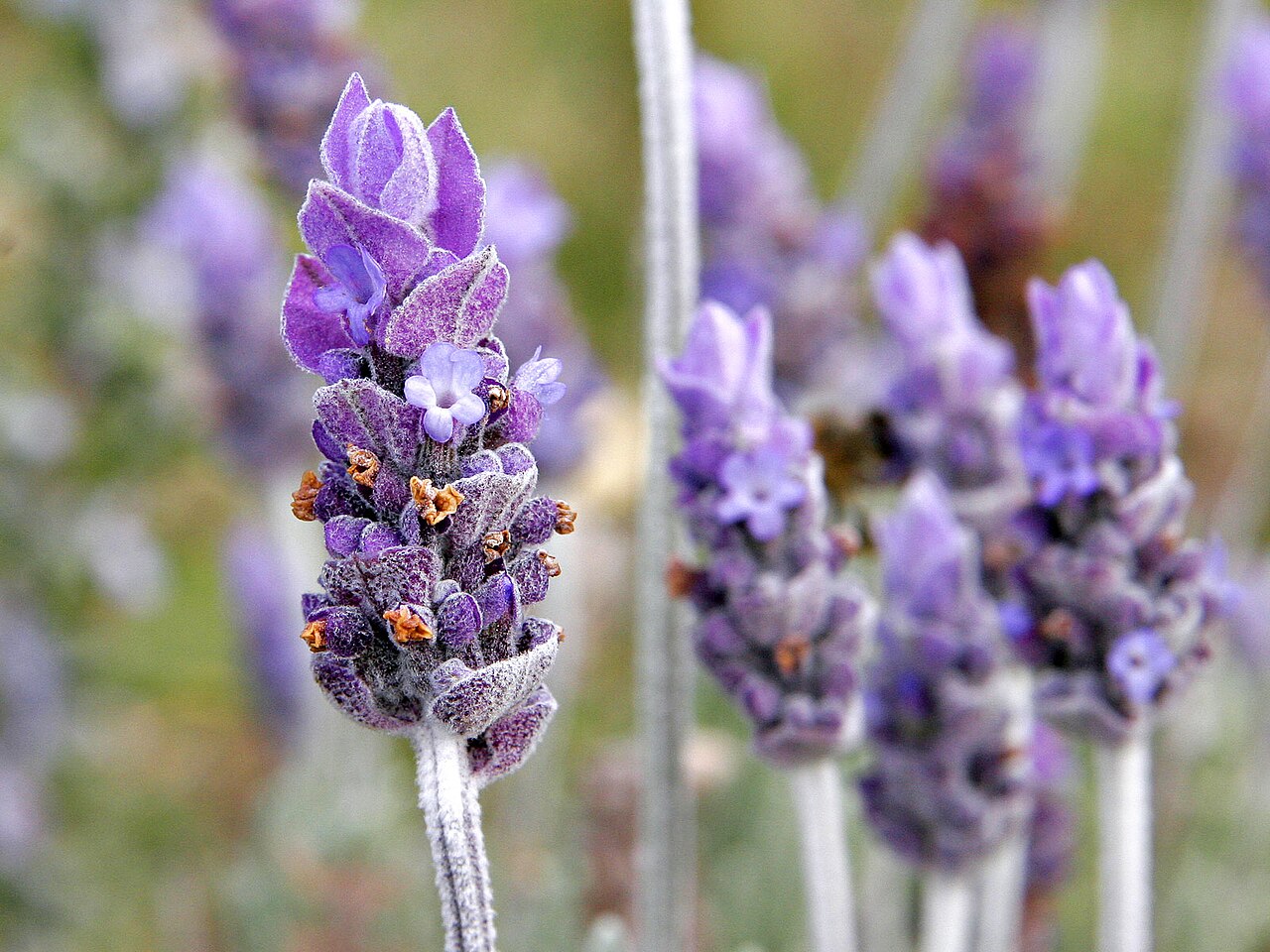
Other herbal teas for headaches
- Lavender. In a placebo-controlled trial of 47 people with migraine, inhaling lavender essential oil for 15 minutes eased the pain. 92 of 129 attacks responded, compared with 32 of 68 on placebo. Lavender tea has not been tested, but its scent and calming effect make it a pleasant addition to a bedtime blend.
- Feverfew. A traditional migraine herb taken daily to prevent attacks. A Cochrane review of six trials found the evidence mixed. The largest trial found about 0.6 fewer migraines a month than placebo with a standardised extract. Feverfew tea gives an unreliable dose, and it is not suitable in pregnancy.
- Lemon balm. Useful when anxiety is the trigger. It reduced stress and anxiety in trials, mostly as extracts. See our lemon balm tea guide.
- Willow bark. Contains salicin, a natural relative of aspirin, but there are no good trials of the tea for headaches. Avoid it if you are allergic to aspirin or take blood thinners.
- Turmeric. No good evidence for headaches, and a cup holds only a small dose of curcumin, as our turmeric tea guide explains.
A simple headache tea recipe
This ginger and peppermint tea combines the two best-studied herbs. It suits tension headaches and migraines with nausea. It is caffeine free, so add a black tea bag if your headache comes from missing your usual cup.
- Grate a 2 to 3 cm piece of fresh ginger into a small pan with 300 ml of water.
- Simmer gently for 10 minutes.
- Take it off the heat, add 1 to 2 teaspoons of dried peppermint or a handful of fresh leaves, and cover the pan.
- Steep for 5 to 7 minutes, then strain into a mug.
- Add honey or lemon if you like, and sip it slowly somewhere quiet.
Drink a glass of water alongside it. The NHS advises plenty of fluids, rest and avoiding alcohol for an ordinary headache. All teas count towards your fluids, as our guide on whether tea dehydrates you explains.
When a headache needs a doctor
Most headaches are harmless and pass within hours. The NHS advises seeing a GP if a headache is not improving with home treatment or keeps coming back. Call 999 or go to A&E if a headache comes with any of these:
- A sudden, extremely painful headache that reaches full strength within moments
- Weakness, numbness, loss of vision, slurred speech, confusion or memory loss
- A fit (seizure), or a recent injury to the head
- A high temperature, stiff neck, sensitivity to light or a rash that does not fade under a glass
If you get headaches on more days than not, or need painkillers several times a week, talk to your doctor. Frequent headaches are treatable, and overusing painkillers can make them worse.
Tea can also be the cause. Missing your usual cups can bring on a caffeine withdrawal headache within a day. Our guide to whether tea can cause headaches explains why and how to cut back without one.
Migraine is a different condition from an everyday tension headache, and the evidence differs too. Our guide to tea for migraines covers caffeine, ginger and feverfew.
Quick answers
What tea is good for headaches?
Peppermint tea for tension headaches, ginger tea for migraines and nausea, and ordinary black or green tea if you have missed your usual caffeine. Chamomile or lemon balm help when stress is the cause.
What tea helps a headache fastest?
For a caffeine withdrawal headache, a cup of your usual tea works within about an hour. For other headaches, tea is a gentle aid rather than a fast cure. A standard painkiller with a cup of tea is quicker.
Can tea cause headaches?
Yes, in two ways. Too much caffeine can trigger them, and stopping suddenly after daily use causes withdrawal headaches. Keeping your intake steady avoids both.
Which tea is best for a headache and nausea?
Ginger. It eased nausea in migraine trials and has good evidence for other kinds of nausea. Sip it warm or cool, in small mouthfuls.
Is herbal tea safe for headaches in pregnancy?
Ginger and peppermint are generally fine in moderation, but avoid feverfew and check with your midwife before using herbal remedies. Our guide to which teas are safe during pregnancy has the details.
What should I drink before bed to avoid a morning headache?
Water and a caffeine-free herbal tea. Caffeine late in the day can disturb sleep, and poor sleep is a common headache trigger. See our best tea for sleep.
Sources
- Göbel et al. Peppermint oil and paracetamol in tension-type headache. Der Nervenarzt, 1996.
- Borhani Haghighi et al. Cutaneous menthol 10% solution for migraine. International Journal of Clinical Practice, 2010.
- Maghbooli et al. Ginger versus sumatriptan in common migraine. Phytotherapy Research, 2014.
- Atkins et al. Ginger for migraine, a systematic review and meta-analysis. BMJ Evidence-Based Medicine, 2026.
- Derry et al. Caffeine as an analgesic adjuvant for acute pain. Cochrane Database of Systematic Reviews, 2014.
- Juliano and Griffiths. A critical review of caffeine withdrawal. Psychopharmacology, 2004.
- Wider et al. Feverfew for preventing migraine. Cochrane Database of Systematic Reviews, 2015.
- NHS. Headaches.
Last updated: 11 October 2026. Sources are linked in the text.
This article is general information, not medical advice. Talk to your doctor or pharmacist before using tea or herbs for a health condition, especially if you are pregnant, breastfeeding or take regular medication.