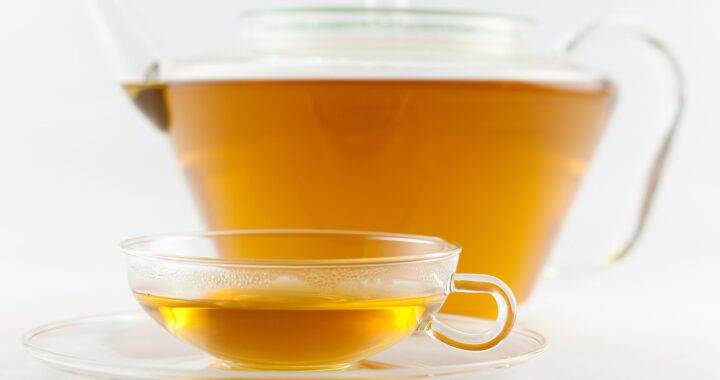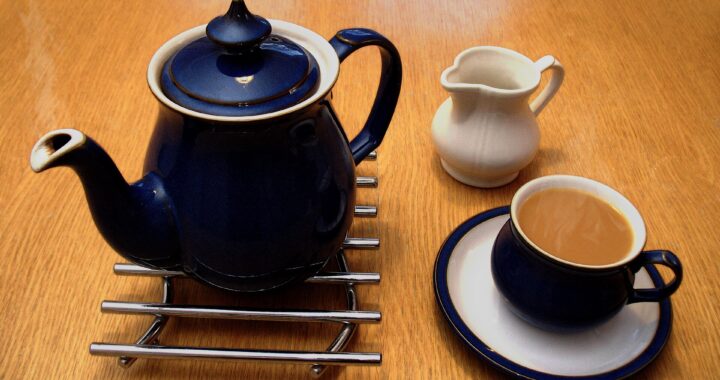
You can keep drinking tea in pregnancy. The NHS advises no more than 200 mg of caffeine a day, about two to three cups of ordinary black or green tea if you have no other caffeine. For herbal teas, it suggests no more than four cups a day and avoiding liquorice root completely. Ginger and peppermint are reasonable everyday choices. Raspberry leaf belongs in late pregnancy, after a chat with your midwife.
This guide summarises public health advice and published research. It is not a substitute for advice from your midwife, doctor or pharmacist, especially if you have a medical condition or take any medicines.
The short answer, tea by tea
| Tea | In pregnancy | Why |
|---|---|---|
| Black, green, white, oolong | Yes, within the caffeine limit | About 75 mg caffeine a cup by NHS estimates |
| Matcha | Yes, in small amounts | You drink the whole leaf, so caffeine per cup can be higher |
| Decaf tea | Yes | Only traces of caffeine |
| Ginger | Yes | Trials show it eases pregnancy nausea |
| Peppermint | Yes, in moderation | Widely used, may worsen heartburn |
| Rooibos | Yes, in moderation | Caffeine free, little research in pregnancy |
| Chamomile | Occasional cups | One study linked regular use to earlier birth |
| Raspberry leaf | Late pregnancy, after talking to your midwife | Little benefit for labour shown, low risk |
| Lemon balm | Best avoided | European regulator says safety not established |
| Hibiscus | Best avoided | Animal studies raise concerns, no human data |
| Liquorice root | Avoid | Linked to harm in children’s development |
| Pennyroyal, slimming or detox teas | Avoid | Toxic herbs or laxatives |
Caffeine in pregnancy
Caffeine crosses the placenta, and a developing baby clears it very slowly. Your own body also clears caffeine more slowly as pregnancy goes on. Health bodies in the UK, US and Europe all settle on the same limit: under 200 mg a day.
The NHS gives these typical amounts: 75 mg in a cup of black or green tea, 100 mg in a cup of instant coffee, 40 mg in a can of cola and 80 mg in a 250 ml energy drink. Real cups vary. When US researchers tested brewed teas, a serving held anywhere from 14 to 61 mg depending on the tea and steeping time. Our tea caffeine guide shows how brewing changes the figure.
What the research shows
In 2010, the American College of Obstetricians and Gynecologists reviewed the evidence and concluded that moderate intake, under 200 mg a day, does not appear to be a major factor in miscarriage or preterm birth. It said the link with the baby’s growth was still unclear.
The largest UK study to look at growth followed 2,635 low-risk pregnant women at two hospitals. The CARE study measured caffeine from all sources and found that the risk of the baby being small for its age rose with intake. There was no clear point below which the risk disappeared.
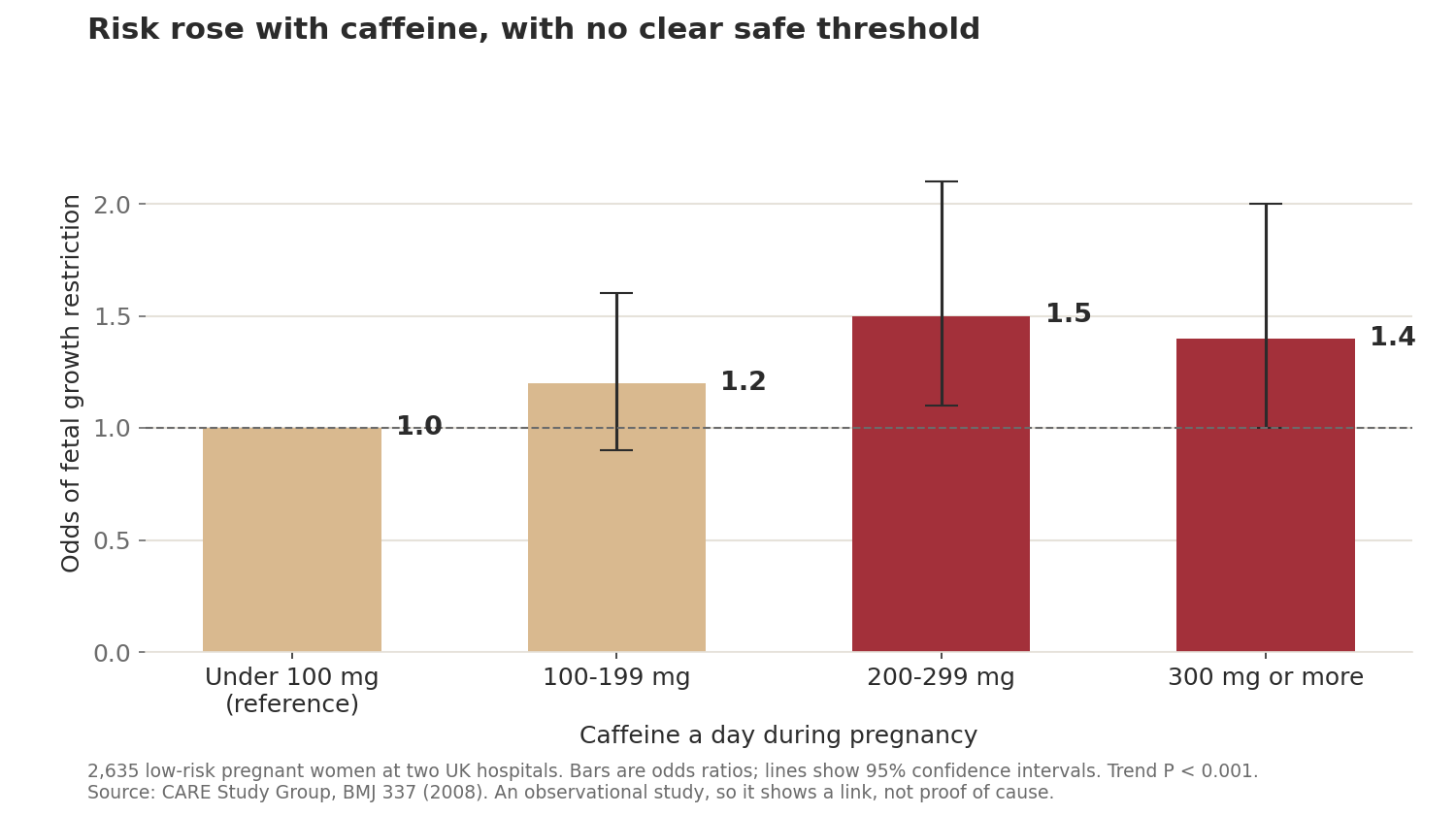
This was an observational study, so it shows a link rather than proof of cause, and the increases were modest. The researchers’ advice was sensible: cut down on caffeine before conception and throughout pregnancy. Keeping well under 200 mg is a reasonable target, not a reason to worry about every cup.
Making your caffeine budget work
- Two cups of ordinary tea is about 150 mg. Add a bar of dark chocolate or a cola and you are near the limit.
- Brew lighter. A shorter steep and a smaller mug both cut caffeine.
- Switch some cups to decaf. It keeps the ritual and the taste. Our guide on whether you can decaffeinate tea at home explains why the kitchen methods do not work well.
- Treat matcha and strong masala chai as at least one full cup of tea each.
- Drink tea between meals rather than with them if you are low in iron. Tea reduces iron absorption from plant foods, as our tea and iron guide explains.
Herbal teas in pregnancy
Herbal teas are not automatically safe because they are natural. Some herbs act on the womb or on hormones, and very few have been tested in pregnant women. The NHS advice is simple: no more than four cups of herbal tea a day, and avoid teas containing liquorice root.
There is a second reason to vary what you drink. Some herbal teas are contaminated with pyrrolizidine alkaloids, natural plant toxins from weeds harvested along with the crop. Germany’s Federal Institute for Risk Assessment advises pregnant and breastfeeding women to vary their herbal teas and teas with other drinks rather than relying on one product.
Ginger tea
Ginger has the best evidence of any herbal remedy in pregnancy. A 2026 umbrella review of 18 systematic reviews found that ginger, usually 450 to 1,950 mg a day as capsules, reduced the severity of morning sickness compared with placebo. It worked better for nausea than for vomiting, and did not raise the risk of miscarriage or side effects. A mug of fresh ginger tea is a gentle way to try it. Our ginger tea guide has a recipe and the doses used in trials. If you take blood thinners or have a bleeding disorder, check with your doctor first.
Peppermint tea
Peppermint is one of the most commonly drunk teas in pregnancy, and there is no evidence of harm at normal drinking amounts. It has not been well studied in pregnant women, though. It relaxes the muscle at the top of the stomach, which can make heartburn worse, a common complaint in later pregnancy. See our peppermint tea guide for more.
Rooibos tea
Rooibos is naturally caffeine free and low in tannins, so it does not interfere with iron absorption as much as black tea. Studies in pregnancy are lacking, but it is widely drunk and has no known risks at a few cups a day. Our rooibos guide covers how to brew it.
Chamomile tea
Chamomile is often recommended for sleep and anxiety, and an occasional cup is unlikely to cause problems. Regular use deserves a little caution. In a study of 600 new mothers in southern Italy, those who drank chamomile regularly throughout pregnancy were more likely to give birth early and to have smaller babies. The study relied on mothers’ memories after birth and could not prove cause, but it is a reason not to drink large amounts daily. Our chamomile tea guide covers its other uses.
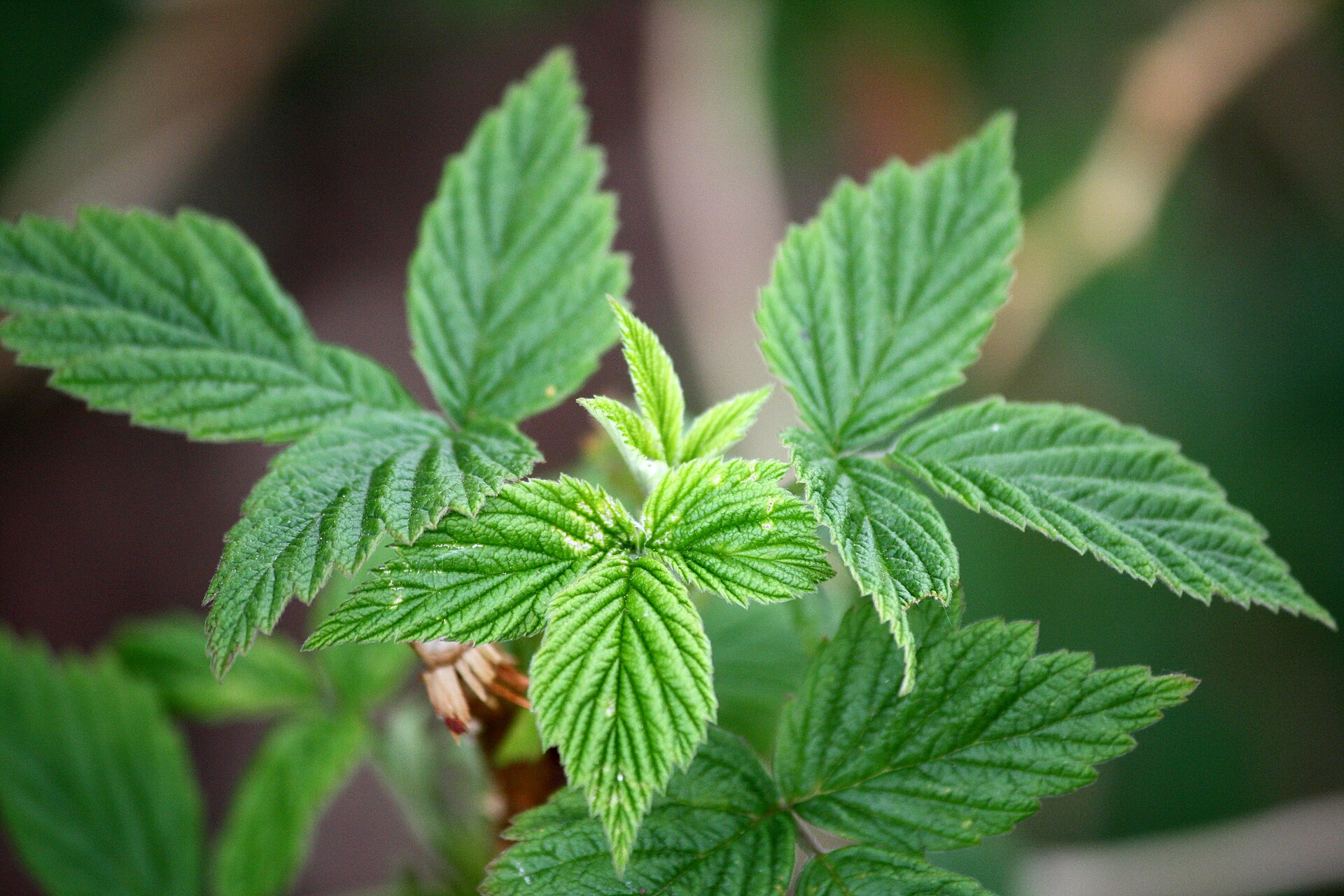
Raspberry leaf tea
Many women drink raspberry leaf tea in late pregnancy, hoping it will shorten labour. The best trial gives that hope only weak support. In a double-blind trial in Australia, 192 first-time mothers took raspberry leaf tablets, 2.4 g a day, or a placebo from 32 weeks. The first stage of labour, the longest part, was no shorter. The second stage was about 10 minutes shorter and forceps were used less often, 19.3% of births against 30.4%. There were no harms to mothers or babies, and other birth outcomes did not differ. A 2021 review found the overall evidence weak in both directions.
In November 2024, the UK Committee on Toxicity assessed raspberry leaf tea in pregnancy. It judged the risk to be low, but with high uncertainty. It noted that some women drink far more than the dose tested in the trial. Raspberry leaf is usually started in the third trimester. Speak to your midwife before you start, especially if you have had a caesarean, have a planned caesarean, have had a premature birth or have any complications.
Lemon balm tea
Lemon balm is popular for calm and sleep, but the European Medicines Agency says its safety in pregnancy has not been established and does not recommend medicinal use. Our lemon balm tea guide covers its evidence. For calm, caffeine-free evenings, see our best tea for sleep and pick one of the better-studied options above.
Hibiscus tea
Hibiscus is caffeine free and lowers blood pressure a little in adults, as our hibiscus guide explains. There are no human studies in pregnancy, and some animal studies found effects on mothers and offspring at high doses. Fruit tea blends often contain hibiscus as a colouring ingredient. The odd cup is unlikely to matter, but avoid drinking it daily.
Liquorice root tea
This is the clearest one to avoid. Liquorice root contains glycyrrhizin, which can block the placental enzyme that protects the baby from the mother’s stress hormones. In a Finnish study of 378 children, those whose mothers ate or drank large amounts of glycyrrhizin in pregnancy, 500 mg or more a week, scored about 7 points lower on IQ tests at age 12. They were also more likely to show ADHD symptoms. The NHS advises avoiding liquorice root tea. Check the labels of blended teas, including some sold as pregnancy or wellness blends.
Teas to avoid completely
- Pennyroyal. Historically used to try to end pregnancies. Its oil is toxic to the liver, and cases of organ failure and death are on record, as Memorial Sloan Kettering details.
- Slimming, detox and cleansing teas. Many contain senna or other laxatives, which can cause cramps and dehydration.
- Teas sold to bring on periods or labour. Herbs marketed this way act on the womb and are not safe to use without medical supervision.
- Concentrated supplements. Turmeric in food is fine, but NCCIH warns supplements may be unsafe in pregnancy. The same goes for most herbal capsules and extracts. Our turmeric tea guide has the details.
Tea while breastfeeding
Caffeine passes into breast milk in small amounts, and young babies clear it slowly. The 200 mg daily limit is a sensible guide while breastfeeding too. If your baby seems unsettled or sleeps poorly, try cutting back. The same caution about herbal teas applies: stick to familiar ones, vary them, and ask your health visitor or pharmacist before trying anything sold as a remedy.
Quick answers
How many cups of tea can I have a day while pregnant?
Two to three cups of ordinary black or green tea fits the 200 mg caffeine limit, as long as you have little or no coffee, cola or chocolate. For herbal teas, the NHS suggests no more than four cups a day.
Is green tea safe in pregnancy?
Yes, within the caffeine limit. The NHS counts a cup of green tea as about 75 mg, the same as black tea. Avoid green tea extract supplements, which are much more concentrated.
When can I start raspberry leaf tea?
It is usually started in the third trimester, often from 32 weeks, the timing used in the main trial. Talk to your midwife first. In that trial it did not shorten the first stage of labour.
Which tea helps with morning sickness?
Ginger has the strongest evidence. Sip it slowly and try it cool if hot drinks make nausea worse. If you cannot keep fluids down, contact your midwife or doctor. Severe sickness needs treatment.
Do herbal teas count towards my fluids?
Yes. All teas, including caffeinated ones, add to your daily fluid intake. Our guide on whether tea dehydrates you explains why. For more caffeine-free ideas, see our best caffeine-free tea guide.
Sources
- NHS. Foods to avoid in pregnancy (caffeine and herbal teas).
- ACOG Committee Opinion No. 462. Moderate caffeine consumption during pregnancy. Obstetrics and Gynecology, 2010.
- CARE Study Group. Maternal caffeine intake during pregnancy and risk of fetal growth restriction. BMJ, 2008.
- Tahergorabi et al. Ginger for nausea and vomiting in pregnancy, an umbrella review. Phytotherapy Research, 2026.
- Simpson et al. Raspberry leaf in pregnancy: its safety and efficacy in labor. Journal of Midwifery and Women’s Health, 2001.
- UK Committee on Toxicity. Statement on raspberry leaf tea in the maternal diet, 2024.
- Räikkönen et al. Maternal licorice consumption during pregnancy and outcomes in children. American Journal of Epidemiology, 2017.
- Trabace et al. Natural relief of pregnancy-related symptoms and neonatal outcomes. Journal of Ethnopharmacology, 2015.
- German Federal Institute for Risk Assessment. Pyrrolizidine alkaloids in herbal teas and teas, 2013.
Last updated: 8 October 2026. Sources are linked in the text.
This article is general information, not medical advice. Talk to your doctor or pharmacist before using tea or herbs for a health condition, especially if you are pregnant, breastfeeding or take regular medication.