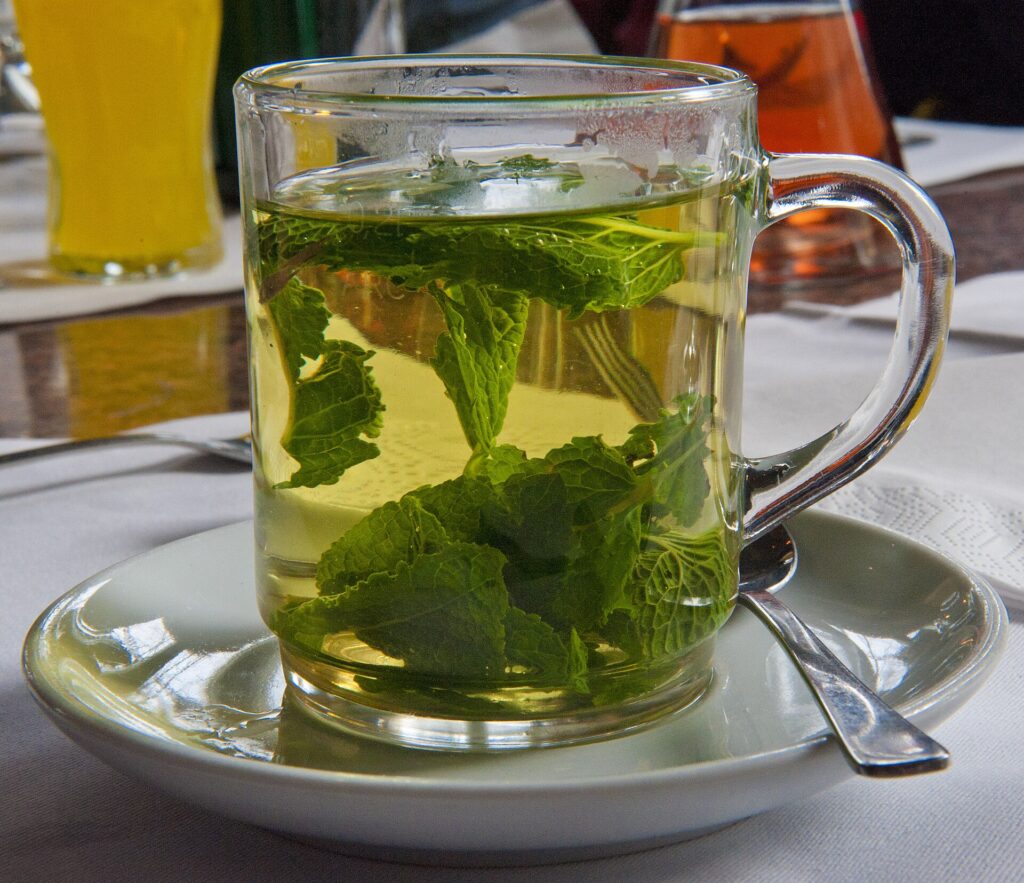
Peppermint tea is caffeine-free, pleasant after a meal and very low-risk for most people. The strongest evidence for peppermint is for bloating and cramping in irritable bowel syndrome, but that evidence comes from capsules of peppermint oil, not the tea. Trials of the tea itself are rare and small. The main downside is heartburn: peppermint can make acid reflux worse.
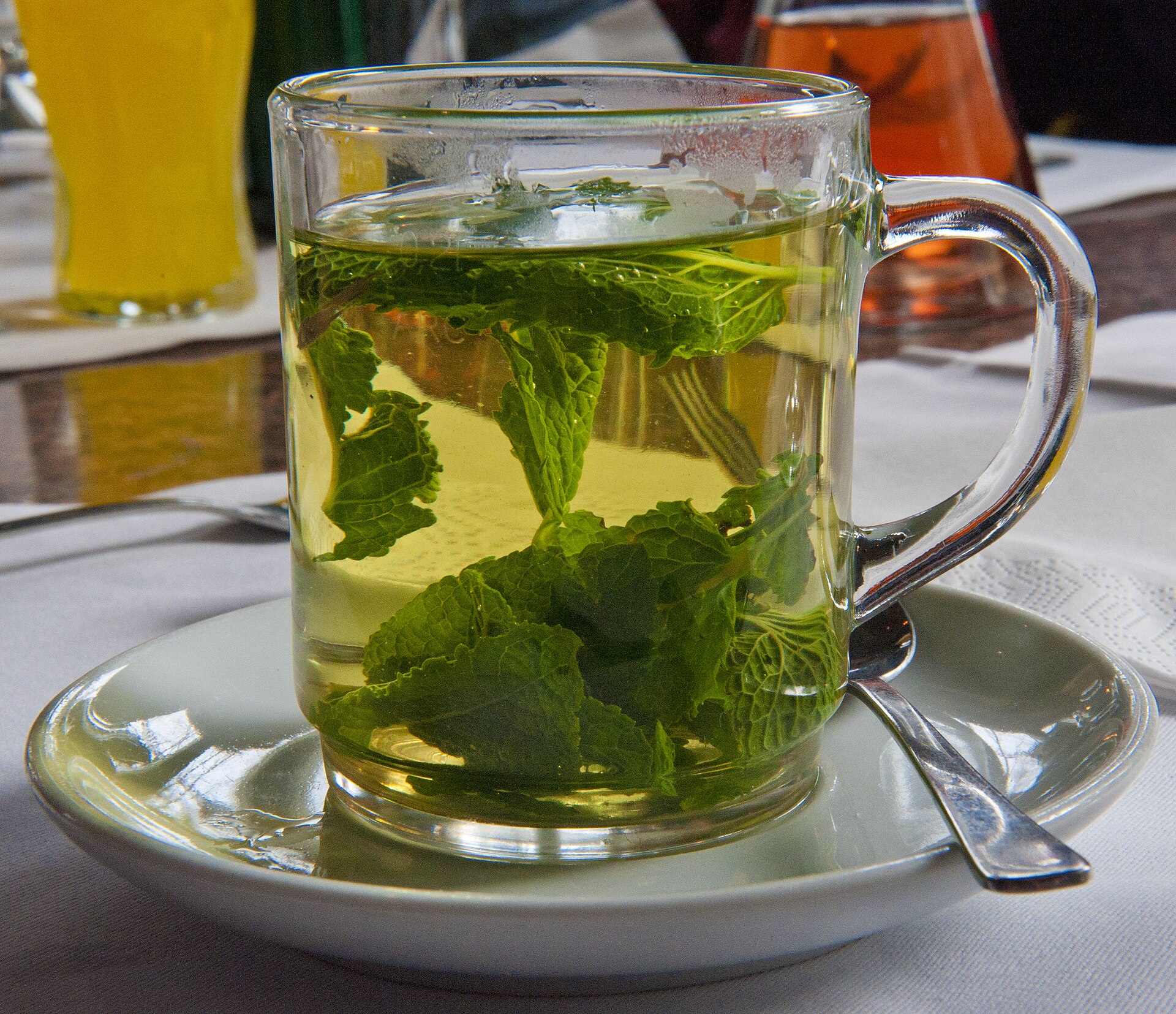
Peppermint (Mentha × piperita) is a natural hybrid of watermint and spearmint. Its leaves contain an aromatic oil, mostly menthol and menthone, plus plant compounds including rosmarinic acid and the flavonoids eriocitrin, luteolin and hesperidin, according to a review by researchers at Tufts University. That review made a point that still shapes what can honestly be said: most human research has tested peppermint oil, and clinical trials of peppermint tea were absent at the time.
This guide separates what is known about the oil from what can reasonably be expected from a cup of tea.
Evidence at a glance
| Claim | What was tested | Strength of evidence |
|---|---|---|
| Eases IBS symptoms | Enteric-coated peppermint oil capsules | Moderate: 10 trials, benefit over placebo, low-quality evidence |
| Eases tension headache | 10% peppermint oil rubbed on the forehead and temples | Good for the oil on the skin; nothing for the tea |
| Aids digestion after meals | Traditional use; animal studies of gut muscle | Weak in humans |
| Sharper thinking | One trial of 200 ml of peppermint tea, 25 people | Very early |
| Helps sleep | No trials of peppermint tea for sleep | None, beyond being caffeine-free |
Digestion and IBS
Peppermint oil relaxes the smooth muscle of the gut, which is why it is used for cramping and spasm. The most recent meta-analysis, published in 2022, pooled 10 randomised trials with 1,030 patients. Peppermint oil beat placebo for overall IBS symptoms and for abdominal pain. About one in four people treated had a better outcome than they would have had on placebo for overall symptoms, and about one in seven for pain. Side effects were also more common with the oil, and the authors rated the quality of evidence as very low.
The NHS IBS page suggests asking a pharmacist about peppermint oil as one of the medicines that can help, alongside antispasmodics such as Buscopan. It also recommends herbal teas as a way to reach 8 to 10 drinks a day without extra caffeine.
The capsules in those trials are enteric-coated so they release oil in the intestine rather than the stomach, and they contain concentrated oil. A cup of tea delivers far less, and it starts working in the mouth and stomach. So peppermint tea may be soothing after a heavy meal, but you should not expect it to match the trial results. If you have IBS, the tea is a reasonable caffeine-free drink, and a pharmacist can advise on the capsules.
Heartburn: the main downside
The muscle-relaxing effect that helps with gut cramps can also relax the valve at the bottom of the oesophagus that keeps stomach acid down. The Tufts review noted that caution has been urged for peppermint oil in people with reflux or a hiatus hernia. In the 2022 meta-analysis, which tracked reflux specifically, side effects overall were more common on peppermint oil than on placebo.
If you get heartburn, see whether peppermint tea after meals makes it worse. If it does, switch to something else. Ginger or chamomile are common alternatives, and our caffeine-free tea guide lists more.
Headaches
Peppermint does have good evidence for tension headaches, but on the skin, not in a cup. A solution of 10% peppermint oil in ethanol, rubbed on the forehead and temples, is licensed as a treatment for tension-type headache in adults and children over six. According to a 2016 review by headache specialist Hartmut Göbel, its effect in controlled trials was comparable to aspirin or paracetamol. Drinking the tea has not been tested in the same way. Our tea for headaches guide covers the drinks with better evidence.
Focus and alertness
In a 2025 randomised trial, 25 adults drank either 200 ml of peppermint tea or a placebo drink. The peppermint group improved more on computerised memory and attention tests, and blood flow in the front of the brain rose. The trial was very small and only single-blinded, so treat it as a lead, not a result. For better-tested options, see our tea for focus guide.
Sleep, colds and hydration
- Sleep: no trial shows peppermint tea improves sleep. Its real advantage is what it lacks: no caffeine. Our tea for sleep guide ranks the herbs that have been tested.
- Colds and sore throats: menthol gives a cooling feeling in the nose and throat, and warm drinks are soothing. Our sore throat guide covers the blends that have been trialled.
- Hydration: peppermint tea counts fully towards daily fluid. Even caffeinated tea does, as our tea and hydration article explains.
How to make peppermint tea
- Fresh leaves: about 8 to 10 leaves, lightly bruised, per mug.
- Dried leaves: about 1 to 2 teaspoons per mug, or one teabag.
- Water: just off the boil.
- Time: 5 to 10 minutes. Cover the mug with a saucer while it steeps so the aromatic oil stays in the cup rather than escaping with the steam.
- Serve: plain, with honey or lemon, or chilled over ice.
Peppermint and spearmint are not the same. Spearmint is milder and sweeter, with much less menthol. Moroccan mint tea is usually spearmint brewed with green tea, so it contains caffeine.
Who should be careful
- People with acid reflux, heartburn or a hiatus hernia.
- People taking peppermint oil capsules: check with a pharmacist before adding strong tea on top, and do not take the capsules with antacids, which can dissolve the coating early.
- Babies and young children: do not put peppermint oil or menthol near a child’s face. A mild, cooled cup of tea is a different matter, but ask your health visitor first for babies.
Quick answers
Is it OK to drink peppermint tea every day?
For most adults, yes. The Tufts review found no reported adverse reactions to peppermint tea. Stop if it gives you heartburn.
Does peppermint tea have caffeine?
No. Pure peppermint tea is caffeine-free. Blends with green or black tea are not.
Is peppermint tea good for bloating?
Peppermint oil capsules have good evidence for IBS bloating and pain. The tea is gentler and untested, but many people find it helps after a large meal.
This article is for general information and is not medical advice. See a GP about persistent gut symptoms.
Last updated: 7 October 2026. Sources are linked in the text.
This article is general information, not medical advice. Talk to your doctor or pharmacist before using tea or herbs for a health condition, especially if you are pregnant, breastfeeding or take regular medication.