Afternoon tea is a light meal of sandwiches, scones and cakes eaten around 3 to 5pm, and it started as an upper-class habit in the 1840s. High tea is a hot, filling evening meal from working households, eaten at the table after work. A cream tea is the short version: scones, clotted cream, jam and a pot of tea, and nothing else. Hotels that sell “high tea” with finger sandwiches are really selling afternoon tea.
The three names get swapped around all the time, especially on menus written for tourists. The differences are real, though, and they come from class, time of day and region. Once you know them you will also know what to expect when you book, what order to eat things in, and why a Devon café and a Cornish one would build the same scone the opposite way up.
The difference at a glance
| Afternoon tea | High tea | Cream tea | |
|---|---|---|---|
| When | About 3 to 5pm | About 5 to 7pm, after work | Any time in the afternoon |
| Origin | Aristocratic drawing rooms, 1840s | Working households in industrial Britain | The West Country (Devon and Cornwall) |
| Where it was eaten | Low table or armchairs | The main dining table | Tea rooms, farms, cafés |
| Food | Finger sandwiches, scones, cakes and pastries | Hot and cold savoury dishes: pies, meat, eggs, bread, cake | Scones, clotted cream and jam only |
| Is it a full meal? | No, it bridges lunch and dinner | Yes, it is the evening meal | No, it is a snack |
| Typical tea | Darjeeling, Assam, Earl Grey or a house blend | Strong black tea, usually with milk | A breakfast-style black tea with milk |
What is afternoon tea?
Afternoon tea is a small meal that fills the gap between lunch and a late dinner. The usual story credits Anna, the seventh Duchess of Bedford. Historic UK dates it to 1840 and explains the problem she was solving: dinner in her household was served “fashionably late at eight o’clock”, and she became hungry around four. She started asking for tea, bread and butter and cake in the late afternoon, then invited friends to join her, and the habit spread through society.
Treat the duchess story as tradition rather than a documented invention. People drank tea in the afternoon before 1840. What changed in the Victorian period was that it became a named social occasion, with its own china, its own dress and a fixed running order of food.
What is served, and in what order
A modern afternoon tea usually arrives on a three-tier stand. The convention is to eat from the bottom up, savoury to sweet:
- Sandwiches. Crustless and cut into fingers. Cucumber, egg mayonnaise and cress, smoked salmon and ham with mustard are the standard four.
- Scones. Plain and fruit, served warm with clotted cream and jam. Break them apart by hand rather than cutting them with a knife.
- Cakes and pastries. A slice of Victoria sponge or fruit cake in a traditional tea, small patisserie in a hotel one.
Most venues will refill the sandwiches and scones if you ask, and many include this in the price. It is worth checking when you book, along with whether a glass of Champagne is included and whether they can adapt the menu for gluten-free, vegetarian or dairy-free diets. Popular London hotels often need booking weeks ahead for weekends.
Which tea to order
A light, fragrant tea suits the sandwiches and a stronger one stands up to cream and cake. Darjeeling is the classic choice for the first; Assam or an English breakfast blend for the second. Earl Grey sits between the two, and its citrusy bergamot cuts through rich food. Three or four cups of black tea over a long sitting add up to a fair amount of caffeine, so if you are going late in the day, most venues also offer rooibos, peppermint or another caffeine-free herbal.
What is high tea?
High tea is the one most often misused. It was never a posh occasion. In the industrial towns of northern England and Scotland, workers came home from mills, mines and factories at about 5 or 6pm and needed a proper meal. A large pot of strong tea came with it, so the whole meal was called tea. It is also where the northern English habit of calling the evening meal “tea” comes from, which anyone who grew up in Yorkshire will recognise.
The “high” refers to the table. High tea was eaten sitting up at the main dining table, while afternoon tea was taken in low armchairs around a low table, which is why afternoon tea is sometimes called “low tea”. The food was substantial: meat pies, cold ham, cheese, potatoes, eggs, fish, bread and butter, and cake to finish.
Outside the UK, and in many hotels aimed at visitors, “high tea” now means the same thing as afternoon tea. It sounds grander, and the confusion is so widespread that some British venues use both names. If a menu lists finger sandwiches and a three-tier stand, it is an afternoon tea whatever it is called. A true high tea is a sit-down evening meal of hot food.
What is a cream tea?
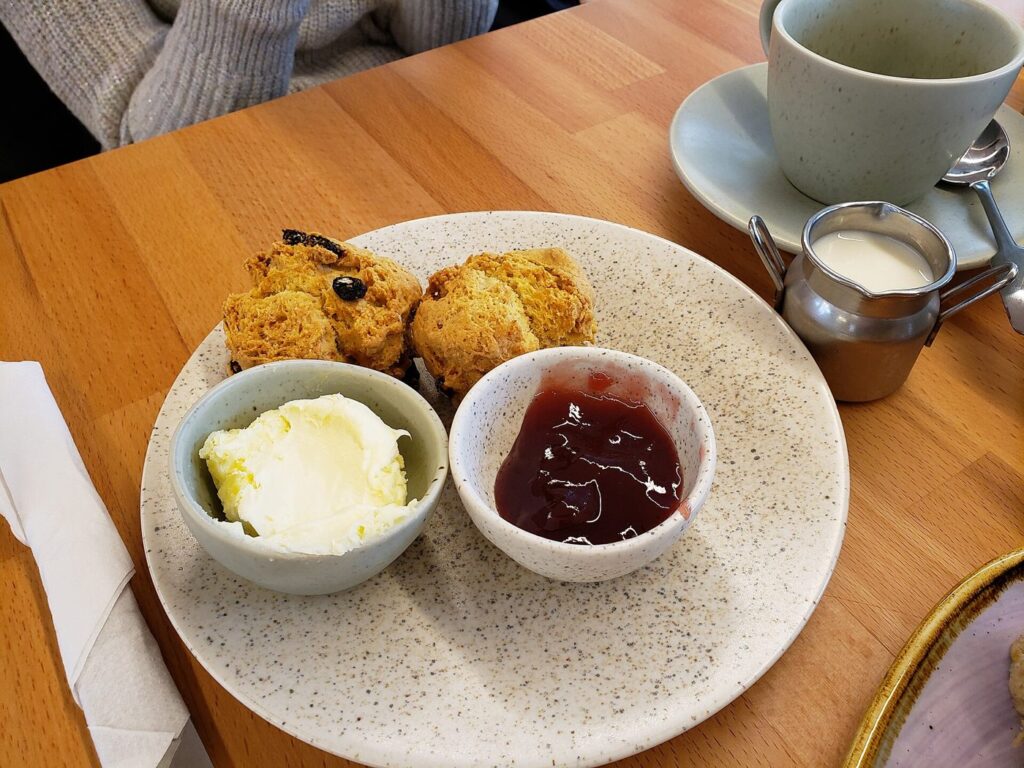
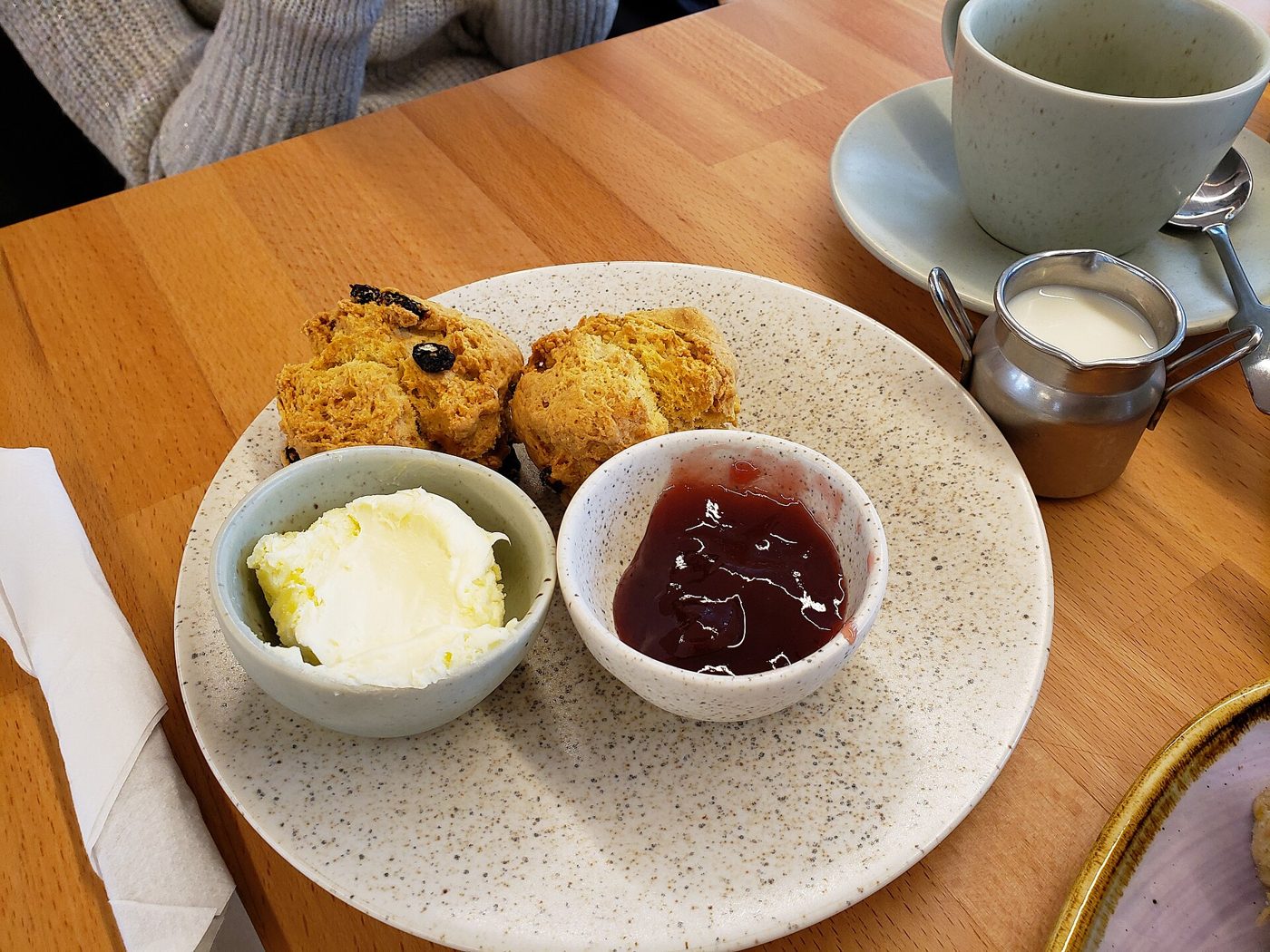
A cream tea is scones with clotted cream and jam, served with a pot of tea. There are no sandwiches and usually no cakes. It is associated with Devon and Cornwall, the two counties whose dairy farms made clotted cream, a thick cream produced by gently heating full-fat milk or cream and letting a crust form as it cools.
Devon’s claim to have invented it rests on a local story from Tavistock Abbey. In a 2004 BBC report, local historians said monks rewarded workers who helped rebuild the abbey after a Viking raid in 997 with bread, clotted cream and preserves. Tea did not reach England until the 17th century, so whatever the monks served, it was not yet a cream tea.
Cornwall has the legal protection. “Cornish clotted cream” is a protected designation of origin, registered in 1998. To use the name, the milk must come from Cornwall and the cream must contain at least 55% fat. Double cream is about 48% fat, which is why clotted cream spreads like soft butter rather than pouring.
Jam first or cream first?
This is the one argument everyone knows about. The regional rule is simple:
- Devon: cream first, then jam. The cream takes the place of butter, and the jam sits on top.
- Cornwall: jam first, then cream. The jam goes on the warm scone and the cream is spooned on top, where it stays cold and holds its shape.
Royal endorsement is claimed by both sides. Former royal chef Darren McGrady told HELLO! magazine in 2018 that Queen Elizabeth II always had jam first, Cornish style. Prince William later suggested his grandmother put cream first. Neither account settles it. The practical point is that the Cornish method is easier: jam spreads on a warm scone, and the cream on top does not melt.
How to make a cream tea at home
- Bake or buy plain scones and warm them for 5 minutes in a low oven. They should be warm, not hot, or the cream will melt.
- Brew a strong black tea: 1 teaspoon or 1 bag per cup with freshly boiled water, steeped for 3 to 5 minutes. Our brewing temperature and time guide covers other teas.
- Set out real clotted cream and a good strawberry jam. Whipped cream is not a substitute; it is too light and too sweet.
- Break each scone in half by hand, then top it the Devon way or the Cornish way.
Quick answers
Is high tea the same as afternoon tea?
No, historically. High tea is a hearty evening meal eaten at the dining table; afternoon tea is a light meal of sandwiches, scones and cakes. Many hotels now use “high tea” to mean afternoon tea, so check the menu.
Why is it called high tea?
Because it was eaten at a high dining table, rather than at the low table and armchairs used for afternoon tea.
What time is afternoon tea?
Traditionally between about 3 and 5pm. Most hotels and tea rooms now serve it from noon to about 5pm.
What is the difference between a cream tea and afternoon tea?
A cream tea is only scones, clotted cream, jam and tea. Afternoon tea adds sandwiches and cakes and is closer to a light meal.