Oolong is a partly oxidised tea from the same plant as green and black tea, made mainly in China’s Fujian province and in Taiwan. A cup usually has a moderate amount of caffeine, somewhere in the 14 to 61 mg range measured for other true teas. Its best-tested benefit is a small rise in calorie burn. In a US trial that rise matched what its caffeine alone did, so oolong is no shortcut to weight loss.
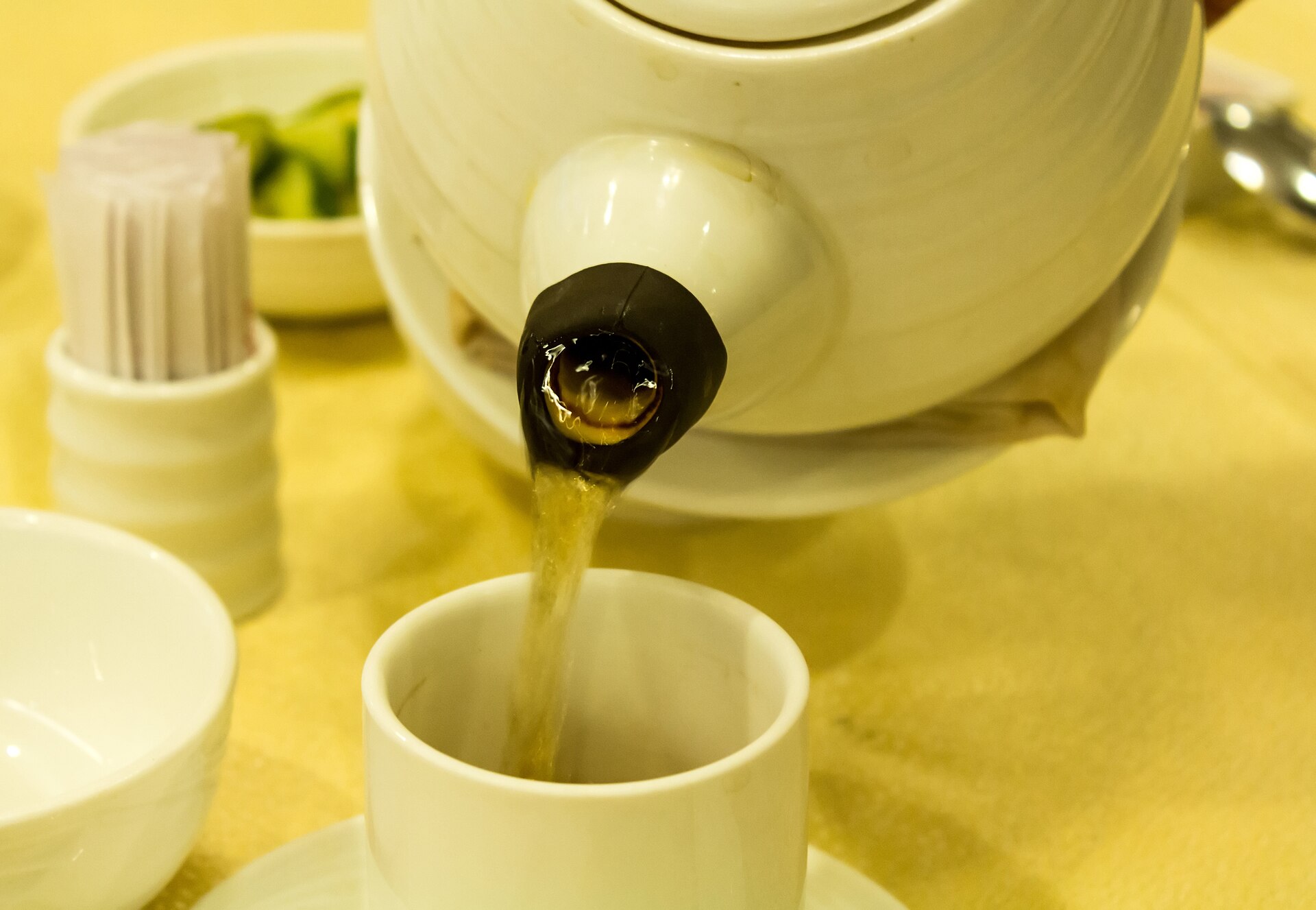
What is oolong tea?
All true tea comes from Camellia sinensis. The difference is what happens after picking. Green tea is heated quickly to stop oxidation. Black tea is left to oxidise fully. Oolong sits in between. Our green vs black tea guide explains the chemistry.
To make oolong, the leaves are wilted, then tossed or shaken so their edges bruise and start to oxidise. The maker stops the process with heat at the point they want, then rolls the leaves into twisted strips or tight balls. Many oolongs are roasted afterwards. That is why oolong covers such a wide range, from flowery, almost green teas to dark, toasty ones.
| Style | Where from | Taste |
|---|---|---|
| Tieguanyin (light) | Anxi, Fujian | Floral, buttery, pale green-gold |
| High mountain (gaoshan) | Central Taiwan | Creamy, fresh, sweet |
| Dong Ding | Nantou, Taiwan | Medium roast, nutty, honeyed |
| Wuyi rock tea (Da Hong Pao) | Wuyi Mountains, Fujian | Dark, roasted, mineral |
| Oriental Beauty | Hsinchu, Taiwan | Heavily oxidised, fruity, honey-like |

How much caffeine is in oolong tea?
There is no fixed figure, because caffeine depends on the leaf, the amount used and the steeping time more than on the tea type. When US researchers tested 20 commercial teas, servings of white, green and black tea ranged from 14 to 61 mg of caffeine with no clear pattern by type. Oolong falls in the same territory. An 8 oz cup of brewed coffee usually has 80 to 100 mg.
Brewing gongfu style, with lots of leaf and many short infusions, gives a stronger total dose over a session than one Western-style mug. Our tea caffeine comparison has the figures for every major tea.
Oolong tea benefits
Metabolism and weight
Oolong has a reputation in China and Japan as a slimming tea. The best test of it was carried out at the US Department of Agriculture. In a 2001 crossover trial, 12 men spent days in a sealed room that measures every calorie burned. They drank water, full-strength oolong, half-strength oolong, or water with the same caffeine as the full-strength tea.
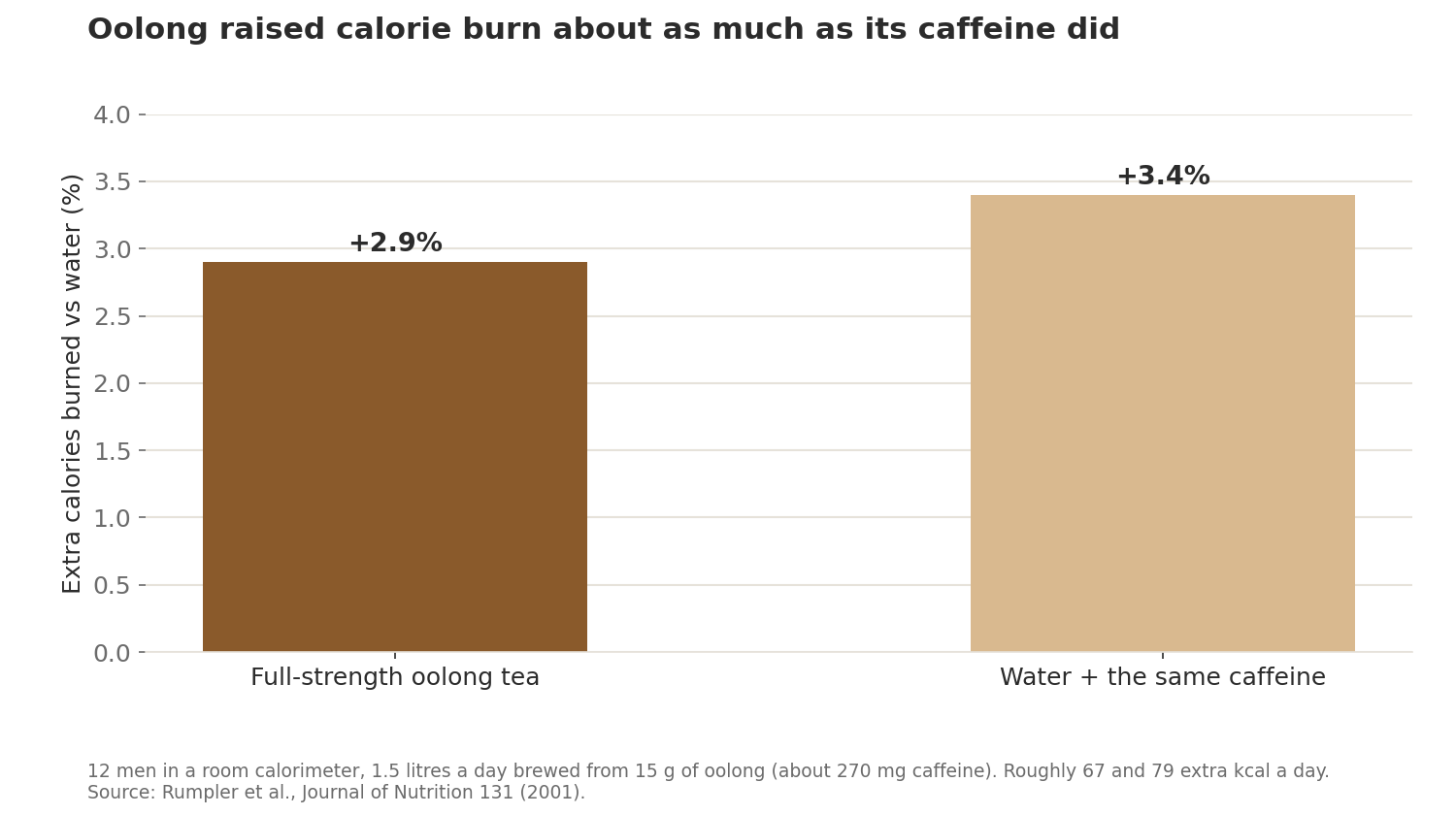
Full-strength oolong raised energy use by 2.9%, about 67 extra calories a day. Plain caffeinated water raised it by 3.4%. So the effect came mostly from the caffeine. One finding was specific to the tea: fat burning was 12% higher on oolong than on water. Even so, that daily dose was brewed from 15 g of leaf and drunk as five 300 ml servings, which is a lot of tea.
Long-term health
Large studies of tea and health mostly track green or black tea, and oolong drinkers are a small group in them. In Japan’s JACC cohort of 110,585 adults, green tea was linked to lower deaths from kidney disease in women, but oolong showed no link either way. Oolong contains the same families of polyphenols as other teas, so any benefits are likely to be similar. They just have not been shown for oolong on its own.
Focus
Like all true teas, oolong pairs caffeine with L-theanine, an amino acid linked to calm alertness. It is a good middle ground in our best tea for focus guide, stronger than most green teas but gentler than coffee. For a stronger hit, see matcha vs coffee.
How to brew oolong tea
| Method | Leaf | Water | Time |
|---|---|---|---|
| Western mug or pot | 3 g (1 to 2 tsp) per 250 ml | 85 to 95°C | 3 to 5 minutes |
| Gongfu (small pot or gaiwan) | 5 to 7 g per 100 to 150 ml | 90 to 100°C | 20 to 60 seconds, repeated 5 to 8 times |
- Rolled oolongs open slowly, so the second and third infusions are often the best.
- Good oolong rarely turns bitter. If it does, cut the time before you cut the temperature.
- For more detail by tea type, see our brewing temperature and steep time guide.
- Oolong also makes excellent cold brew.
- Keep it airtight and away from light. Light oolongs fade faster than roasted ones, as our storage guide explains.
Quick answers
Is oolong tea stronger than green tea?
In flavour, often yes, especially roasted oolongs. In caffeine they overlap, and how you brew matters more than which tea you choose.
Can you drink oolong tea every day?
Yes. A few cups a day is well within normal caffeine limits for healthy adults. Pregnant women should keep total caffeine under 200 mg a day.
Does oolong tea help you lose weight?
Only slightly. It burned about 67 extra calories a day in a trial, mostly because of caffeine. That is helpful at the margins, not a weight-loss plan.
Is oolong tea good before bed?
Not for most people, because it contains caffeine. Finish your last cup at least six hours before bed.
Last updated: 7 October 2026. Sources are linked in the text.
This article is general information, not medical advice. Talk to your doctor or pharmacist before using tea or herbs for a health condition, especially if you are pregnant, breastfeeding or take regular medication.