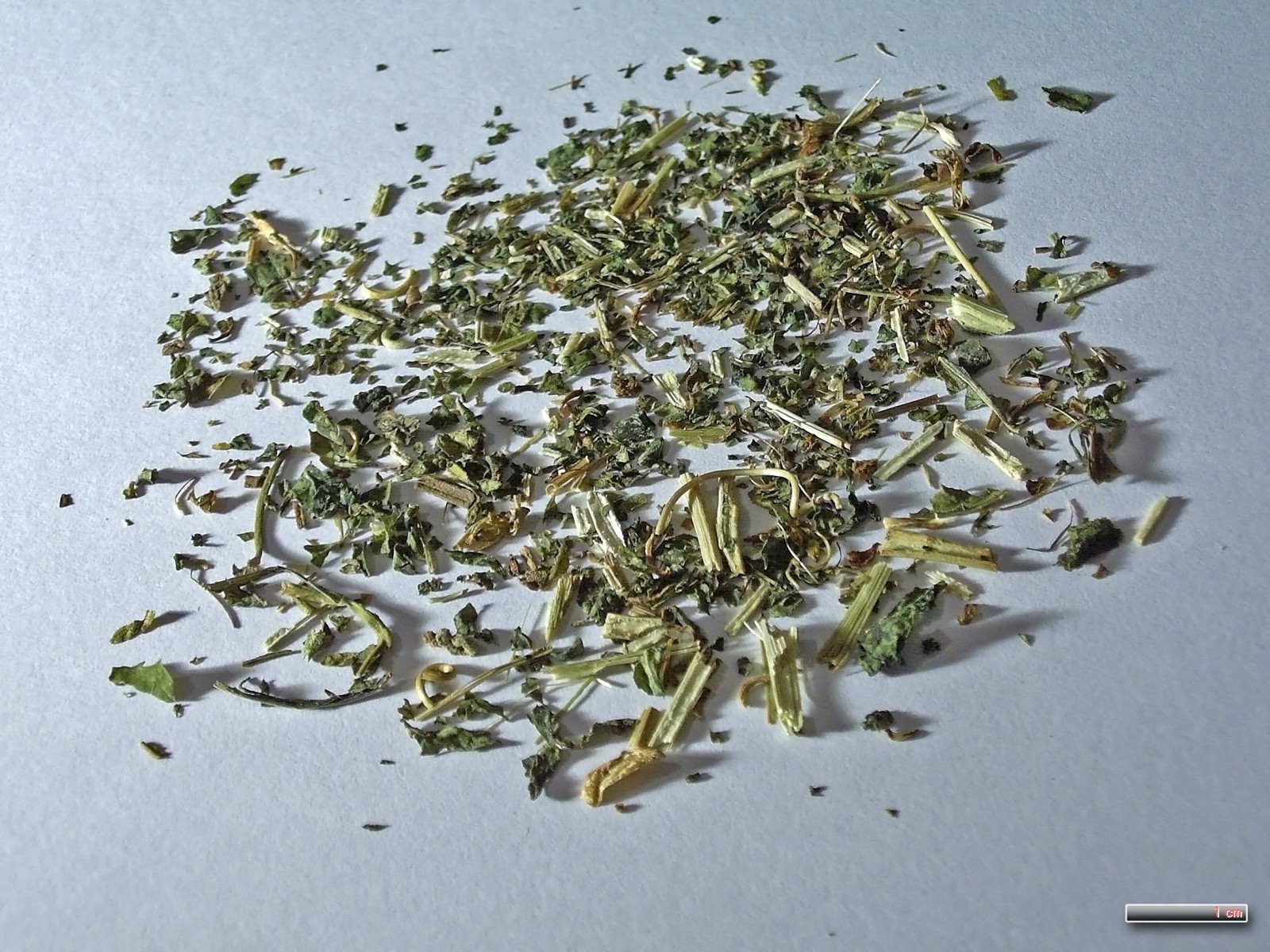
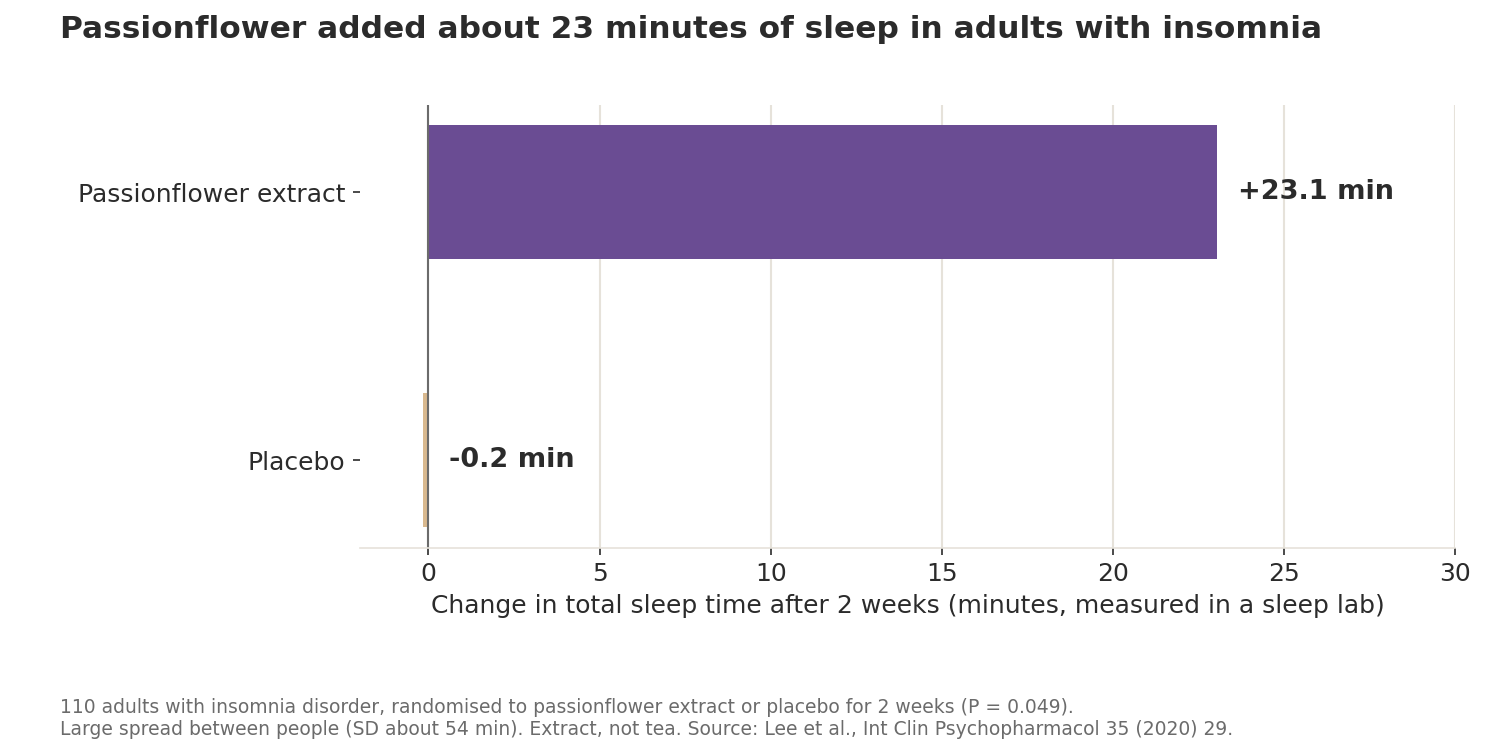
Passionflower tea is a caffeine-free herbal tea made from the dried leaves, stems and flowers of Passiflora incarnata. The best-known trial found that one cup each evening gave a small improvement in how well people felt they slept, and a later trial of a passionflower extract added about 23 minutes of measured sleep in adults with insomnia. The effect is modest, the trials are small, and Europe’s medicines regulator backs it only as a traditional remedy for mild stress and sleep. It is not recommended in pregnancy.
What is passionflower tea?
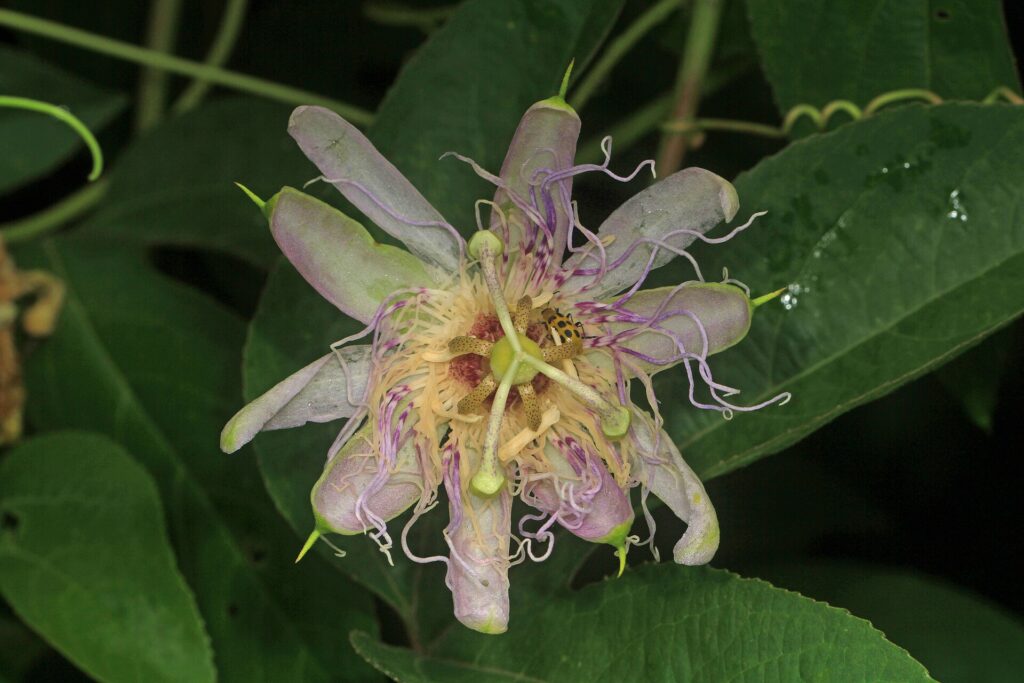
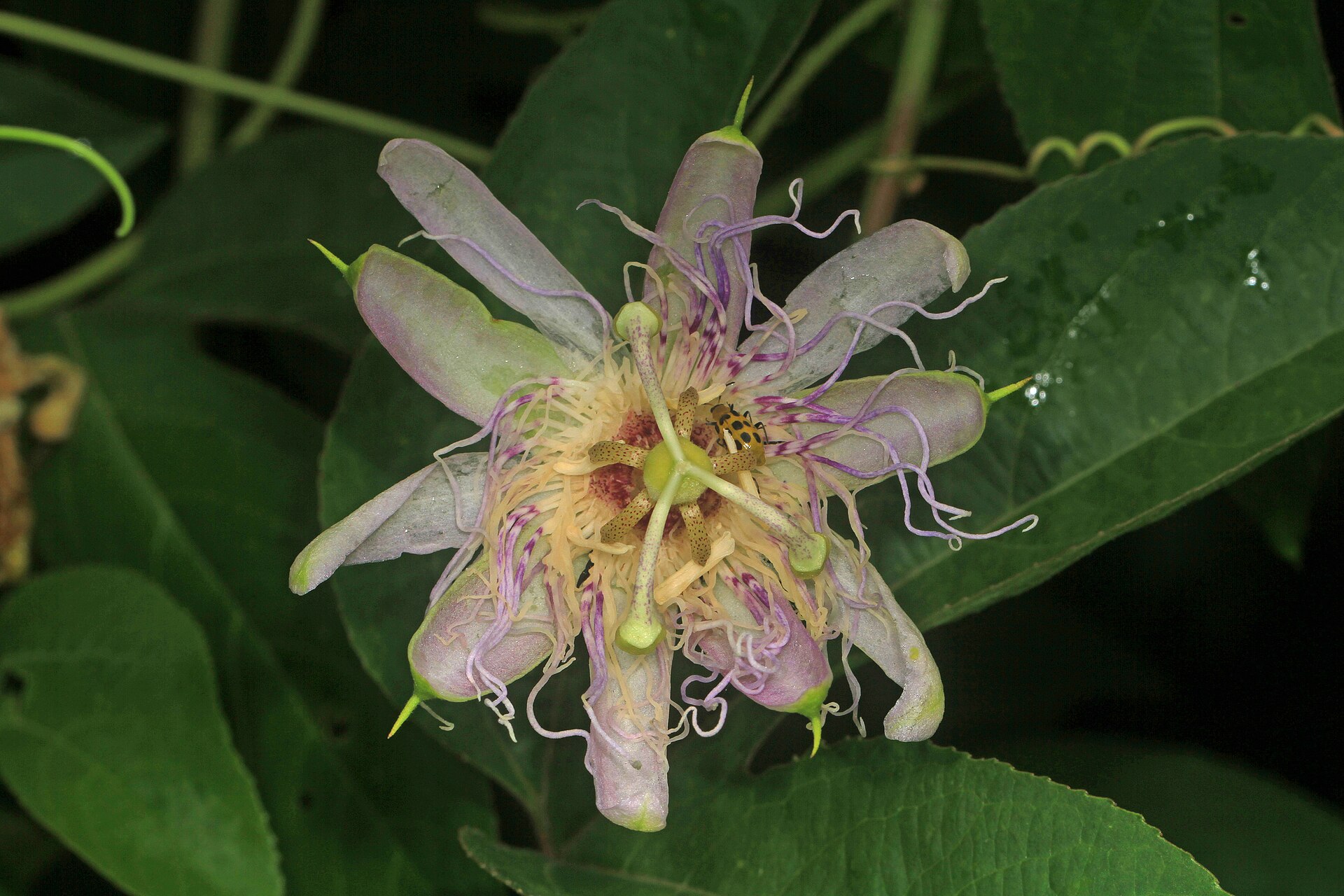
Passionflower tea is an infusion of the above-ground parts of Passiflora incarnata, a climbing vine with striking purple and white flowers. It is also called maypop, purple passionflower or apricot vine. The US National Center for Complementary and Integrative Health notes that the plant is native to the south-eastern United States and Central and South America, and that Spanish explorers brought it to Europe in the 16th century, where it entered folk medicine as a sedative.
This is not the plant that gives you passion fruit. Most passion fruit comes from Passiflora edulis, and a 2024 review of the Passiflora genus shows how much the chemistry varies between species. Herbal products for sleep and stress use P. incarnata, so check the Latin name on the pack. Like other herbal teas, it is naturally caffeine-free, so it fits the evening teas in our guide to caffeine-free tea.
The plant contains flavonoids such as vitexin, isovitexin and chrysin, along with small amounts of alkaloids. Animal studies suggest some of these act on the brain’s GABA system, the same calming system targeted by many sleep medicines. But nobody has pinned down which compound does what in people, and lab findings do not always carry over to a cup of tea.
Does passionflower tea help you sleep?
There are only a few human trials, and only one used actual tea. Here is what each found.
The 2011 passionflower tea trial
In a double-blind trial from Australia, Ngan and Conduit gave 41 healthy adults aged 18 to 35 a cup of passionflower tea each evening for a week, and a placebo tea for another week, with a week’s break in between. Neither the volunteers nor the researchers knew which was which. A 2020 systematic review records the dose as a 2 g tea bag in 250 ml of water. A 2025 review notes that the placebo was a matching bag of dried parsley.
The volunteers kept sleep diaries. Of six sleep measures, only one differed: people rated their sleep quality as better during the passionflower week. The 2025 review puts the gain at about 5% over placebo. Ten volunteers were also tested overnight in a sleep lab, and their anxiety scores were measured, but neither showed a clear difference. The authors concluded that a low dose of passionflower tea gave short-term, subjective sleep benefits to healthy adults with mild sleep problems.
Trials of passionflower extract
A larger 2020 Korean trial tested a passionflower extract, not tea, in 110 adults with diagnosed insomnia disorder. After two weeks, total sleep time measured in a sleep lab rose by an average of 23 minutes in the passionflower group, against essentially no change on placebo. That difference only just reached statistical significance, and the spread between people was wide. Sleep efficiency and time awake during the night improved too, but not by more than they did on placebo.
A 2024 Indian trial of 65 adults with stress and insomnia found that a standardised extract taken at bedtime for 30 days lowered stress scores and increased reported sleep time compared with placebo, with no side effects reported. It tested one branded extract in a small group, so it needs repeating by independent researchers.
| Study | Who | Form | Main result |
|---|---|---|---|
| Ngan and Conduit, 2011 | 41 healthy young adults | Tea, 1 cup nightly for 7 days | Better self-rated sleep quality; no clear change in lab sleep or anxiety |
| Lee et al., 2020 | 110 adults with insomnia | Extract for 2 weeks | About 23 more minutes of sleep in the lab vs placebo |
| Harit et al., 2024 | 65 adults with stress and insomnia | Extract for 30 days | Lower stress, longer reported sleep vs placebo |
| Movafegh et al., 2008 | 60 surgery patients | 500 mg tablet once | Less anxiety before surgery, no extra sedation |
| Zampieri et al., 2025 | 210 surgery patients | Tea blend with chamomile and anise | No difference in anxiety vs a lemon placebo tea |
Passionflower for anxiety
Most passionflower research is about anxiety, which often goes hand in hand with poor sleep. A 2008 trial in 60 day-surgery patients found that a single 500 mg dose taken 90 minutes before surgery lowered anxiety scores compared with placebo, without making people more sedated or slowing their discharge home. In a 2017 dental study, 40 people had both lower wisdom teeth removed on separate days, once after 260 mg of passionflower and once after the sedative midazolam. Anxiety control was similar, but 20% of people had no memory of the procedure after midazolam, while passionflower barely affected memory.
For generalised anxiety disorder, a small 2001 pilot trial of 36 outpatients found a passionflower extract worked about as well as the drug oxazepam over four weeks, with less impact on job performance. But a Cochrane review that pooled the trials concluded there were too few to draw any conclusions. The 2020 systematic review of nine trials found most reported less anxiety, with the effect weaker in people whose anxiety was mild.
The one large trial that used passionflower as a tea had a sobering result. In a 2025 Brazilian study of 210 surgery patients, a calming blend of chamomile, passionflower and anise was no better for anxiety than a lemon placebo tea. Both groups felt calmer. That fits a broader point: part of what helps at bedtime may simply be the ritual of a warm, caffeine-free drink.
What regulators say
The European Medicines Agency’s herbal committee has reviewed passionflower. Its public summary says passionflower can be used to relieve mild symptoms of mental stress and to aid sleep, but only on the basis of long-standing traditional use. It found the clinical trials too small and flawed to prove that it works. The EMA monograph sets the following limits for herbal tea:
- Dose: 1 to 2 g of the dried, cut herb in 150 ml of boiling water, up to four times a day.
- Age: adults and adolescents over 12 only.
- Duration: see a doctor if symptoms last more than two weeks or get worse.
- Pregnancy and breastfeeding: not recommended, because safety has not been established.
- Driving: it may impair your ability to drive or use machines.
In the United States, passionflower is sold as a dietary supplement and is not approved by the FDA for any condition. NCCIH says it may be safe as a tea for up to seven nights, and as an extract for up to eight weeks.
How to make passionflower tea
- Put 1 to 2 g of dried passionflower, roughly 1 to 2 level teaspoons of the cut herb, or one tea bag, in a mug.
- Pour over 150 to 250 ml of water just off the boil. Unlike green tea, herbs need hot water, as our brewing temperature guide explains.
- Cover the mug and steep for 5 to 10 minutes. Covering keeps the aromatic parts in the cup.
- Strain and drink about 30 to 60 minutes before bed.
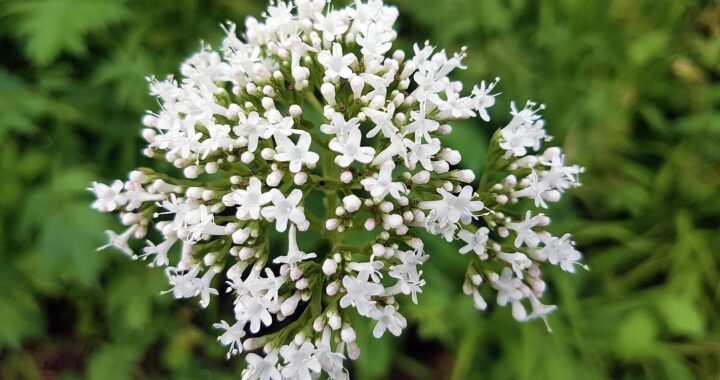
Passionflower tastes mild, grassy and slightly earthy, a little like a light green herbal hay. On its own it can be a bit flat, which is why it is often blended. Common partners are chamomile, lemon balm and valerian. A little honey or a strip of lemon peel also helps. Keep the dried herb in an airtight tin away from light, as you would with any loose tea.
Side effects and safety
Passionflower tea is generally well tolerated. The EMA listed no known side effects, and none of the trials above reported serious problems. NCCIH lists drowsiness, dizziness and confusion as possible side effects. There is one well-known case report from Australia of a 34-year-old woman who developed severe nausea, vomiting, drowsiness and an abnormal heart rhythm after taking a passionflower product at normal doses. She recovered in hospital. It was a single case, and the product was a tablet, not tea, but it is a reason to stop if you feel unwell.
Pregnancy and breastfeeding
Avoid it. NCCIH advises against passionflower in pregnancy because it may cause the uterus to contract, and says little is known about breastfeeding. The EMA also does not recommend it in either case. Our guide to teas during pregnancy lists safer choices.
Medicines and surgery
Passionflower may add to the effects of other things that make you drowsy. Take care, and ask a pharmacist or doctor first, if you use:
- Sleeping tablets or benzodiazepines such as diazepam or lorazepam
- Other sedating medicines, including some antihistamines, antidepressants and strong painkillers
- Alcohol, or other sedative herbs taken in large amounts
The EMA found no reported interactions, but NCCIH warns that passionflower might interact with anaesthetics and medicines used around surgery. Tell your surgical team if you have taken it in the two weeks before an operation. Children under 12 should not have it, because it has not been studied in them.
Passionflower compared with other sleep teas
Passionflower sits in the middle of the pack. Its evidence is thinner than for valerian, which has more trials but mixed results, and broadly similar to chamomile and lemon balm, which are also backed mainly by small studies and traditional use. None of these teas works like a sleeping pill. Our ranking of the best tea for sleep compares them side by side. Whichever you choose, the biggest single change for many people is simply swapping an evening cup of caffeinated tea for a herbal one. A typical mug of black tea has around 40 to 50 mg of caffeine, as our caffeine comparison shows, and keeping your daily tea intake to earlier in the day can help on its own.
Quick answers
How long does passionflower take to work?
In the tea trial, people drank one cup each evening and reported better sleep quality over a week. The extract trial ran for two weeks. Do not expect it to knock you out within minutes.
Can I drink passionflower tea every night?
For short periods, yes. NCCIH considers it possibly safe as a tea for up to seven nights, and the EMA advises seeing a doctor if sleep problems last longer than two weeks.
Does passionflower tea have caffeine?
No. It is a herbal infusion, not tea from Camellia sinensis, so it is naturally caffeine-free unless it is blended with real tea.
Is passionflower the same as passion fruit?
No. Herbal passionflower is Passiflora incarnata. Most passion fruit comes from Passiflora edulis. Passion fruit tea flavourings will not have the same effect.
Will passionflower make me groggy in the morning?
Most people do not report a hangover effect at tea doses, and the 2008 surgery trial found no extra sedation. But it can cause drowsiness, so see how it affects you before driving.
Sources
- Ngan A, Conduit R. A double-blind, placebo-controlled investigation of the effects of Passiflora incarnata (passionflower) herbal tea on subjective sleep quality. Phytotherapy Research, 2011.
- Lee J et al. Effects of Passiflora incarnata Linnaeus on polysomnographic sleep parameters in subjects with insomnia disorder. International Clinical Psychopharmacology, 2020.
- Harit MK et al. Randomized, double-blind, placebo-controlled clinical study of Passiflora incarnata in participants with stress and sleep problems. Cureus, 2024.
- Movafegh A et al. Preoperative oral Passiflora incarnata reduces anxiety in ambulatory surgery patients. Anesthesia and Analgesia, 2008.
- Dantas LP et al. Effects of Passiflora incarnata and midazolam for control of anxiety in patients undergoing dental extraction. Medicina Oral, Patología Oral y Cirugía Bucal, 2017.
- Akhondzadeh S et al. Passionflower in the treatment of generalized anxiety: a pilot double-blind randomized controlled trial with oxazepam. Journal of Clinical Pharmacy and Therapeutics, 2001.
- Miyasaka LS et al. Passiflora for anxiety disorder. Cochrane Database of Systematic Reviews, 2007.
- Janda K et al. Passiflora incarnata in neuropsychiatric disorders: a systematic review. Nutrients, 2020.
- Zampieri VC et al. Exploring the effects of a calming herbal tea blend on perioperative anxiety: a randomized clinical trial. Journal of Medicinal Food, 2025.
- Żełabowski K et al. The efficacy of melatonergic receptor agonists used in clinical practice in insomnia treatment. Molecules, 2025.
- Fisher AA et al. Toxicity of Passiflora incarnata L. Journal of Toxicology: Clinical Toxicology, 2000.
- Nikolova K et al. Chemical compositions, pharmacological properties and medicinal effects of genus Passiflora L.: a review. Plants, 2024.
- European Medicines Agency. Passiflorae herba: herbal medicinal product summary.
- European Medicines Agency, HMPC. Community herbal monograph on Passiflora incarnata L., herba (EMA/HMPC/669740/2013).
- National Center for Complementary and Integrative Health. Passionflower.
Last updated: 11 October 2026. Sources are linked in the text.
This article is general information, not medical advice. Talk to your doctor or pharmacist before using tea or herbs for a health condition, especially if you are pregnant, breastfeeding or take regular medication.