Dry tea does not really expire in the way milk or meat does. Kept dry, it is very unlikely to make you ill long after the date on the box, because that date is a best before date about quality, not safety. What tea does do is go stale. Green tea and matcha fade within months, black tea lasts a year or two, and some white and dark teas get better with age. The one real safety problem is damp: tea that has got wet and grown mould should go in the bin.

Does tea expire?
Most packs of tea carry a best before date, usually one to three years after packing. In the UK, the government’s food labelling guidance explains the difference: use-by dates are about safety and appear on foods that go off quickly, while best before dates are about quality. Food past its best before date is not unsafe just because of the date, though it may have lost flavour or texture.
Dry tea belongs firmly in the second group. Finished tea leaves hold only a few per cent water, far too little for bacteria or mould to grow. So the honest answer to “does tea expire?” is that it loses quality over time but, kept dry, rarely becomes unsafe. A tin of black tea a year past its date will usually brew a perfectly drinkable, if flatter, cup.
The caffeine does not fade either. In a 2019 storage study of green tea, caffeine stayed essentially unchanged over five months at every temperature tested. Old tea will still keep you awake, at the levels in our tea caffeine chart.
How long does tea last? Shelf life by type
How fast tea goes stale depends mostly on how it was made. Delicate, unoxidised teas lose their fresh character fastest. Fully oxidised and fermented teas change slowly, and a few are aged on purpose. The table below is our rough guide to peak quality, based on the storage studies below and on typical best before dates. It assumes the tea is sealed, dry, dark and at room temperature.
| Tea | Best quality | What happens as it ages |
|---|---|---|
| Matcha (opened) | About 1 to 2 months | Fades from bright to dull green, loses sweetness, turns flat or hay-like |
| Green tea (sencha, longjing) | 6 to 12 months | Loses grassy freshness and colour, tastes dull and slightly stale |
| Jasmine and other scented teas | 1 to 3 years | Scent peaks, then fades and a stale note creeps in |
| Green oolong | About 1 year | Floral aroma softens |
| Roasted oolong | 2 years or more | Changes slowly, can mellow |
| Black tea, including Earl Grey | 1 to 2 years | Becomes flatter and less brisk; bergamot fades in Earl Grey |
| White tea | Years | Often aged on purpose; grassy notes turn sweet and mellow |
| Pu-erh and other dark teas | Years to decades | Aged on purpose; taste becomes smoother |
| Herbal teas | 1 to 2 years | Aromatic oils from mint, chamomile and others evaporate |
Green tea sits at the fragile end because it has not been oxidised at all, so its catechins, vitamin C and chlorophyll are still intact and easily damaged. Black tea has already been through that oxidation in the factory, so there is less left to lose. The same logic explains why a light, green oolong fades faster than a dark, roasted one.
What actually changes as tea gets old
Three things wear tea down: oxygen, heat and moisture, with light speeding all of them up. Here is what the research shows each one doing.
Catechins
Catechins are the main antioxidants in tea and part of its bitterness. In one US study, researchers stored eight commercial green teas, sold in tea bags in the United States, Korea and Japan, at 20°C for six months. Total catechins fell steadily, and most of the loss came from EGCG and ECG, the two most plentiful ones. The results are not always so simple. In the 2019 Huangshan Maofeng study the main catechin, EGCG, barely moved, but epigallocatechin (EGC) at room temperature fell from 11.3 to 0.9 mg per gram over 150 days, a loss of more than 90%.
Vitamin C, amino acids and colour
That same study, which packed tea in vacuum-sealed foil bags, found that room temperature cut vitamin C from 2.32 to 0.44 mg per gram in five months, a fall of about 80%. Free amino acids, which give green tea its savoury, fresh taste, dropped by about 40%. Chlorophyll fell by a third, and the leaves shifted from green towards yellow and brown. Even in sealed bags, the moisture content of the room-temperature tea crept up from 5.7% to 8.2%. The freezer slowed all of these losses, and the fridge helped less than you might expect.
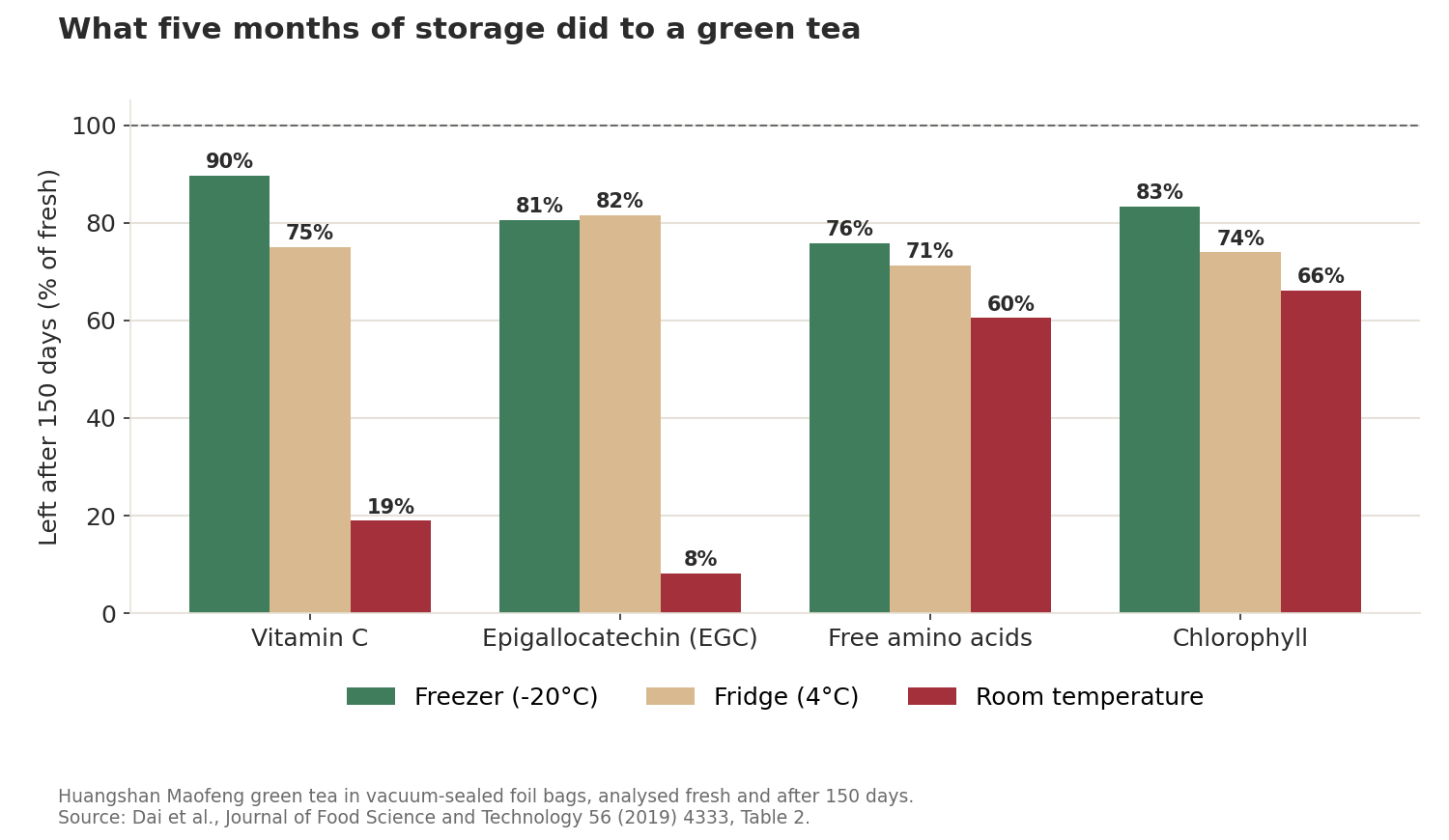
In practice, vitamin C in brewed tea is a small amount in any case, so its loss matters less for your health than for flavour and colour. The drop in amino acids and aroma is what you will notice in the cup.
Aroma
Fresh green tea gets much of its smell from light, volatile compounds that slowly escape or oxidise. Other compounds form in their place, giving the papery, stale note of old tea. The same study found that tea kept at 4°C had a clearly different mix of volatiles after 100 days. Tea frozen at -80°C was closest to fresh, and tasters still rated the -20°C tea as fresh. A 2024 study of jasmine tea linked a compound called (Z)-4-heptenal to the stale aroma that develops with long storage. In that study, jasmine tea actually smelled best at about three years, then weakened.
Matcha and green tea go stale fastest
Matcha is green tea ground to a fine powder, so a huge surface area meets the air every time you open the tin. A 2020 Korean study stored matcha at different temperatures for two months. Its colour, catechins, caffeine, antioxidant activity and rutin all fell faster as the temperature rose. A 2026 follow-up looked at light and humidity. Under ordinary LED room lighting, the catechins EGCG and ECG had half-lives of only about 30 to 40 days. Matcha kept dark and dry, at a water activity of 0.53 or below, held on to its compounds much better.
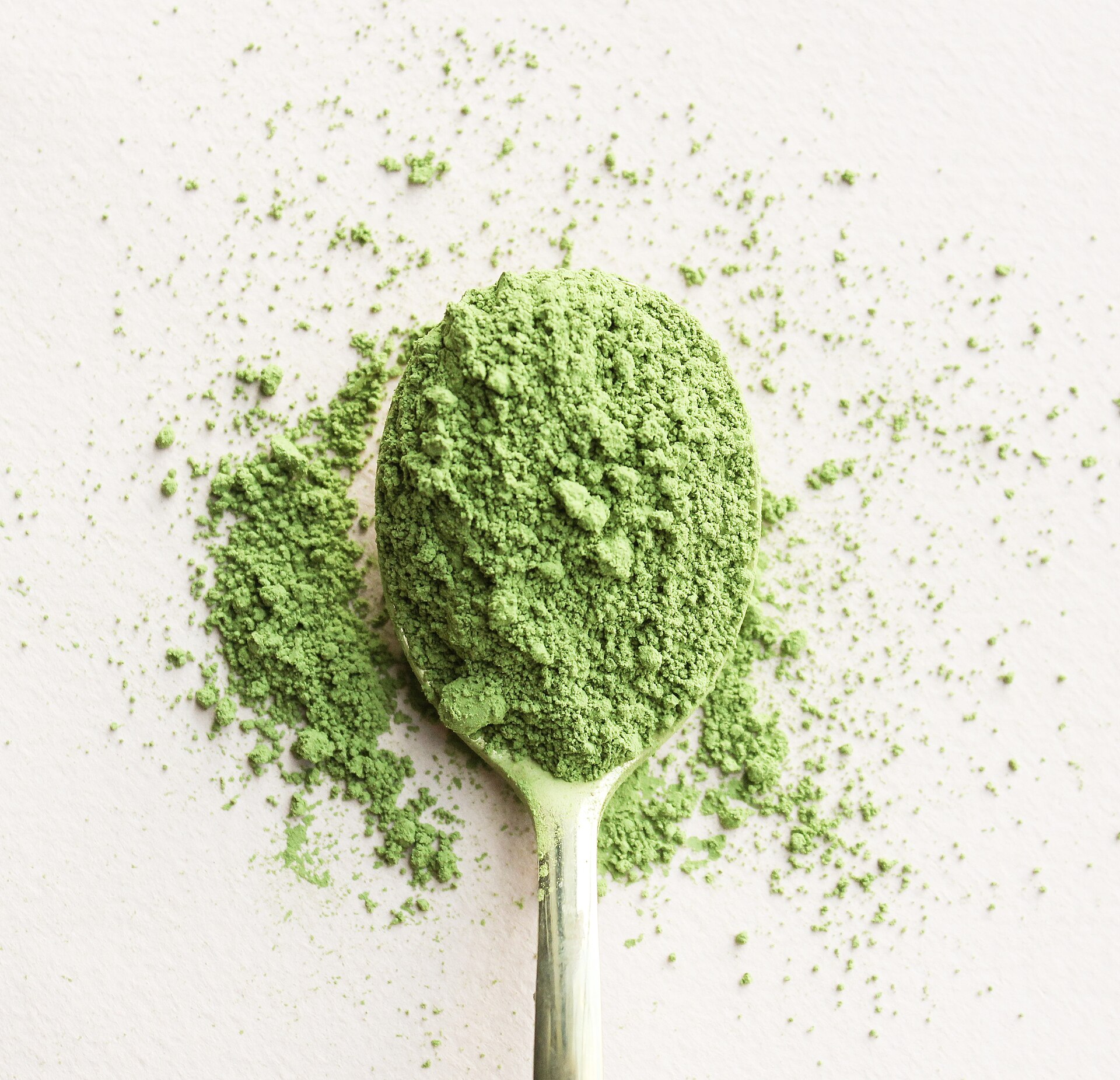
So buy matcha in small tins, keep it sealed in the dark, and use it within a month or two of opening. If you buy a lot of loose green tea, keep the unopened bags in the freezer, as the study above suggests. Let a frozen bag reach room temperature before you open it, or water from the air will condense on the cold leaves. Our tea storage guide covers containers, the fridge and the freezer in more detail. Fresh green tea also deserves careful brewing, so see how to brew green tea for the right temperature.
Teas that get better with age
Not all tea is best fresh. Some teas are stored for years on purpose, and a 2026 review of aged tea describes what happens. Slow oxidation, non-enzyme reactions and, in dark teas, microbes break down the harsh flavanols, so bitterness and astringency fall and woody, sweet aromas build up. The review also notes that ageing has an ideal window: older is not always better.
- White tea. A 2026 study followed Zhenghe white peony tea stored for up to 12 years. Fresh tea was grassy and fruity; older tea gained mellow, aged notes as amino acids and catechins fell and other flavonoids rose. Our white tea guide explains the styles.
- Pu-erh. In a nine-year study of one ripened pu-erh, the stale aroma faded with storage and the taste moved from heavy to sweet and mellow. See our pu-erh tea guide for how it is made and brewed.
- Roasted oolong. Heavily baked oolongs are also aged in Taiwan and Fujian, and are re-roasted from time to time to drive off moisture.
Ageing tea is still storage, though. It needs clean, dry air, no strong smells and no damp. Ageing is not a reason to keep a forgotten box of supermarket green tea bags.
Can old tea make you sick? Mould and safety
The only way stored tea becomes a real hazard is moisture. Wet leaves can grow mould, and some moulds make mycotoxins. A 2023 review of Chinese dark tea warns that poor storage of these slowly ageing teas can let harmful fungi take hold. Surveys of shop-bought products show low-level contamination is possible but uncommon. One Taiwanese study found traces of a few mycotoxins in some commercial pu-erh, green and black teas, and rated the drinking risk mostly of low concern. A 2026 Brazilian study of 91 dried herbs sold for tea found at least one mycotoxin in about a quarter of samples, again at intakes it judged to be no health concern. Both studies looked at teas as sold, not teas that had been stored badly at home.
Throw tea away, whatever its date, if you see any of these:
- Fuzzy white, green or black spots, or webbing between leaves
- A musty, damp or sour smell instead of a tea smell
- Leaves that have clumped together or feel soft and damp
- Tea bags that got wet, even if they have since dried out
- Small insects or moth larvae in herbal blends, grains or dried fruit pieces
Brewed tea is a different matter. Once it is wet it behaves like any other drink, so refrigerate it and drink it within about three days, as our cold brew tea guide explains. Do not leave a pot of brewed tea at room temperature overnight and drink it the next day.
Tea bags vs loose leaf
Tea bags usually go stale faster than loose leaf. Most bags hold small, broken pieces of leaf, and smaller pieces have far more surface exposed to air than whole leaves do. Many bags are also packed in a paper box rather than sealed foil, and the paper bag itself lets air and smells through. Individually foil-wrapped bags last much better.
Herbal teas lose quality in a different way. Peppermint, chamomile and other caffeine-free herbal teas get much of their character from aromatic oils that slowly evaporate. Old peppermint tea is not dangerous, but it tastes weak. Flavoured black teas such as Earl Grey fade the same way, since bergamot oil is volatile.
How to tell if tea has gone stale
You do not need a lab. Use your senses on the dry leaf first, then the brewed cup.
| Check | Fresh tea | Stale tea |
|---|---|---|
| Smell the dry leaf | Clear, strong aroma when you open the pack | Faint, papery, dusty or smells of the cupboard |
| Look at green tea or matcha | Bright, lively green | Olive, yellowish or brownish |
| Brew a cup | Full flavour, some sweetness, a clean finish | Flat, thin or dull; needs more leaf for any taste |
| Check the leaf feel | Crisp and dry, snaps easily | Soft or bendy, a sign it has taken up moisture |
If the tea is merely stale, you can still use it. Steep it a little longer or with a little more leaf, use it for iced tea or cold brew, or cook with it. Getting the temperature and steep time right helps an older tea more than a fresh one.
Quick answers
Can you drink tea after the best before date?
Yes, if it has been kept dry and shows no mould or musty smell. The date is about quality, not safety. Expect a weaker taste, especially from green tea.
How long do tea bags last?
Black tea bags usually taste good for one to two years if sealed. Green and herbal tea bags fade sooner. Bags in an open paper box go stale faster than foil-wrapped ones.
Does old tea lose its caffeine?
No, not noticeably. Caffeine is stable in dry tea, so stale tea has about as much caffeine as fresh tea. It is the flavour and aroma that fade.
Should I keep tea in the fridge?
Only unopened, airtight packs, and mainly green tea and matcha. Opening a cold pack in a warm room lets moisture condense on the leaves. Most black, oolong and herbal teas are fine in a dark cupboard.
Does tea go mouldy?
Only if it gets damp. Dry tea is too dry for mould to grow. If you see fuzz, smell mustiness or feel damp, clumped leaves, throw it out. Do not try to rinse or brew it.
Which tea lasts the longest?
Pu-erh and other dark teas, then white tea, which can both improve for years. Among everyday teas, black teas such as Darjeeling last longer than green, and scented jasmine tea can keep its aroma for a few years.
Sources
- GOV.UK. Understanding food labelling: best before and use-by dates.
- Dai et al. Recommended storage temperature for green tea based on sensory quality. Journal of Food Science and Technology, 2019.
- Friedman et al. Stability of green tea catechins in commercial tea leaves during storage for 6 months. Journal of Food Science, 2009.
- Kim et al. Effect of storage temperature on the antioxidant activity and catechins stability of matcha (Camellia sinensis). Food Science and Biotechnology, 2020.
- Kim et al. Effect of water activity and light exposure on the stability of bioactive compounds in matcha powder during storage periods. Food Chemistry, 2026.
- Qi et al. Variation in the aroma composition of jasmine tea with storage duration. Foods, 2024.
- Liu et al. The chemistry of time: flavor evolution and functional health benefits in aged tea. Comprehensive Reviews in Food Science and Food Safety, 2026.
- Li et al. Volatile flavoromics and metabolomics reveal quality evolution mechanism of Zhenghe white peony tea during storage. npj Science of Food, 2026.
- Bo et al. Metabolomic and sensory insights into the aging mechanism of ripened pu-erh tea over nine years. Molecules, 2026.
- Xu et al. Reviews of fungi and mycotoxins in Chinese dark tea. Frontiers in Microbiology, 2023.
- Wan et al. Establishment of appropriate conditions for the efficient determination of multiple mycotoxins in tea samples and assessment of their drinking risks. Food Chemistry, 2025.
- Evangelista et al. Mycotoxins occurrence in dry herbs used for tea preparation. Mycotoxin Research, 2026.
Last updated: 11 October 2026. Sources are linked in the text.