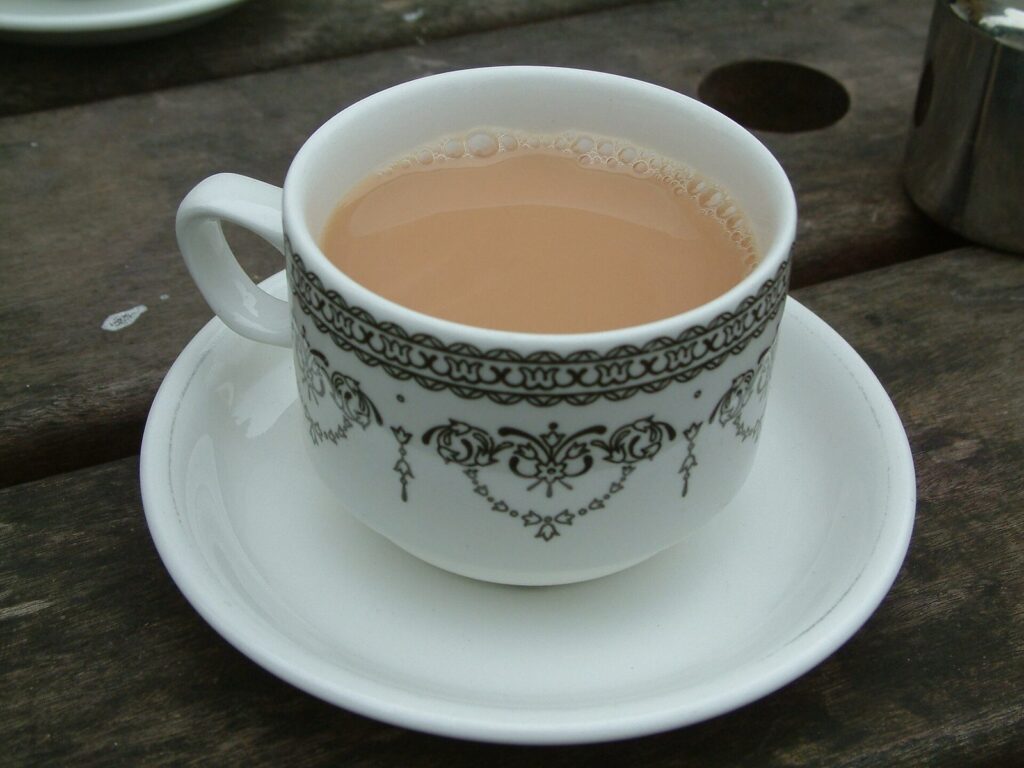
Yes, tea can cause headaches, but usually not in the way people expect. The most common link is caffeine withdrawal: if you drink tea every day and then miss your usual cups, a headache can start within 12 to 24 hours. Very high caffeine intake, iced tea gulped too fast and liquorice-based herbal teas are less common causes. A normal amount of tea does not dehydrate you, and for most people it is more likely to ease a headache than start one.
This guide is about tea as a cause of headaches. If you want to know which teas may help once a headache has started, read our guide to the best tea for headaches, which covers caffeine as a painkiller booster along with ginger, peppermint and chamomile.
The short answer
| Possible cause | How strong is the evidence? | Who it affects |
|---|---|---|
| Missing your usual caffeine | Strong, from controlled trials | Regular tea or coffee drinkers |
| Very high daily caffeine | Moderate, mostly from population studies | Heavy drinkers, people with migraine |
| Caffeine painkillers taken too often | Strong, recognised diagnosis | People treating frequent headaches |
| Iced tea drunk very fast | Recognised, short-lived | Anyone |
| Liquorice root tea | Case reports of high blood pressure | Daily drinkers, older adults |
| Dehydration from tea | Not supported by trials | Unlikely to affect anyone at normal intake |
| Tannins or histamine in tea | No good evidence | Unproven |
Caffeine withdrawal is the main culprit
Caffeine blocks adenosine, a chemical that makes you feel tired and widens blood vessels. With daily caffeine the body adapts, so when the caffeine is suddenly gone the adenosine system rebounds. That is thought to be one reason a dull, throbbing headache follows. The exact mechanism is still debated, but the effect itself is very well documented.
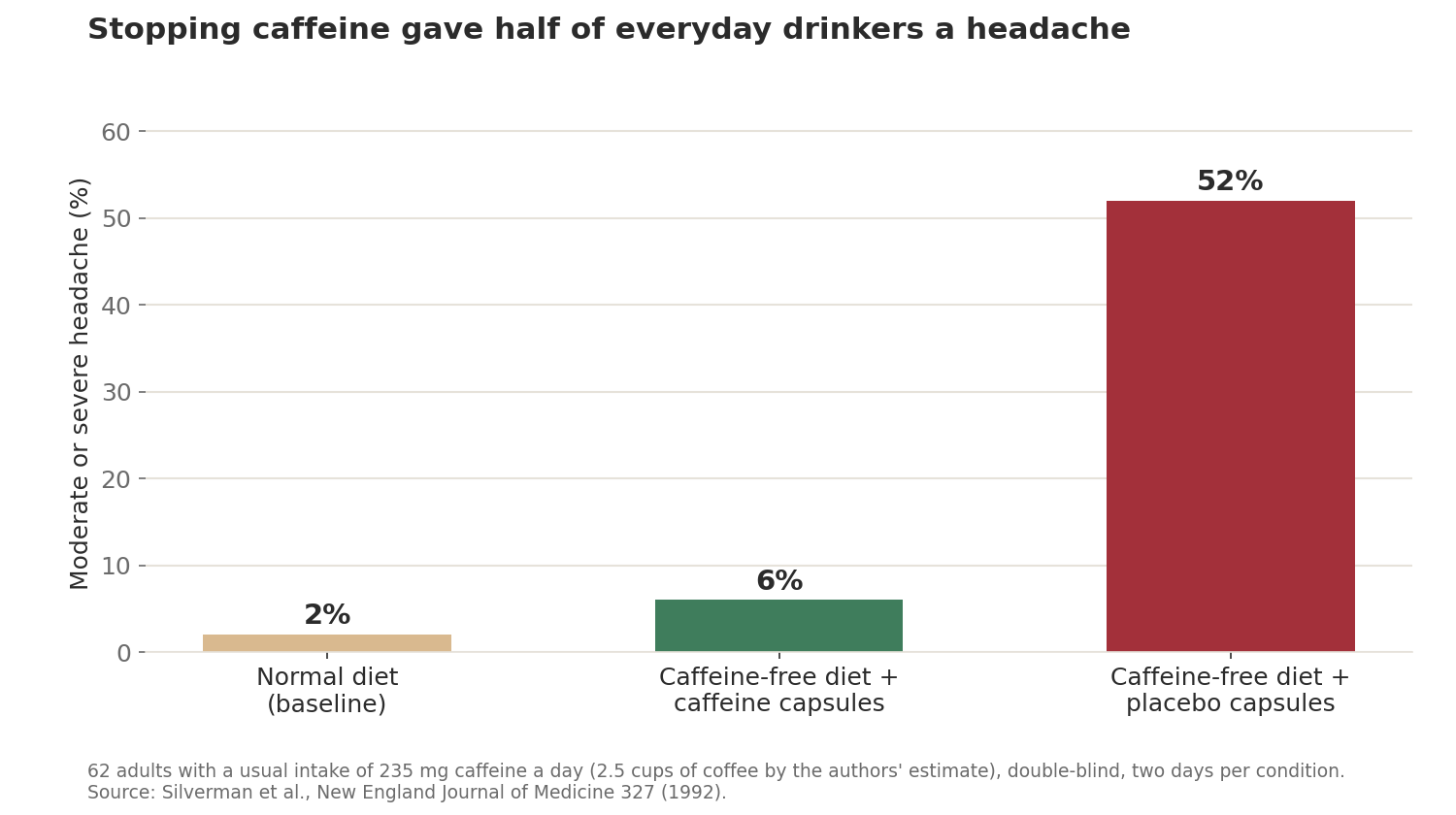
The most cited evidence comes from a 1992 double-blind trial in the New England Journal of Medicine. Researchers asked 62 adults with ordinary caffeine habits, averaging 235 mg a day, to switch to a caffeine-free diet for two days at a time. During one period they took capsules containing their usual caffeine dose; during the other they took identical dummy capsules. Nobody knew which was which. On the dummy capsules, 52% reported a moderate or severe headache, compared with 2% on their normal diet and 6% when the capsules held caffeine. Some also felt tired and low, and 13% took painkillers they had not been told they could use.
A larger review of 57 experimental studies by Juliano and Griffiths confirmed the picture. Headache affected about half of people in the trials. Other validated symptoms were tiredness, low energy, poor concentration, low mood, irritability and feeling foggy. The review also found that:
- symptoms usually started 12 to 24 hours after the last dose;
- they peaked between 20 and 51 hours;
- they lasted from two to nine days;
- giving up as little as 100 mg a day, roughly one or two cups of tea, was enough to cause symptoms;
- the higher the usual dose, the more likely and the worse the symptoms.
The International Headache Society recognises caffeine-withdrawal headache as a formal diagnosis. Its criteria describe a headache that starts within 24 hours of the last caffeine after more than two weeks of taking over 200 mg a day, and that either eases within an hour of taking 100 mg of caffeine or clears within seven days of stopping completely.
Why the weekend and the hospital are common settings
Withdrawal headaches often show up when routines change. People who drink tea at work all week and sleep in at the weekend may get a late-morning headache simply because their first cup is hours later than usual. Fasting does the same thing. A 2023 study of 755 caffeine users on the first day of Ramadan found that 55.5% developed a caffeine-withdrawal headache. Those who did had a median intake of 316 mg a day, against 144 mg in those who did not.
Surgery is another example. In a study of 287 patients having minor operations, each extra 100 mg of usual daily caffeine raised the odds of a post-operative headache by 16%, which the authors put down to missing caffeine while fasting.
How much caffeine is in your tea?
Tea has less caffeine than coffee, but it adds up across a day. A lab analysis of 20 commercial teas found 14 to 61 mg per cup in white, green and black teas, with steeping time making a bigger difference than tea type. The NHS uses a rounder estimate of 75 mg for a cup of tea and 100 mg for a cup of instant coffee. Our tea caffeine content guide compares the main types in detail.
| Daily tea habit | Caffeine at 40 mg a cup | Caffeine at 75 mg a cup |
|---|---|---|
| 2 cups | 80 mg | 150 mg |
| 4 cups | 160 mg | 300 mg |
| 6 cups | 240 mg | 450 mg |
| 8 cups | 320 mg | 600 mg |
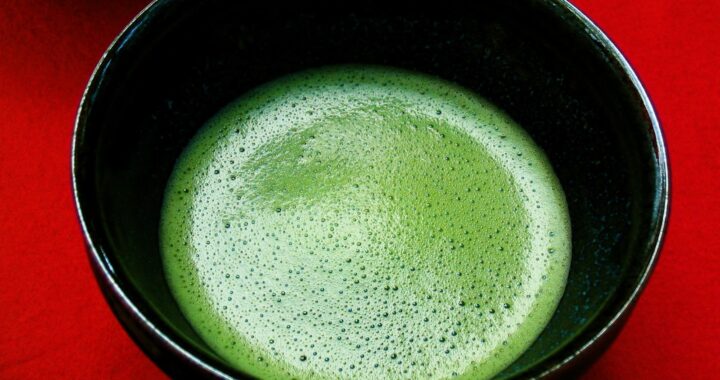
So a four-cup-a-day tea drinker may well be above the 200 mg a day mentioned in the withdrawal criteria. Matcha, which is drunk as whole powdered leaf, can deliver more per cup than brewed tea; see our matcha vs coffee comparison. If you rely on tea to get going in the morning, our guide to the best tea to stay awake explains how much caffeine each type gives you.
Too much caffeine can trigger headaches too
Small doses of caffeine help some headaches, which is why it is added to some painkillers. But regular high intake is linked with more headaches over time.
- In the Head-HUNT study of 50,483 Norwegian adults, people with high caffeine intake had slightly higher odds of occasional headache (odds ratio 1.16). The link was weak, and the study could not show cause and effect.
- A US case-control study found that people with chronic daily headache, meaning headache on at least 180 days a year, were more likely to have been high caffeine consumers before it started (odds ratio 1.50). The authors called caffeine a modest risk factor.
- In a six-week diary study of 98 adults with episodic migraine, one or two caffeinated drinks a day were not linked with migraine on the same day. Three or more servings were linked with higher odds, though the estimates were imprecise.
- A clinic in Israel reported 36 children and teenagers with daily headaches linked to very high cola intake. When they cut down gradually, the headaches stopped completely in 33 of them.
For healthy adults, the European Food Safety Authority considers up to 400 mg of caffeine a day safe, with single doses up to 200 mg. During pregnancy the limit is 200 mg a day; our guide to which teas are safe during pregnancy covers this. These limits are about general safety, not headaches, and people with migraine may do better well below them. Our guide to how many cups of tea a day is healthy puts these numbers into cups.
Caffeine painkillers and rebound headaches
Some over-the-counter painkillers contain caffeine alongside paracetamol or aspirin. They work, but taking any headache medicine too often can cause medication-overuse headache: headache on 15 or more days a month after more than three months of regular overuse. If you rely on strong tea plus caffeine tablets to shift the same headache most days, speak to a GP or pharmacist.
Does tea dehydrate you and give you a headache?
Probably not. Dehydration can cause headaches, and the NHS lists not drinking enough fluids among common triggers. But tea counts towards your fluid intake. In a randomised trial in healthy men, four or six mugs of black tea with milk, providing 168 or 252 mg of caffeine, hydrated people just as well as the same amount of boiled water. Our article on whether tea dehydrates you goes through the evidence. If you get a headache after a long day of tea and little else, a missed meal or too little sleep is a more likely cause.
Other ways tea can be linked to a headache
Iced tea and brain freeze
Gulping a very cold drink can cause a short, sharp pain in the forehead or temples. The International Headache Society lists this as headache from ingesting a cold stimulus. It is harmless and fades within minutes. Sipping iced tea slowly, or letting it warm a little, avoids it.
Liquorice root tea
Liquorice root contains glycyrrhizin, which can make the body hold on to salt and lose potassium, pushing blood pressure up. In a case reported in the Canadian Medical Association Journal, an 84-year-old man developed a hypertensive emergency, with headache, sensitivity to light and chest pain, after drinking one to two glasses of homemade liquorice root drink a day for two weeks. Liquorice is common in herbal blends sold for digestion or sweetness. Check the label if you drink herbal tea daily and have high blood pressure, heart or kidney disease.
Tannins and histamine
Online lists often blame tannins or histamine in tea, borrowing claims made about red wine. There is no good clinical evidence for this. If one particular tea seems to set you off, a headache diary is the most reliable way to check.
Late tea and poor sleep
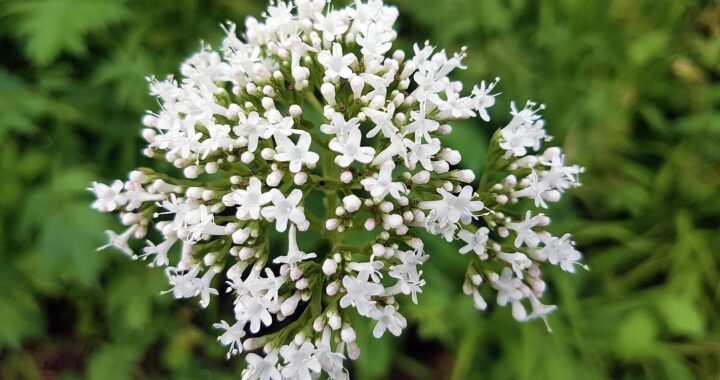
EFSA notes that even 100 mg of caffeine close to bedtime can affect sleep in some adults, and too little sleep is a known headache trigger. If evening cups are a habit, switch to a herbal tea after mid-afternoon. Our guides to the best tea for sleep and valerian tea have caffeine-free options.
How to cut back on tea without a headache
Stopping suddenly is what triggers withdrawal, so the usual advice is to taper. The children in the cola study above cut down gradually and mostly avoided withdrawal headaches. A practical plan for tea drinkers:
- Count your current cups for a few days, including coffee, cola and chocolate.
- Drop one cup every three to four days, starting with the latest one of the day.
- Swap the dropped cup for a caffeine-free tea such as rooibos or peppermint, so the habit stays the same.
- Make the remaining cups weaker by steeping for one or two minutes instead of four or five, or mix in decaf. Our guide to decaffeinating tea at home explains why a quick rinse does not remove much caffeine.
- Keep meals and sleep regular while you cut down, so other triggers do not pile up.
If you do get a withdrawal headache, it usually passes within a few days to a week. A dose of tea providing about 100 mg of caffeine, a mug or two, will often relieve it within an hour. That is also a clue that withdrawal was the cause.
When to see a doctor
Most headaches are not serious. The NHS advises seeing a GP if headaches keep coming back or are getting worse despite treatment. Call 999 or go to A&E if a headache:
- comes on suddenly and is extremely painful;
- follows a head injury, or comes with a seizure;
- comes with numbness or weakness, trouble speaking, confusion or loss of vision;
- comes with a high temperature, a stiff neck or a rash that does not fade under a glass.
Ask for an urgent GP appointment or call 111 if a headache comes with vomiting, eye problems, jaw pain when eating, or gets worse when you cough, sneeze or bend down.
If your headaches are migraines, see our guide to tea for migraines, which covers when caffeine helps and when it becomes a trigger.
Quick answers
Why do I get a headache after drinking tea?
Possible reasons include too much caffeine in one go, iced tea drunk too quickly, or a herbal blend containing liquorice. A headache that starts several hours after your usual tea time is more likely to be withdrawal than the tea itself.
Can not drinking tea give you a headache?
Yes. If you drink tea daily, missing it can cause a caffeine-withdrawal headache within 12 to 24 hours. In trials about half of regular caffeine users got one.
How long does a caffeine withdrawal headache last?
Usually two to nine days, with the worst of it between about 20 and 51 hours after the last caffeine. It fades faster if you taper rather than stopping at once.
Can herbal tea cause headaches?
Most herbal teas are caffeine-free and do not cause withdrawal. Liquorice root is the main one to watch, because it can raise blood pressure when drunk often.
Does tea help or cause migraines?
Both are possible. Caffeine can help a migraine painkiller work, but in one diary study three or more caffeinated drinks in a day were linked with higher migraine odds. Keeping intake moderate and steady seems the safest approach. Our best tea for headaches guide covers the helpful side.
Sources
- Juliano and Griffiths. A critical review of caffeine withdrawal: empirical validation of symptoms and signs, incidence, severity, and associated features. Psychopharmacology, 2004.
- Silverman et al. Withdrawal syndrome after the double-blind cessation of caffeine consumption. New England Journal of Medicine, 1992.
- Magdy et al. Prevalence, characteristics, and factors associated with caffeine-withdrawal headache during the first day of Ramadan. Headache, 2023.
- Fennelly et al. Is caffeine withdrawal the mechanism of postoperative headache? Anesthesia and Analgesia, 1991.
- Hagen et al. High dietary caffeine consumption is associated with a modest increase in headache prevalence: results from the Head-HUNT Study. Journal of Headache and Pain, 2009.
- Scher et al. Caffeine as a risk factor for chronic daily headache: a population-based study. Neurology, 2004.
- Mostofsky et al. Prospective cohort study of caffeinated beverage intake as a potential trigger of headaches among migraineurs. American Journal of Medicine, 2019.
- Hering-Hanit and Gadoth. Caffeine-induced headache in children and adolescents. Cephalalgia, 2003.
- Ruxton and Hart. Black tea is not significantly different from water in the maintenance of normal hydration in human subjects. British Journal of Nutrition, 2011.
- Chin et al. Caffeine content of brewed teas. Journal of Analytical Toxicology, 2008.
- Falet et al. Hypertensive emergency induced by licorice tea. Canadian Medical Association Journal, 2019.
- International Headache Society. ICHD-3, 8.3.1 Caffeine-withdrawal headache.
- International Headache Society. ICHD-3, 8.2 Medication-overuse headache.
- International Headache Society. ICHD-3, 4.5 Cold-stimulus headache.
- European Food Safety Authority. Caffeine topic page and 2015 scientific opinion.
- NHS. Headaches.
- NHS. Foods to avoid in pregnancy (caffeine section).
Last updated: 11 October 2026. Sources are linked in the text.
This article is general information, not medical advice. Talk to your doctor or pharmacist before using tea or herbs for a health condition, especially if you are pregnant, breastfeeding or take regular medication.