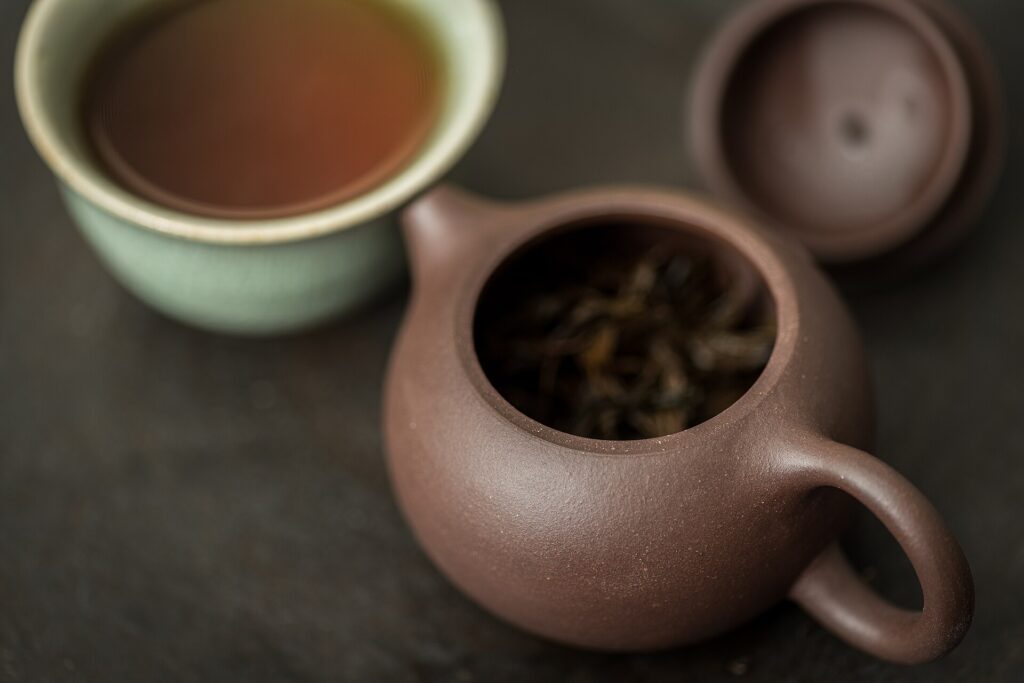
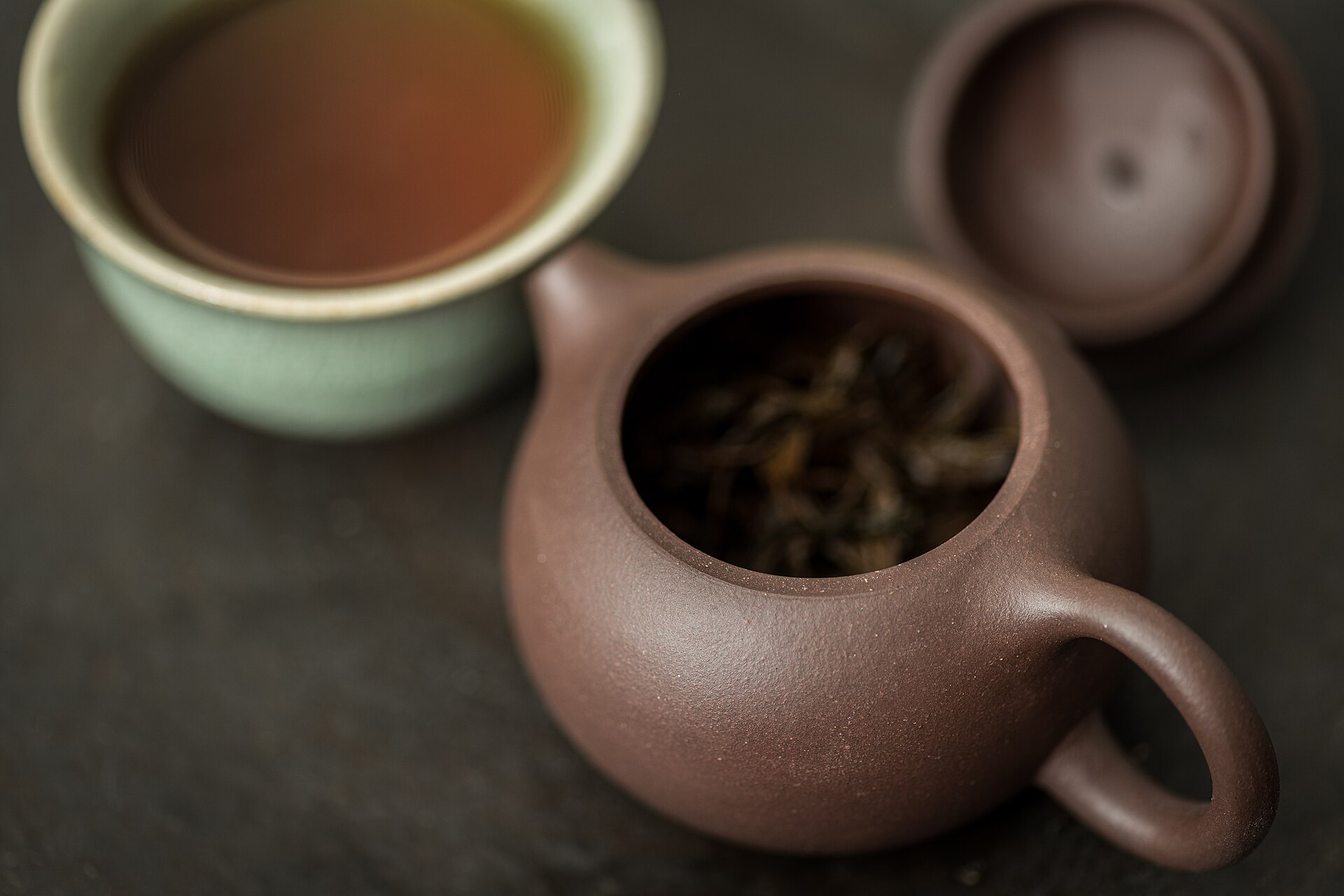
Lapsang souchong is a black tea from the Wuyi Mountains of Fujian, China, dried over pinewood fires. That gives it a strong smoky aroma often compared to a campfire, bacon or peaty whisky. It has been sold in Britain since the 1700s and was famously Winston Churchill’s tea. In 2023, Twinings stopped selling it after more than two centuries. Specialist shops including Harney & Sons, Fortnum & Mason and Whittard still stock it.
What is lapsang souchong?
Lapsang souchong is made from the same plant as all true tea, Camellia sinensis. It is processed like a black tea, with the leaves withered, rolled and oxidised. But it has an extra step: the leaves are dried over smouldering pinewood, which coats them in smoke. Our green vs black tea guide explains how oxidation turns leaves dark.
The name comes from the Fuzhou dialect of Fujian. According to standard references, lapsang refers to pinewood and souchong means “small sort”, a term for a grade of larger leaf. In China the original version is called Zheng Shan Xiao Zhong, “proper mountain small variety”, made in and around Tongmu village in the Wuyi Mountains. Not all Zheng Shan Xiao Zhong is smoked. Some high-grade versions are unsmoked, sweet and fruity.
How lapsang souchong is made
- Fresh leaves are withered on bamboo mats indoors, traditionally in a smokehouse warmed by a pinewood fire.
- The leaves are rolled to break the cells and start oxidation.
- They rest in cloth bags for several hours to oxidise, then are briefly pan-fired.
- They are rolled again to twist them.
- Finally they dry for 8 to 12 hours on upper racks above the smoking pine fire. This is when most of the smoke flavour soaks in.
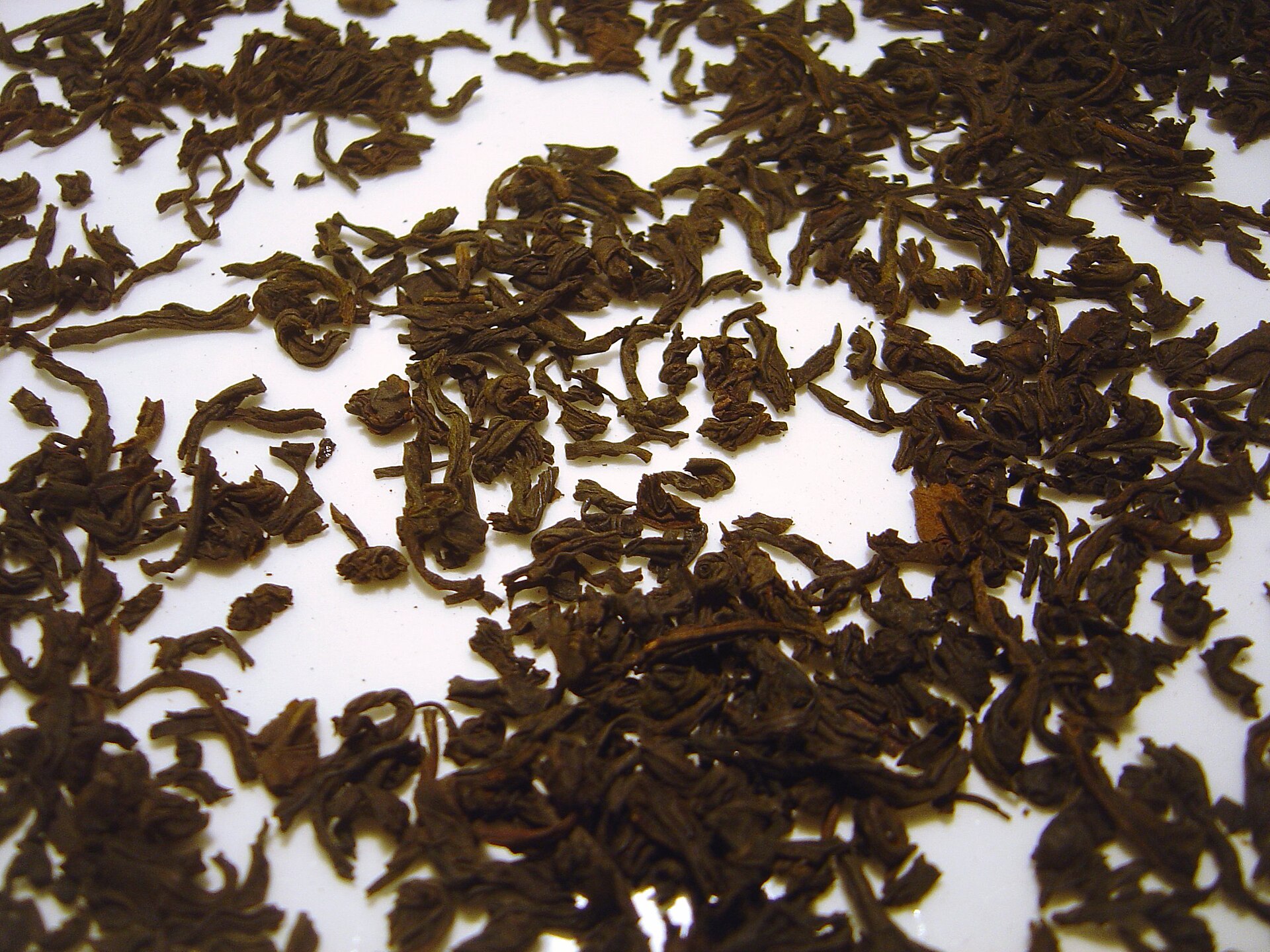
Cheaper lapsang is often made from larger, older leaves that are partly processed on farms and then hot-smoked in central facilities. The smoke hides their weaker natural flavour. Taiwanese lapsang, sometimes sold as “tarry” lapsang, is usually smoked even more heavily. The strength depends on how close the leaves sit to the fire and for how long.
Why it smells of smoke
Chemists have traced the smell to the pine. A 2025 study that followed lapsang through every production step found that withering and drying over pinewood add smoky compounds such as guaiacols, and two aroma compounds, longifolene and alpha-terpineol, that come only from the pine smoke and are not found in other teas.
The smoke also changes the taste. A 2026 study of smoke withering found it lowered levels of several bitter compounds in the leaf, including catechins. Two smoke compounds, guaiacol and alpha-terpineol, also blocked one of the tongue’s bitter taste receptors in lab tests. That helps explain why lapsang tastes smooth rather than harsh despite its strength.
| Flavour note | Where it comes from |
|---|---|
| Campfire, smoked bacon | Phenolic smoke compounds such as guaiacol |
| Pine resin | Longifolene and alpha-terpineol from pinewood |
| Dried longan, raisin | The oxidised black tea leaf, stronger in aged lapsang |
| Smoked paprika, peaty whisky | How many drinkers describe the overall effect |
A short history
Smoked tea has a romantic origin story. According to a common legend, in the 17th century an army passed through the Wuyi Mountains and delayed the tea harvest. Farmers dried the leaves quickly over pine fires to save them and sold the smoky result to Dutch traders, who came back for more. Whether or not it happened that way, smoked teas from Wuyi were reaching Europe by the 18th century.
Souchong was among the teas the British East India Company shipped to its American colonies, and some of it went into Boston harbour in 1773, as our article on the tea in the Boston Tea Party explains. In Britain, lapsang became a favourite of the upper classes and is closely linked with Winston Churchill, who was said to drink it.
What happened to Twinings lapsang souchong?
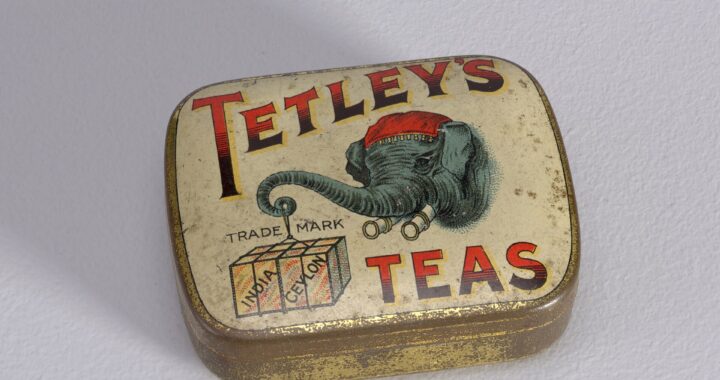
Twinings had sold lapsang souchong since the 1700s, and it was one of the oldest teas in its range. In 2023 the company told the press it had faced challenges sourcing the tea and rising prices, and it delisted it. In its place it launched a blend called Distinctively Smoky, described as reminiscent of lapsang souchong.
Long-time drinkers were not impressed. Writing in The Spectator, one critic compared the replacement to stale cigarettes, and fans left a wave of angry reviews. The episode is a good example of how product ranges change under large owners. Twinings belongs to Associated British Foods, as our Twinings ownership guide explains, and our guide to who owns the big tea brands covers the rest of the market.
Where to buy lapsang souchong now
Lapsang is easy to find from specialist tea sellers, usually as loose leaf. As of October 2026, these sell it:
- Harney & Sons sells a smoked Chinese lapsang souchong. Read the Harney & Sons story.
- Fortnum & Mason sells loose-leaf lapsang smoked over pinewood fires.
- Whittard of Chelsea sells loose lapsang and uses it in its Russian Caravan blend.
- Chinese tea specialists often sell both smoked lapsang and unsmoked Zheng Shan Xiao Zhong from Tongmu. Ask which you are buying.
Look for leaves that are dark, twisted and whole, with a clean pine smoke smell rather than an acrid or chemical one. Lapsang’s strong smell travels, so keep it in its own airtight tin away from other teas. Our tea storage guide explains why.
How to brew lapsang souchong
| Method | Leaf | Water | Time |
|---|---|---|---|
| Mug or teapot | 2 to 3 g (1 rounded teaspoon) per 150 to 200 ml | 95°C to just off the boil | 3 to 5 minutes |
| Gongfu (small pot) | 5 g per 110 ml | 95°C | 30 to 60 seconds, several rounds |
- Try it black first. It also takes milk well, though it is not usually sweetened.
- Start with a short steep if you are new to the smoke, then lengthen it.
- For more on water and time for each tea, see our brewing temperature and steep time guide.
Blends and cooking
Lapsang is the smoky backbone of Russian Caravan, a blend often made from roughly 60% Keemun, 20% lapsang and some roasted oolong. A pinch also adds depth to Earl Grey. Cooks use the leaves as a spice. Grind them into meat rubs, add them to stock, or soak boiled eggs in lapsang tea for a smoky flavour. It goes well with salmon, cheese and dark chocolate.
Is smoked tea safe?
Smoking any food can leave behind polycyclic aromatic hydrocarbons (PAHs), compounds from smoke that can cause cancer at high exposures. A study in Luxembourg measured them in smoked and unsmoked black teas. Smoked leaves contained more of two PAHs, but benzo(a)pyrene, the best-known one, was never detected in the brewed tea. The authors concluded that PAH levels in tea infusions are low compared with other foods, though much of what is in the leaf passes into the cup.
The EU has not set a legal limit for PAHs in tea, as a 2018 review noted, partly because too little is known about how much transfers to the drink. For most people, a few cups of lapsang a week is not a concern. If you drink it all day, every day, it makes sense to mix it with unsmoked teas.
Quick answers
Did Twinings discontinue lapsang souchong?
Yes. Twinings delisted it in 2023, citing sourcing challenges, and replaced it with a blend called Distinctively Smoky.
Does lapsang souchong have caffeine?
Yes, like any black tea. Whittard lists its lapsang at about 37 mg per cup, and brewed black teas generally contain about 14 to 61 mg per cup. See our tea caffeine comparison.
What does lapsang souchong taste like?
Strongly of wood smoke and pine, with a smooth, slightly sweet black tea underneath and notes of dried fruit. The smell is stronger than the taste.
Is lapsang souchong the same as Russian Caravan?
No. Russian Caravan is a blend that usually contains some lapsang, mixed with Keemun or Assam and sometimes oolong. It is less smoky.
Is lapsang a fermented tea like pu-erh?
No. Lapsang is a smoked black tea. Pu-erh is fermented by microbes after it is made.
Sources
- Lapsang souchong: name, history, processing and brewing.
- Su et al. Aroma changes during the manufacturing of smoked Lapsang Souchong tea. Food Chemistry, 2025.
- Su et al. Smoke withering and bitterness in smoked Lapsang Souchong tea. Food Chemistry, 2026.
- Pincemaille et al. PAHs in smoked and non-smoked black teas and infusions. Food Chemistry, 2014.
- The Spectator. On the end of Twinings lapsang souchong.
Last updated: 8 October 2026. Sources are linked in the text.