Darjeeling tea is a black tea grown on 87 registered estates in the Himalayan foothills of West Bengal, India. It is picked in seasons called flushes. First flush, picked in spring, is light, green and floral. Second flush, picked in early summer, is fuller and is famous for a grape-like “muscatel” note. A cup usually holds about 30 to 50 mg of caffeine, roughly the same as other black teas and less than a typical cup of coffee.
What is Darjeeling tea?
Darjeeling is the name of a hill district in the north of West Bengal, between Nepal, Sikkim and Bhutan. Tea grown there, and only there, can legally be sold as Darjeeling. It comes from the same plant as every other true tea, Camellia sinensis, and most of it is made as black tea. Our green vs black tea guide explains how processing turns the same leaf into different teas.
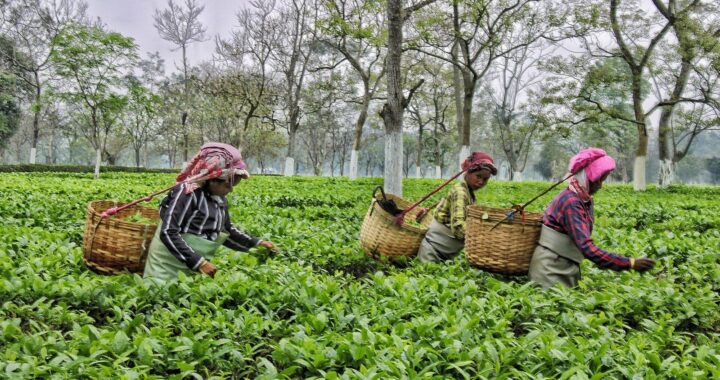
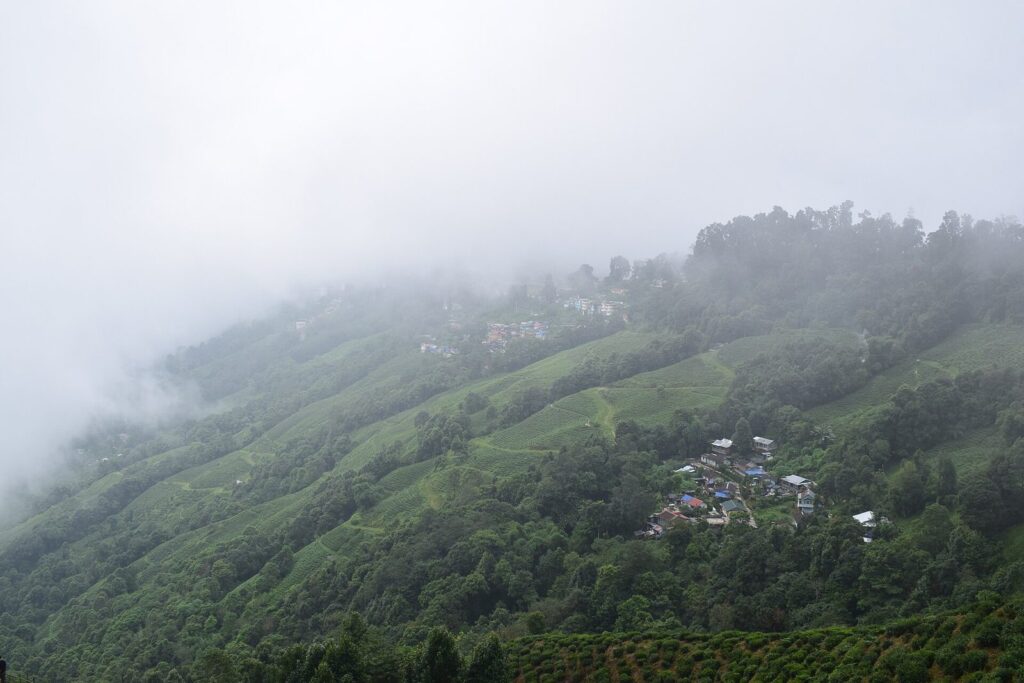
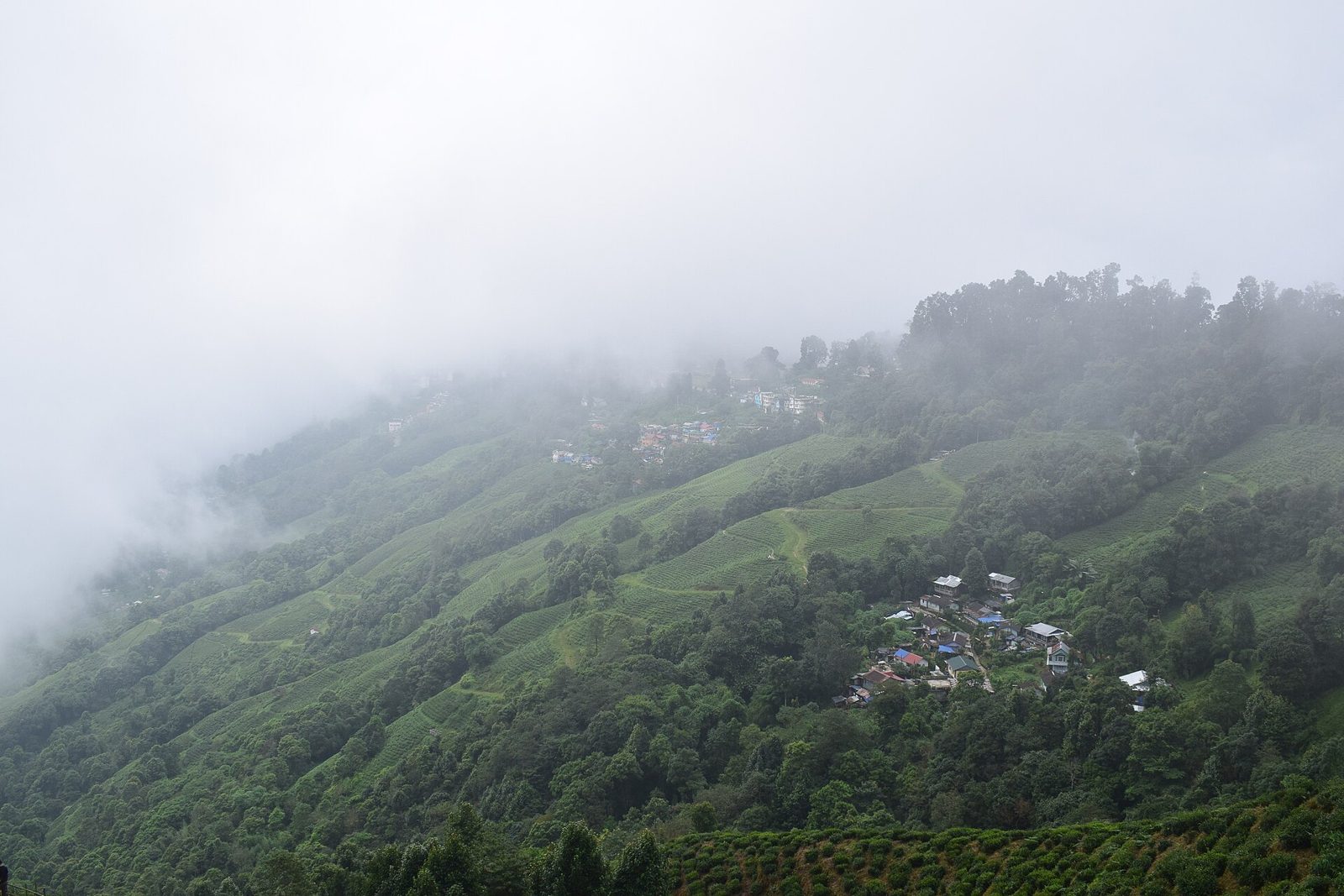
What sets Darjeeling apart is a mix of altitude, climate and plant type. According to a World Intellectual Property Organization case study, the estates sit at 200 to 2,000 metres on slopes as steep as 60 to 70 degrees, with heavy rain, frequent mist and only two to four hours of sunshine on an average day. Many bushes are of the small-leaved Chinese variety rather than the large-leaved Assam plant used in most Indian tea. Pickers take two leaves and a bud, by hand.
The result is a lighter, more aromatic tea than India’s other famous black tea, Assam, which is malty and strong. Tea lovers often call Darjeeling “the champagne of teas”, a comparison the industry itself uses when it explains why the name is protected.
Darjeeling flushes explained
The bushes go dormant in the cool, dry winter. When growth restarts, each new burst of shoots is called a flush. Darjeeling has four main harvests, and each tastes different. The dates below are typical; the weather moves them by a few weeks every year.
| Flush | Usual picking time | Taste and colour | How it is sold |
|---|---|---|---|
| First flush | Late February or March to April | Pale gold cup, floral, green and brisk | The most prized and expensive; sold by estate and lot |
| Second flush | May to June | Amber cup, fuller body, ripe fruit and muscatel notes | The classic Darjeeling; high prices too |
| Monsoon (rains) flush | July to September | Darker, stronger and plainer | Mostly used in blends and tea bags |
| Autumn flush | October to November | Copper cup, smooth, woody and mellow | Good value; often lower prices than spring teas |
First flush
First flush shoots grow slowly after winter, so they are tender and full of flavour compounds. Many estates oxidise them only lightly, so the dry leaf looks a mix of green, brown and silver, and the cup can resemble a light oolong more than a typical black tea. Expect notes of fresh flowers, green apple and almond, with a dry, slightly astringent finish.
The seasons are chemically different, not just different in taste. A 2026 study of Darjeeling orthodox teas from two gardens and three seasons found clear seasonal shifts in amino acids, sugars and catechins. Researchers also report that flavonoid levels tend to be higher in the first flush than the second, which fits the sharper, brighter taste of spring teas.
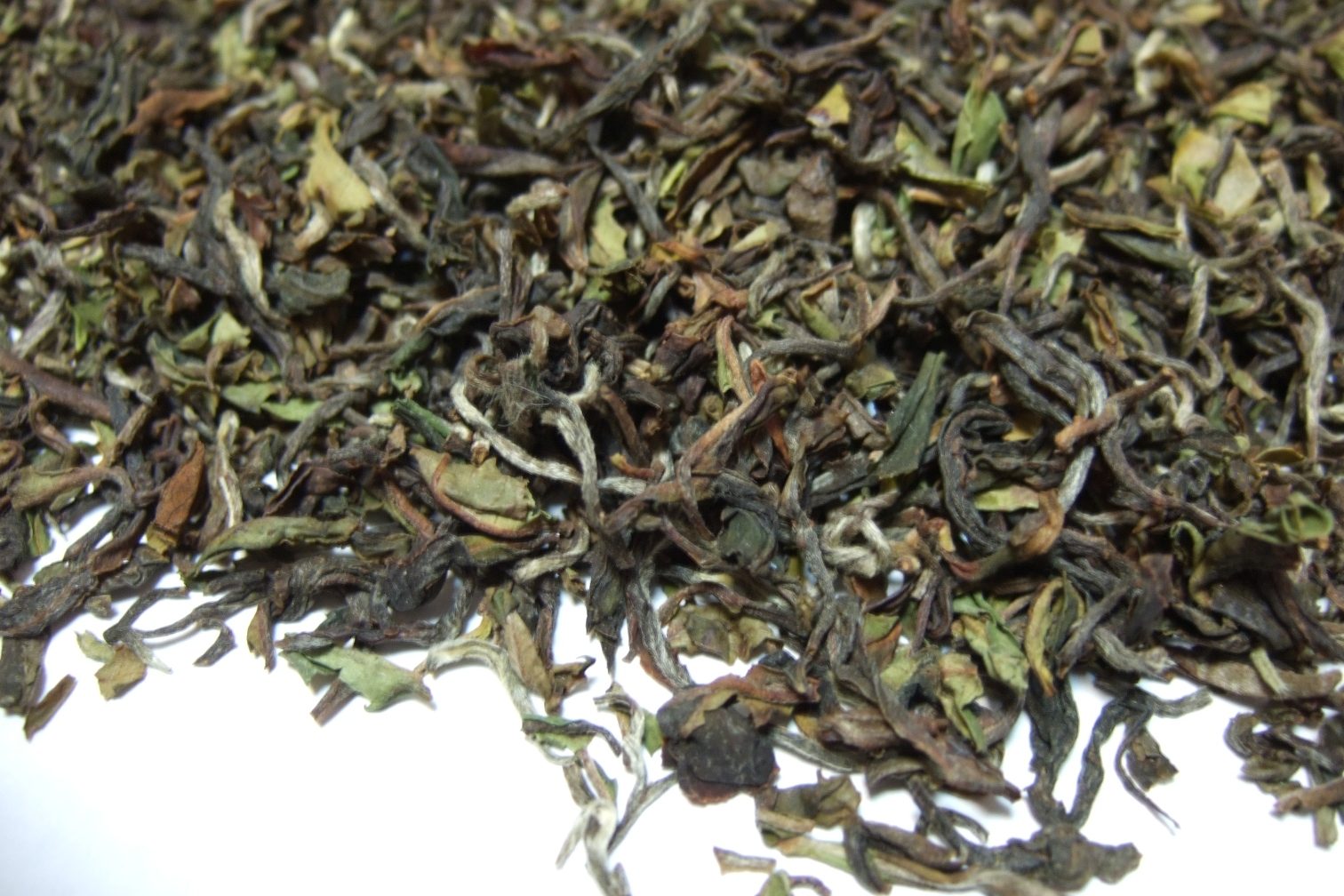
Second flush and the muscatel flavour
Second flush leaves grow faster in the warmer weather and are oxidised more fully. The cup is darker and rounder, and the best lots have the muscatel character that made Darjeeling famous: a sweet, grapey, slightly spicy note named after muscat grapes.
Growers have long linked muscatel to small insects, such as leafhoppers and thrips, that feed on the shoots in early summer. The plant responds to the bites by making extra aroma compounds. The same process is better studied in Taiwan’s Oriental Beauty oolong, and a 2025 review of the tea green leafhopper describes how its feeding raises floral and fruity compounds such as linalool and its relatives. Its exact role in Darjeeling is still debated.
Monsoon and autumn flushes
Heavy summer rain makes the bushes grow fast, and rains tea is plainer and stronger. Most of it goes into blends. After the monsoon, growth slows again, and the autumn flush gives a smooth, mellow, copper-coloured tea that many everyday drinkers prefer to spring tea. It is also usually the cheapest way to try single-estate Darjeeling.
How much caffeine is in Darjeeling tea?
Darjeeling is often described as a gentle tea, but that does not mean it is low in caffeine. In a 2017 comparison of Indian black teas, Darjeeling leaf contained 1.7 g of caffeine per 100 g, or 17 mg per gram. That was more than the Assam leaf tea in the same study (1.1 g per 100 g) and close to the Nilgiri teas, though less than finely broken Assam dust (3.0 g per 100 g), the type used in many tea bags.
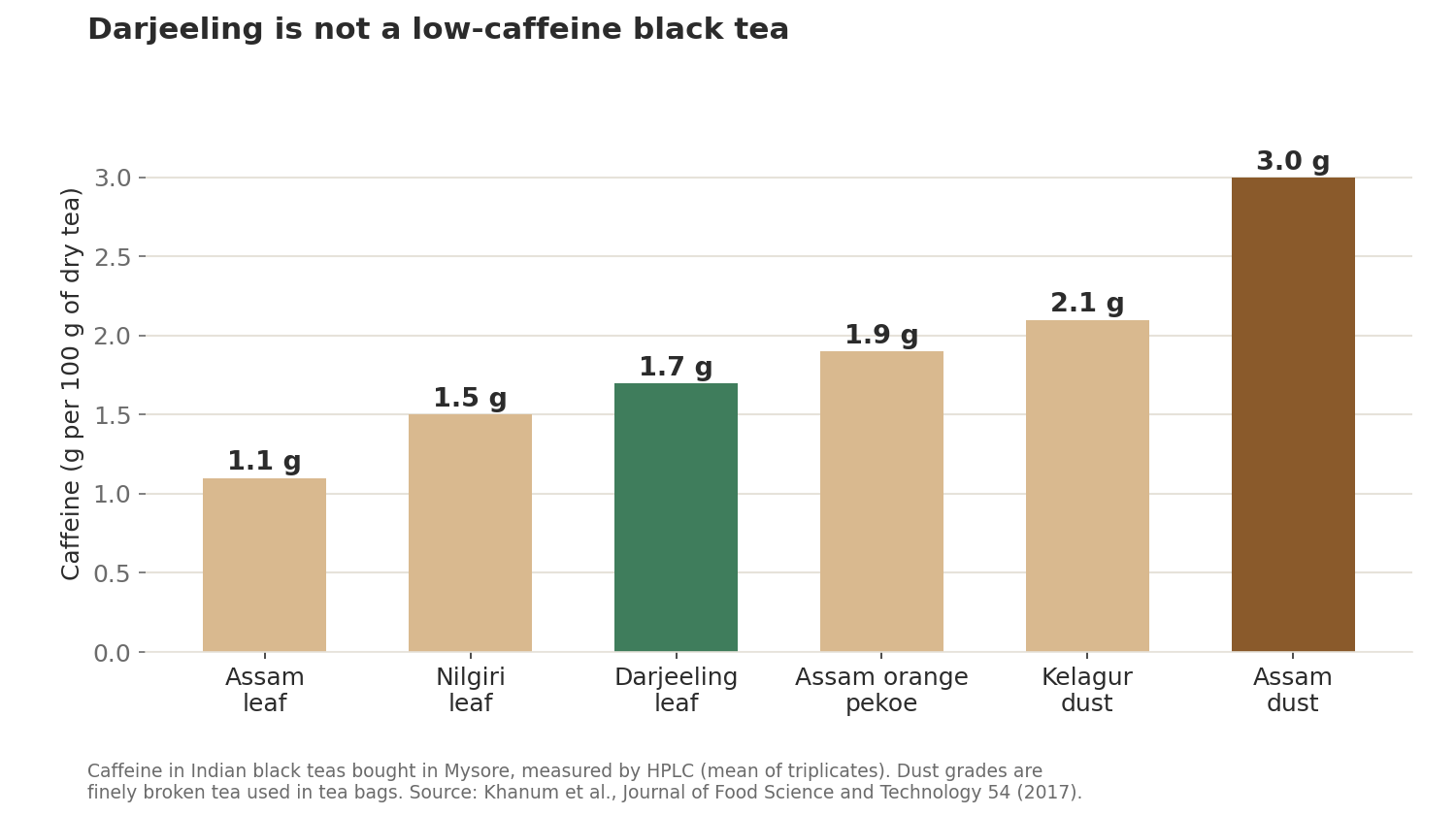
A typical cup uses about 2 g of leaf, so it starts with roughly 34 mg of caffeine in the leaf. Not all of it dissolves, and the amount in the cup depends on the steeping time and the water temperature. Lab tests on brewed commercial teas found 14 to 61 mg per serving across white, green and black teas, with no clear pattern by tea type. Steep time mattered more. For a Darjeeling made with a 3 to 4 minute steep, a reasonable estimate is 30 to 50 mg per mug.
| Drink | Typical caffeine per cup |
|---|---|
| Darjeeling, 3 to 4 minute steep | About 30 to 50 mg (estimate) |
| Brewed black, green or white tea | 14 to 61 mg per serving |
| Herbal tea | None |
So two or three cups of Darjeeling a day is well within the European Food Safety Authority’s safe limit of 400 mg of caffeine a day for healthy adults, or 200 mg during pregnancy. Our tea caffeine content compared guide puts Darjeeling beside every other tea, and how many cups of tea a day covers daily limits. If you want a tea that keeps you alert, see our guide to the best tea to stay awake; for calm concentration, our best tea for focus guide explains how caffeine and L-theanine work together.
Why Darjeeling looks so light
Pour a cup of Darjeeling next to an Assam and the difference is obvious. Darjeeling is bright gold or amber, while Assam is deep red-brown. The colour comes mostly from thearubigins, pigments formed when tea leaves oxidise. In the same 2017 study, Darjeeling had 3.6% thearubigins, about half the level in Assam leaf (7.3%), along with the lowest total colour of the teas tested. That is why Darjeeling tastes delicate even though it carries a normal dose of caffeine.
Many estates also make green, white and oolong-style Darjeeling under the same name. If you like fragrant, lighter teas, our guide to jasmine tea is another good next step.
Genuine Darjeeling and the protected name
For decades far more tea was sold as Darjeeling than the district grew. To stop that, the Tea Board of India created the Darjeeling logo in 1983 and registered it, and the word itself, as a certification trademark in several countries. Since 2000, every company dealing in Darjeeling has needed a Tea Board licence, and exports carry a certificate of origin, according to WIPO. Blending with tea from anywhere else is not allowed under the scheme.
In 2004 Darjeeling became the first product registered under India’s geographical indication law. The European Union followed with Regulation 1050/2011, which registered Darjeeling as a protected geographical indication. Since then, a tea sold in the EU as Darjeeling must be grown and made in the Darjeeling area.
A shrinking harvest
The protected name has not stopped a long decline in output. Darjeeling produced 14.49 million kg of tea in 1990, Business Standard reported in 2025. A 104-day shutdown during political unrest in 2017 cut that year’s crop to 3.2 million kg, and output in 2024 was 5.6 million kg, the lowest apart from 2017. Industry figures quoted by Agro & Food Processing put 2025 at around 5.3 million kg.
| Year | Darjeeling production |
|---|---|
| 1990 | 14.49 million kg |
| 2008 | 11.58 million kg |
| 2017 | 3.2 million kg (104-day shutdown) |
| 2024 | 5.6 million kg |
| 2025 | About 5.3 million kg |
Producers blame ageing bushes, dry springs, heavy monsoons, labour shortages and cheaper orthodox tea from neighbouring Nepal, which can enter India duty free. For buyers, it means genuine single-estate Darjeeling is scarce and the cheapest “Darjeeling” in a shop deserves a second look.
How to brew Darjeeling tea
Darjeeling is easy to brew badly. Boiling water and a long steep can make first flush tea harsh. Treat spring teas a little more gently than other black teas.
- Use 2 to 3 g of leaf (about a heaped teaspoon) per 200 to 250 ml cup.
- For first flush, use water just off the boil, around 85 to 90°C, and steep for 2 to 3 minutes.
- For second flush and autumn tea, use water at 90 to 95°C and steep for 3 to 4 minutes.
- Taste, then adjust. If it is bitter, shorten the steep before you cut the leaf.
- Good loose leaf will give a second, slightly longer infusion.
Most Darjeeling is best without milk, which hides its aroma. A strong second flush or autumn tea can take a splash, but for a milky cup an Assam or a robust Ceylon tea is a better match. Darjeeling also makes a lighter base for Earl Grey. Our article on milk in tea covers the debate, and Indian-style masala chai uses strong CTC tea rather than Darjeeling. For more on water and timing, see our brewing temperature and steep time guide.
Buying and storing Darjeeling
- Look for the estate and flush. Good Darjeeling names the garden, such as Castleton, Margaret’s Hope or Makaibari, and the season. Lot codes like DJ-2 mark the order of the year’s batches.
- Read the grade. Letters such as FTGFOP1 (Finest Tippy Golden Flowery Orange Pekoe, grade 1) describe leaf size and the share of buds, not flavour.
- Check for the logo. The Darjeeling logo, a woman’s profile holding tea leaves, marks Tea Board certified tea. Blends that say “Darjeeling style” are not the same thing.
- Buy fresh spring tea. First flush loses its bright, green notes within a year. Second flush and autumn teas keep a little longer.
- Store it airtight. Keep tea away from light, heat, moisture and strong smells. Our tea storage guide explains how.
Quick answers
Does Darjeeling tea have more caffeine than other black tea?
Not by much. Darjeeling leaf had 1.7 g of caffeine per 100 g in one Indian study, in the normal range for black tea. How you brew it matters more than the origin. A longer, hotter steep pulls out more caffeine.
Which has more caffeine, first flush or second flush?
There is no reliable rule. Young spring shoots and buds can be rich in caffeine, but first flush is usually brewed cooler and shorter, which extracts less. In practice, cups of both are similar.
Is Darjeeling tea black or green?
Most Darjeeling is sold as black tea, but first flush is often only lightly oxidised and can look half green. Some estates also make green, white and oolong teas under the Darjeeling name.
What is the difference between Darjeeling and Assam tea?
Darjeeling grows at high altitude, mostly from small-leaved Chinese-type bushes, and makes a light, floral, aromatic cup. Assam grows in a hot river valley from the large-leaved Assam plant and makes a dark, malty, strong cup that suits milk. Our Assam tea guide compares them.
Sources
- Khanum et al. Quality, antioxidant activity and composition of Indian black teas. Journal of Food Science and Technology, 2017.
- Chin et al. Caffeine content of brewed teas. Journal of Analytical Toxicology, 2008.
- De et al. Metabolomic insights into seasonal variations in Darjeeling orthodox tea. Journal of Food Science and Technology, 2026.
- Majumder et al. Virtual screening and docking analysis of novel ligands for selective enhancement of tea flavonoids. Food Chemistry X, 2022.
- Kanu et al. Redefining the tea green leafhopper as a vital asset in premium tea production. Life, 2025.
- World Intellectual Property Organization. Managing the challenges of the protection and enforcement of intellectual property rights (Darjeeling tea case study).
- Commission Implementing Regulation (EU) No 1050/2011 registering Darjeeling as a protected geographical indication.
- Business Standard. Darjeeling tea woes deepen, pushing industry to an existential crisis, May 2025.
- Agro & Food Processing. Darjeeling tea industry seeks relief from government as output, prices decline.
- European Food Safety Authority. Scientific opinion on the safety of caffeine, 2015.
Last updated: 9 October 2026. Sources are linked in the text.