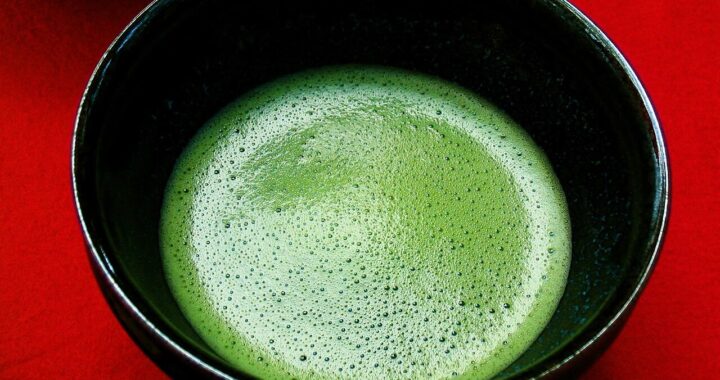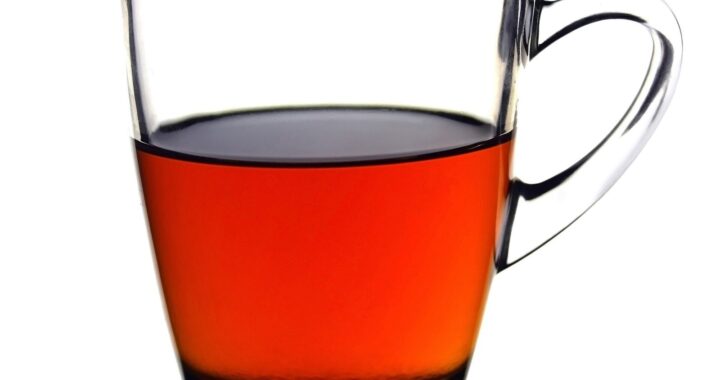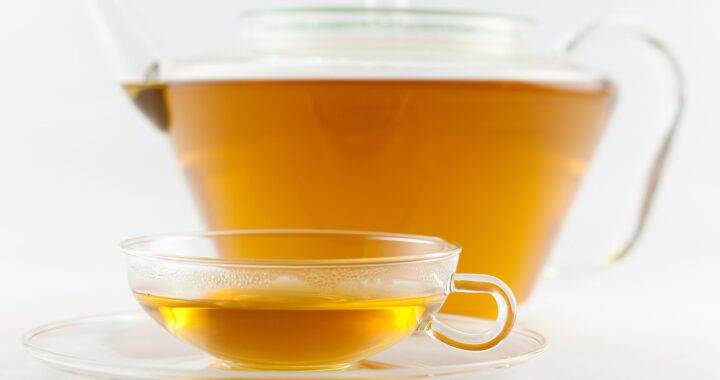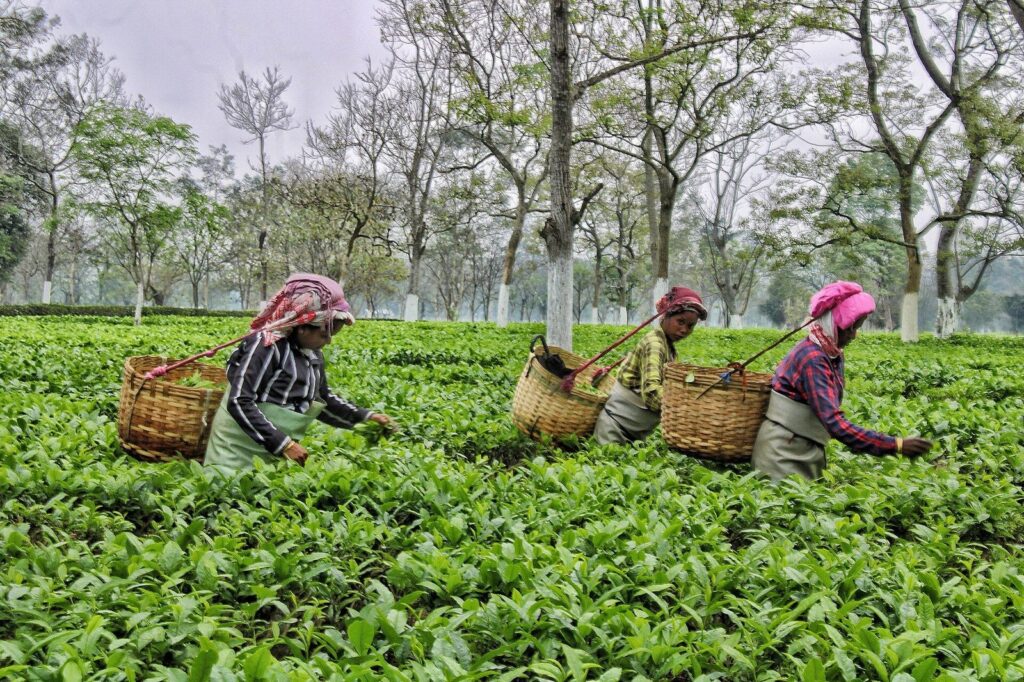
Assam tea is a strong, malty black tea grown in the lowlands of north-east India, and it is the backbone of most breakfast blends. A typical mug holds roughly 40 to 60 mg of caffeine, about half a mug of coffee. That is normal for black tea rather than unusually high. Its punchy taste comes from the plant variety, the hot and wet climate and the way most of it is processed, not from extra caffeine.
What is Assam tea?
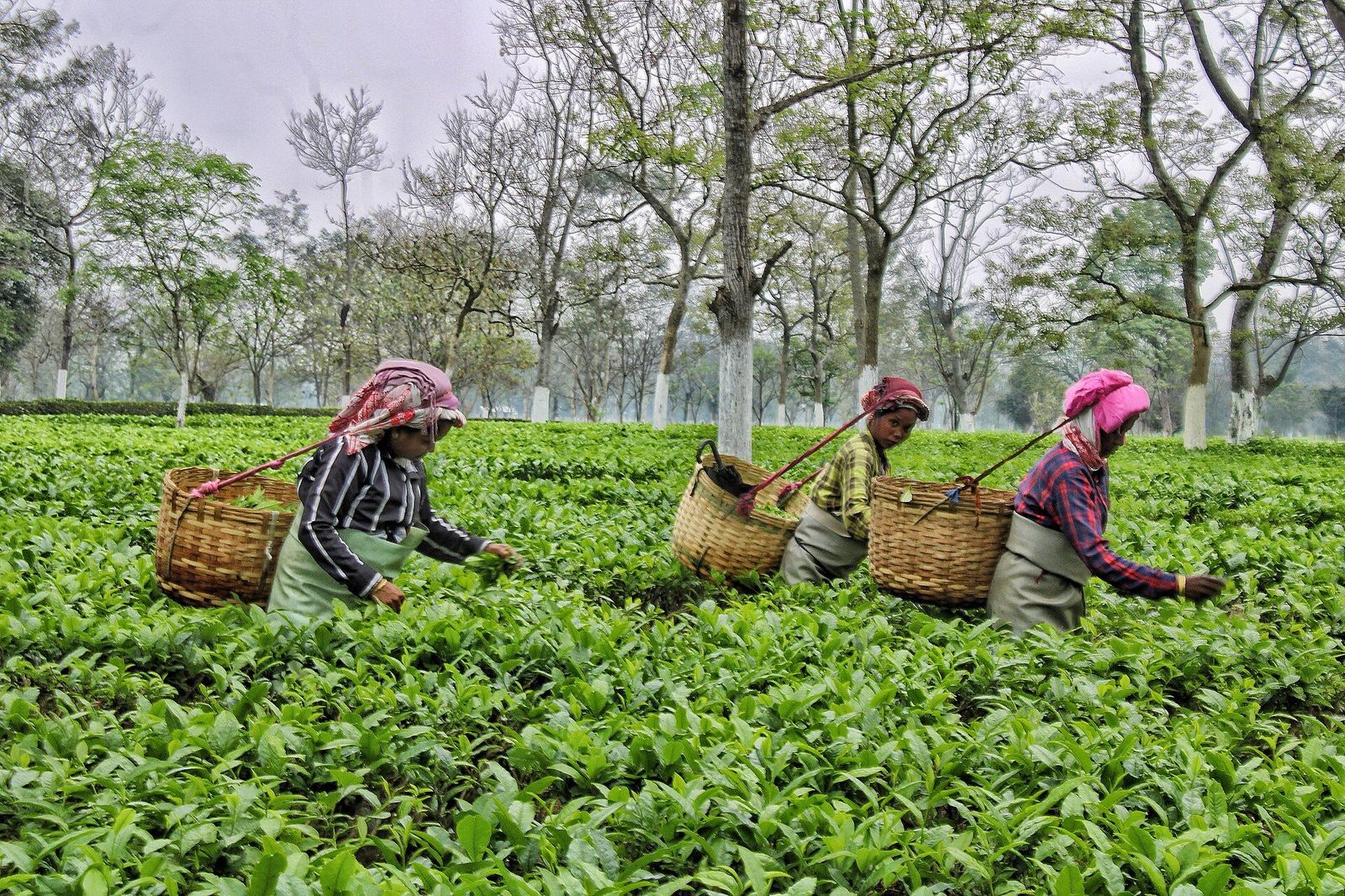
Assam tea is black tea from the state of Assam in north-east India. Most of it grows on large estates along the Brahmaputra and Barak river valleys. Unlike Darjeeling, which grows on steep Himalayan slopes, Assam is flat and low. The Tea Board of India describes its orthodox tea as grown on estates no higher than 150 metres above sea level, in a region of high humidity and alluvial soil laid down by the Brahmaputra.
The plant is different too. Most Assam bushes belong to Camellia sinensis var. assamica, the large-leaved variety native to the region. Its leaves are broad, glossy and dark green, and the bush thrives in heat and monsoon rain. Chinese teas mostly come from the smaller-leaved var. sinensis, which suits cooler hills. Both make every kind of tea, but assamica leaves are rich in the polyphenols that turn into a dark, brisk black tea.
Assam is also enormous. According to Tea Board figures reported in February 2026, Assam made 687.76 million kg of India’s 1,369.98 million kg of tea in 2025, just over half.
How much caffeine is in Assam tea?
A mug of Assam usually has somewhere between 40 and 60 mg of caffeine, depending on how much tea you use and how long you brew it. The US Department of Agriculture lists brewed black tea at 20 mg of caffeine per 100 g, which works out to about 47 mg in a 240 ml cup. Brewed coffee has about twice that.
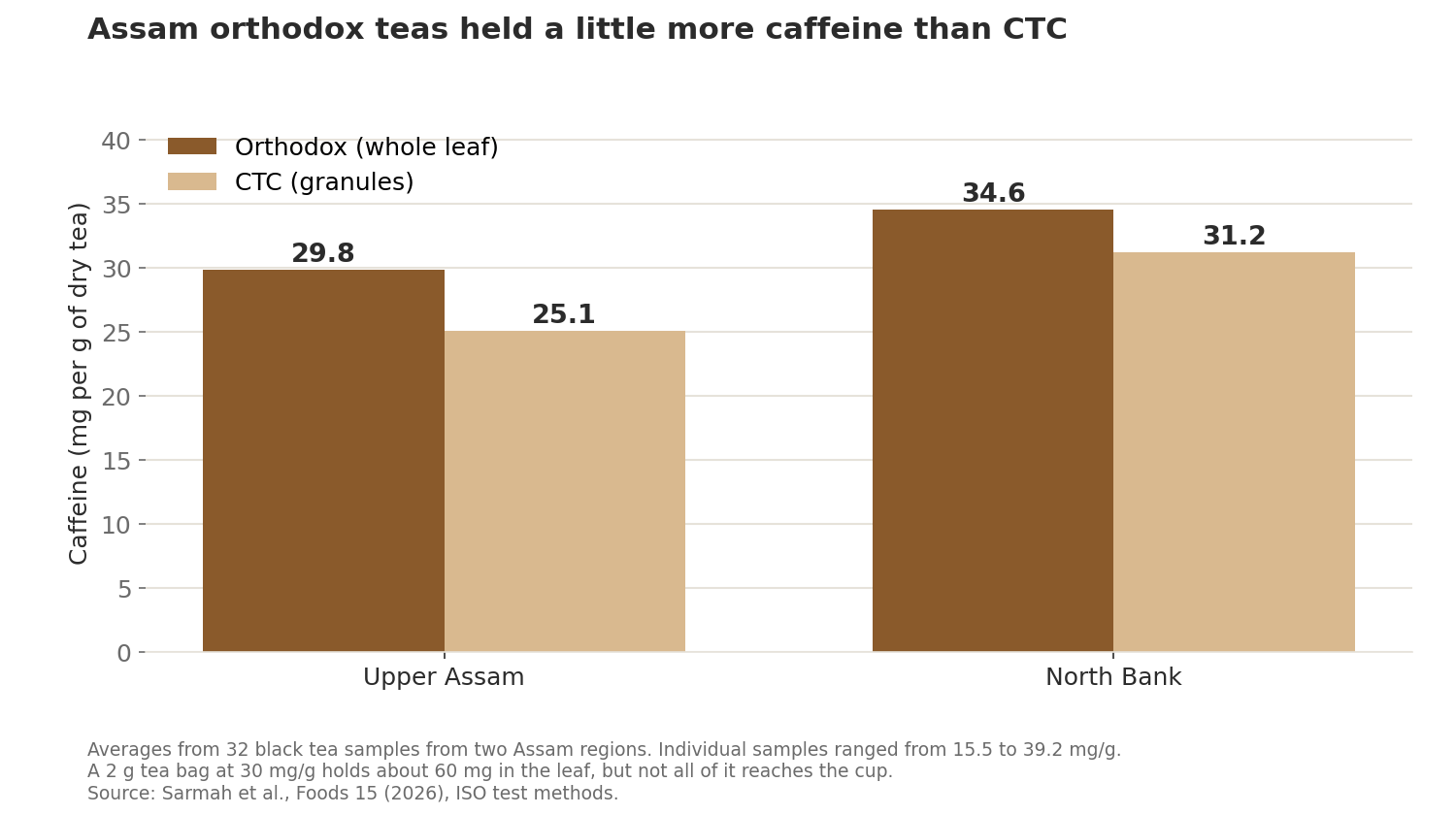
The dry leaf gives a better sense of the range. A 2026 study of 32 black teas from Assam, tested with ISO methods, found caffeine from 15.5 to 39.2 mg per gram of dry leaf, with an average of 30.1 mg. A standard 2 g tea bag at that average contains about 60 mg of caffeine in the leaf. Not all of it dissolves, especially in a short brew.
How you brew matters as much as which tea you buy. In a 2025 lab study, cup-sized black tea bags released an average of 39 mg of caffeine per 200 ml, while loose black tea gave 24 mg under the same conditions. Longer steeping raised caffeine for every type of tea tested. An older analysis of 20 teas found 14 to 61 mg per serving, with steep time mattering more than tea type.
| Drink | Serving | Caffeine |
|---|---|---|
| Brewed black tea (USDA average) | 240 ml cup | About 47 mg |
| Black tea, cup-sized tea bag (lab study) | 200 ml | 39 mg on average |
| Black tea, loose leaf (same study) | 200 ml | 24 mg on average |
| Assam black tea, dry leaf | 2 g, one tea bag | About 60 mg in the leaf |
| Brewed coffee (USDA average) | 240 ml cup | About 95 mg |
So does Assam have more caffeine than other black teas? Not reliably. Its strong flavour makes it feel stronger, but the measured range overlaps with black teas from China, Kenya and Sri Lanka. Our tea caffeine comparison puts every type side by side, and our guide to the best tea to stay awake explains how to get the most lift from a cup.
What Assam tea tastes like
Assam is malty, brisk and full-bodied, with a bright reddish-brown colour. Good orthodox Assam can taste of malt loaf, toast, cocoa and dried fruit. CTC Assam is blunter, strong and slightly astringent, made to stand up to milk and sugar.
Two groups of compounds formed during oxidation shape it. Theaflavins give brightness and briskness, and thearubigins give colour and body. The Assam teas in the 2026 survey averaged 8.6 mg of theaflavins per gram. The same study notes that caffeine binds with theaflavins, which adds to the fresh, brisk taste tasters look for.
Assam tea seasons
Assam is picked from late March to late autumn, and the season changes the cup.
| Season | Rough timing | What to expect |
|---|---|---|
| First flush | Late March to April | Lighter, fresher and brisk |
| Second flush | May to June | Full-bodied, malty and sweet, with golden tips. Often called tippy tea |
| Monsoon (rains) teas | July to September | Strong and dark, mostly made into CTC for blends |
| Autumn flush | October to November | Rounder and mellower |
CTC vs orthodox Assam tea
Assam tea is made in two ways, and the difference matters more than almost anything else on the label.
Orthodox is the traditional method. Fresh leaves are withered, rolled to bruise them, left to oxidise, then dried and sorted into grades. The leaf keeps its shape, so you get twisted black leaves, often with golden tips. Orthodox Assam is the kind sold by grade names such as TGFOP (tippy golden flowery orange pekoe).
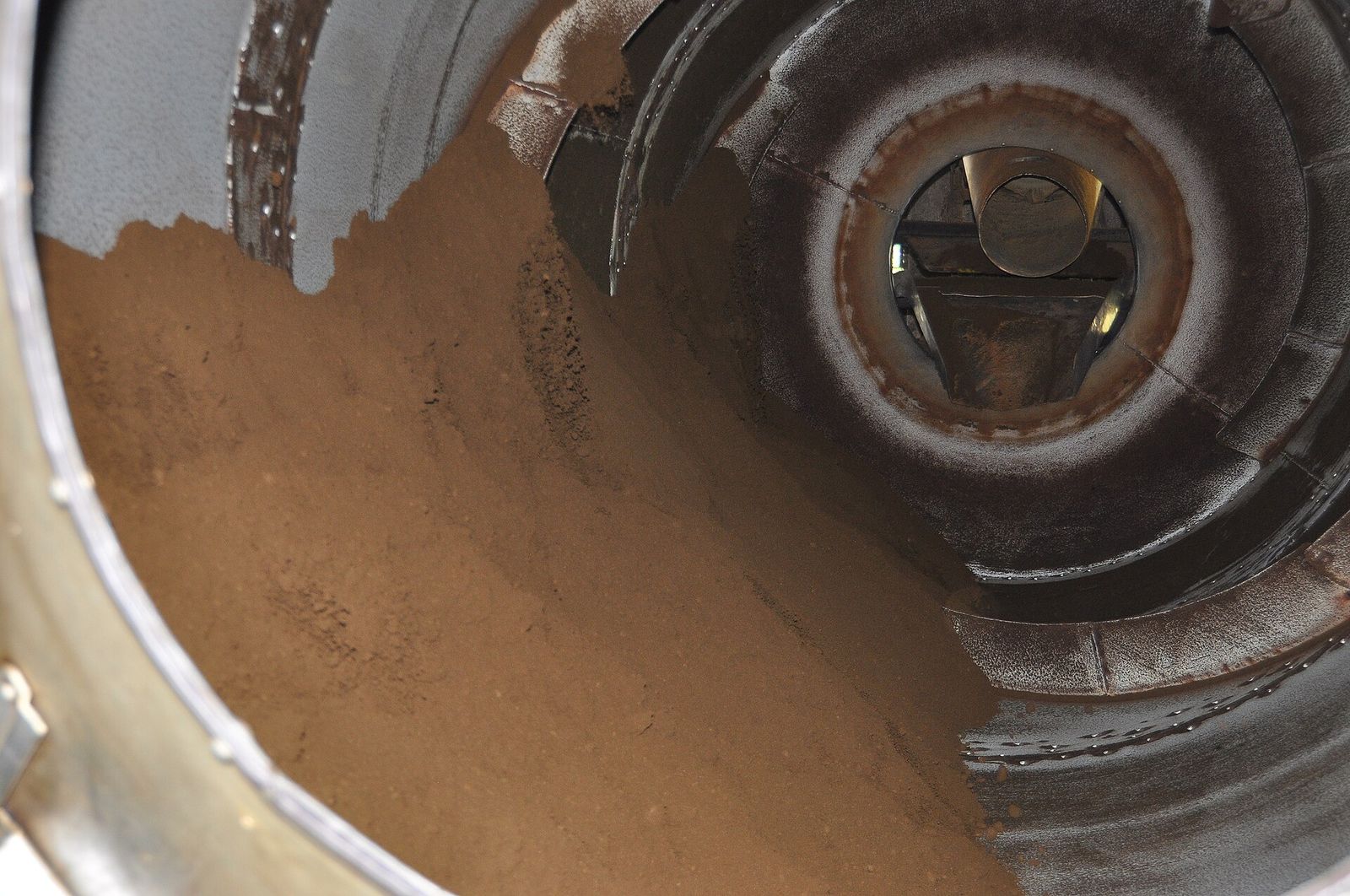
CTC stands for crush, tear, curl. Instead of rolling, the withered leaf goes through sets of toothed steel rollers that cut it into small, hard pellets. According to standard accounts, the first CTC machine went into service in 1930 at the Amgoorie estate in Assam, under Sir William McKercher. CTC tea brews fast and dark, which made it ideal for tea bags and for boiling into milky Indian chai. Most of India’s tea is now CTC.
| Orthodox Assam | CTC Assam | |
|---|---|---|
| Looks like | Twisted whole or broken leaves, often with gold tips | Small round granules |
| Brewing speed | 3 to 5 minutes | 2 to 4 minutes, colours almost at once |
| Taste | Malty, layered, slightly sweet | Strong, dark, brisk and simple |
| Best with | A splash of milk or none | Milk and sugar, or boiled as chai |
| Where you find it | Loose-leaf tea shops, single estates | Tea bags, breakfast blends, chai |
| Average caffeine (Upper Assam) | 29.8 mg per g | 25.1 mg per g |
Lab studies find the two styles closer than their looks suggest. In the 2026 Assam survey, orthodox and CTC teas had almost identical soluble solids and theanine, though orthodox held slightly more caffeine. A 2024 cell study ranked orthodox black tea above CTC for antioxidant activity, but that says little about a mug.
Orthodox Assam has extra protection. The Tea Board’s Assam (Orthodox) word and logo are registered as certification marks. Under the Tea Board’s regulations, a pack carrying the logo must contain tea that comes entirely from listed Assam gardens.
A short history of Assam tea
Tea was drunk in Assam long before the British arrived. The Singpho people of the region made drinks and food from the wild plant, and according to the Tocklai Tea Research Institute they had been making and drinking tea “from antiquity”.
In 1823 a Scottish trader, Robert Bruce, saw wild tea near Rangpur and arranged to get plants from a Singpho chief, but died before collecting them. His brother Charles, posted to Sadiya during the war with Burma, obtained plants and seed. Some early accounts give the credit to Maniram Dewan, an Assamese nobleman who may have pointed the Bruces to the plant.
The first eight chests of Assam tea were sold at auction in London on 10 January 1839. The Assam Company was formed the same year to grow it commercially. Maniram Dewan worked for the company, then set up his own garden at Cinnamara in 1845, becoming one of the first Indian tea planters. After the 1857 uprising, the British hanged him at Jorhat on 26 February 1858 for plotting against them. Assam remembers him every year on that date.
By 1888 Britain was buying more tea from India than from China. It came at a high human cost. Workers were recruited from central India on harsh contracts, and their descendants still make up much of the estate workforce.
Assam in breakfast tea and tea bags
If you drink English breakfast or Irish breakfast tea, you are probably drinking Assam. Irish blends lean on it most heavily for their strength and colour. Everyday British tea bags usually blend Assam CTC with teas from Kenya and elsewhere for a consistent, strong cup that takes milk well. Our guides to who owns PG Tips, who owns Tetley and who owns Typhoo cover the companies behind those blends, and our guide to who owns the big tea brands has the full list.
In India the most common way to drink Assam is as chai, with the CTC leaf boiled in milk and water with sugar and often spices. Our masala chai recipe shows how.
How to brew Assam tea
- Use 2 to 3 g of loose leaf, about one heaped teaspoon, or one tea bag per 250 ml mug.
- Pour on freshly boiled water. Black tea needs full heat to bring out its body.
- Steep CTC or tea bags for 2 to 4 minutes, and orthodox leaf for 3 to 5 minutes.
- Remove the leaves or bag so the tea does not turn bitter.
- Add milk if you like. Assam is one of the few teas arguably better with it.
On the old argument, see milk first or tea first. For other teas, use our brewing temperature and steep time guide.
Is Assam tea good for you?
Assam is black tea, so the evidence for black tea applies. Most of it comes from observational studies, which can show links but not prove cause and effect. In the UK Biobank study of nearly 500,000 adults, people who drank two or more cups of tea a day, mostly black tea, had a 9 to 13 percent lower risk of dying during about 11 years of follow-up than non-drinkers.
- Caffeine. The European Food Safety Authority considers up to 400 mg of caffeine a day safe for healthy adults, and up to 200 mg a day in pregnancy. That allows several mugs of Assam. Our how many cups of tea a day guide does the sums.
- Iron. Black tea reduces the absorption of iron from plant foods. If you are low in iron, drink it between meals rather than with them. See tea and iron absorption.
- Temperature. In a UK Biobank analysis, people who drank a lot of very hot tea or coffee had a higher risk of one type of oesophageal cancer. Letting your mug cool for a few minutes is a simple habit.
Assam, Darjeeling or Ceylon?
Assam is the strongest and maltiest of South Asia’s three classic black teas, best with milk. Darjeeling, grown at high altitude, is lighter and more floral, and usually drunk without milk. Ceylon tea from Sri Lanka sits in between, bright and brisk with a citrus edge, and works both ways. Our green tea vs black tea guide explains how all black teas differ from green.
For how Assam compares with other black teas, and how steep time changes the dose, see how much caffeine is in black tea.
Quick answers
Does Assam tea have more caffeine than coffee?
No. A mug of Assam usually has 40 to 60 mg of caffeine, while a similar mug of brewed coffee has around 95 mg. A very strong, long-brewed Assam can come close to a weak coffee.
Is Assam tea stronger than English breakfast tea?
English breakfast is usually a blend built on Assam, so a pure Assam tastes as strong or stronger. Irish breakfast blends tend to use even more Assam than English ones.
Can you drink Assam tea without milk?
Yes. Orthodox Assam, especially a second flush, is pleasant black, with a malty sweetness. Strong CTC tea bags can taste harsh without milk, so brew them for less time if you drink them black.
Is Assam tea the same as chai?
Not quite. Chai simply means tea in Hindi, but in India it usually means Assam CTC boiled with milk, sugar and often spices. Assam tea is the leaf; chai is one way of making it.
Sources
- Sarmah et al. Biochemical quality profile of black tea from Upper Assam and North Bank region of Assam, India. Foods, 2026.
- Ayakdaş and Ağagündüz. Determination of L-theanine and caffeine contents in tea infusions with different fermentation degrees and brewing conditions. Foods, 2025.
- Chin et al. Caffeine content of brewed teas. Journal of Analytical Toxicology, 2008.
- Deo et al. Comparative studies on the antioxidant, anticancer and anti-inflammatory activities of green tea, orthodox black tea and CTC black tea. Journal of Food Science and Technology, 2024.
- Inoue-Choi et al. Tea consumption and all-cause and cause-specific mortality in the UK Biobank. Annals of Internal Medicine, 2022.
- Inoue-Choi et al. Hot beverage intake and oesophageal cancer in the UK Biobank. British Journal of Cancer, 2025.
- US Department of Agriculture, FoodData Central. Tea, black, brewed (173227).
- EFSA Panel on Dietetic Products. Scientific opinion on the safety of caffeine. EFSA Journal, 2015.
- Tea Board of India. Regulations governing use of the Assam (Orthodox) certification marks.
- Tocklai Tea Research Institute. History of tea cultivation.
- ETV Bharat. Assam leads as India’s tea production rises in 2025, citing Tea Board data. February 2026.
Last updated: 11 October 2026. Sources are linked in the text.