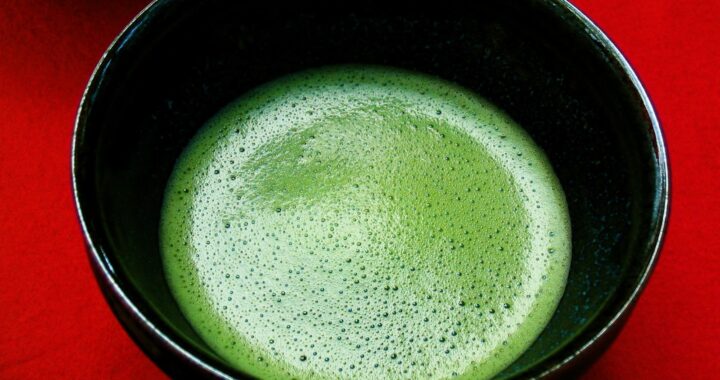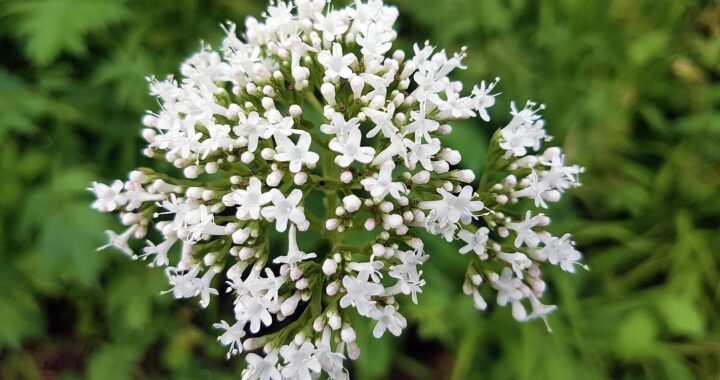
Jasmine tea is usually green tea that has been packed with fresh jasmine flowers so the leaves soak up their scent. Because the base is real tea, it has caffeine: most cups land somewhere between about 15 and 60 mg, similar to ordinary green tea. Its health effects come mainly from that green tea, and the evidence for those is modest. The jasmine itself adds aroma, and lab studies suggest even the smell can have a mild calming effect.
What is jasmine tea?
Jasmine tea is a scented tea. Leaves of Camellia sinensis, the plant behind all true tea, are perfumed with the flowers of Jasminum sambac, or Arabian jasmine. In the best teas the flowers are removed once their scent has gone into the leaf.
Most jasmine tea uses a green tea base, which is why it tastes light and slightly grassy under the floral note. A 2026 review of jasmine tea research notes that black, oolong and other teas are scented too. You will find jasmine silver needle, made from a white tea base, and jasmine oolong from Taiwan and Fujian. If you are not sure how those base teas differ, our green tea vs black tea guide explains what oxidation does to the leaf.
The city most associated with jasmine tea is Fuzhou, the capital of Fujian province in south-east China. In 2014 the UN Food and Agriculture Organization named the Jasmine and Tea Culture System of Fuzhou City a Globally Important Agricultural Heritage System. FAO credits Fuzhou with inventing the tea-scenting method and describes how farmers grow tea and jasmine at different heights on the same hillsides. In 2022 UNESCO added China’s traditional tea processing techniques, which include scenting, to its list of intangible cultural heritage. Today jasmine tea is also made in Guangxi and Sichuan.
How jasmine tea is made
The green tea is made in spring, but jasmine blooms in summer, so scenting happens months later. Jasmine releases most of its scent in the evening, so the flowers are picked as tight buds by day.
- Waiting for the flowers. The buds are heaped until most are half open and releasing scent.
- Mixing. Tea and flowers are layered or mixed in a pile and left for several hours, often overnight. The dry leaves absorb the scent and some moisture from the petals.
- Cooling. The pile warms up as the flowers respire, so workers spread it out to release heat, then heap it again.
- Removing the flowers. The spent flowers are sieved out and the tea is dried gently.
- Repeating. The whole cycle is done again with fresh flowers. Ordinary grades may be scented two or three times. Fine grades are scented five, seven or more times.
Researchers have measured how this works. In a 2026 study, a pan-fired green tea was scented three times, using 0.9 kg, 0.6 kg and 0.5 kg of fresh jasmine for every kilogram of tea, for 10.5, 10.5 and 8 hours. That is 2 kg of flowers per kilogram of tea. A 2023 study found the best results with flower weights between 80% and 120% of the tea weight, and chose 80% as the better value. More rounds help only up to a point. A 2025 study found the aroma compounds in the tea reached saturation by the fourth round for one jasmine variety, while the standard double-petal variety kept improving until the fifth.

What scenting does to the tea
Scenting changes more than the smell. In the Yang study, trained tasters scored the finished jasmine tea 12.3% higher for aroma and 11.5% higher for taste than the green tea it started as. The liquor turned from green to pale yellow. The warm, humid pile also changed the chemistry of the leaf. Soluble sugars rose by 22% and free amino acids by 5%, while the bitter and astringent components fell. Tea polyphenols, catechins and caffeine dropped by between 6.6% and 18.5%.

That helps explain why good jasmine tea tastes softer and sweeter than the plain green tea it was made from. This was one batch, so exact numbers will vary.
Why jasmine tea smells the way it does
Jasmine aroma is a blend of dozens of compounds. Analyses of commercial jasmine teas keep finding the same core group. The Gu study named methyl anthranilate, benzyl acetate, linalool, indole, methyl benzoate and methyl salicylate as the key aroma compounds. A survey of 92 jasmine teas added alpha-farnesene and cis-3-hexenyl benzoate.
| Compound | What it smells like | Where it comes from |
|---|---|---|
| Linalool | Floral, slightly citrus | Jasmine flowers and the tea leaf |
| Benzyl acetate | Sweet, fruity jasmine | Jasmine flowers |
| Methyl anthranilate | Grape, orange blossom | Jasmine flowers |
| Indole | Heavy, animal-like in large amounts | Jasmine flowers |
| Alpha-farnesene | Green apple, citrus | Jasmine flowers |
| Methyl salicylate | Wintergreen | Jasmine flowers and tea |
Real scenting vs jasmine flavouring
Scenting with fresh flowers is slow and uses a lot of jasmine, so many cheap jasmine teas take a shortcut. They use a lower-grade green tea, add jasmine flavouring, and mix in dried petals for looks. The result often smells strong in the packet but fades quickly in the cup and can taste perfumed or soapy.
- Read the ingredients. A traditionally scented tea lists green tea, and sometimes jasmine flowers. Words such as “flavouring”, “natural flavour” or “aroma” mean the scent was added.
- Few petals is a good sign. Fine jasmine tea has most flowers removed after scenting. A tea full of dried petals is not necessarily bad, but the petals add little scent.
- Smell the second cup. Well-scented leaf keeps its aroma over two or three infusions. Sprayed flavour usually disappears after the first.
Jasmine pearls and other styles
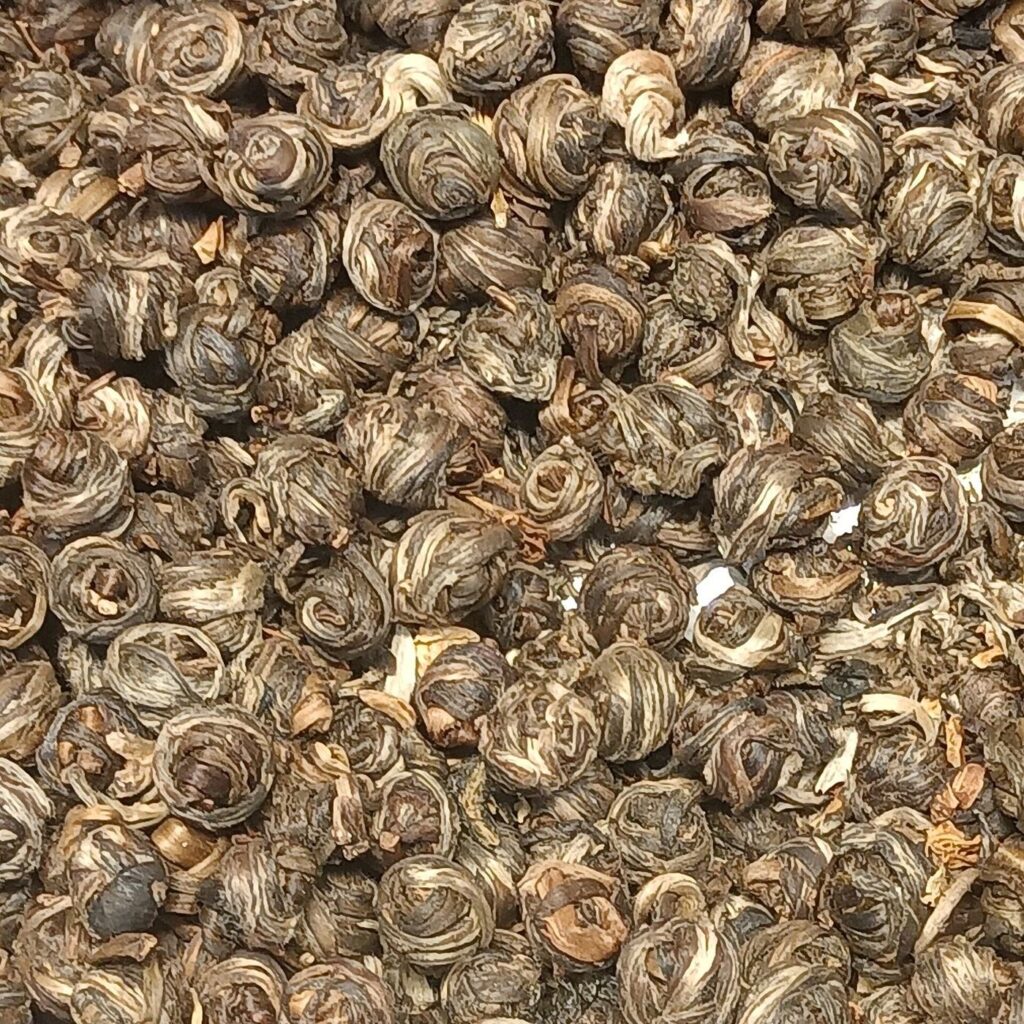
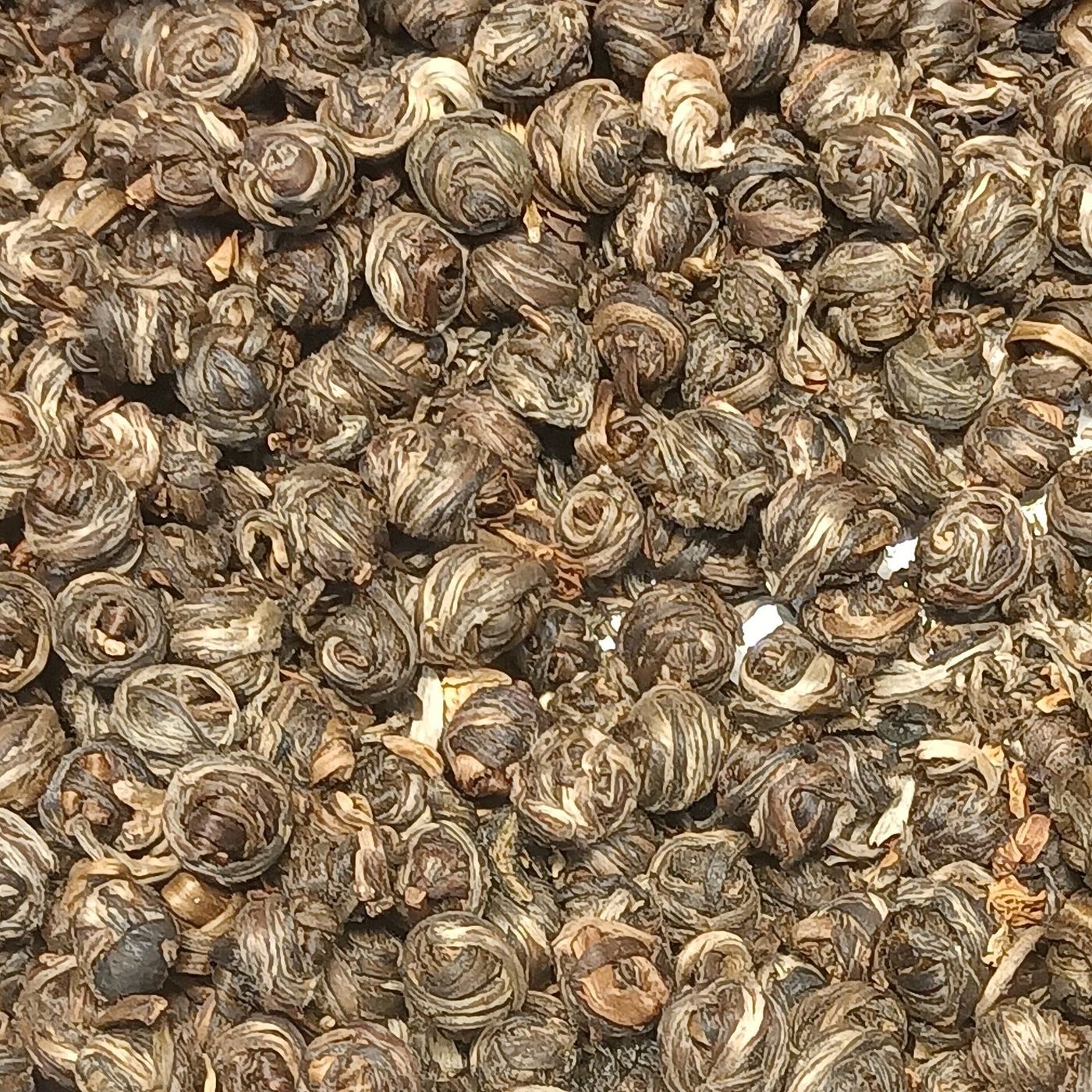
Jasmine pearls, sometimes sold as dragon pearls or dragon phoenix pearls, are young leaves and buds rolled by hand into small balls before scenting. They unfurl slowly in hot water. Bi Tan Piao Xue (“snow on the green lake”) from Sichuan is another classic, with a few white petals left in the leaf. Many cheaper jasmine tea bags are flavoured rather than scented, so check the ingredients list.
How much caffeine is in jasmine tea?
Jasmine flowers contain no caffeine, so the caffeine comes from the tea. A jasmine green tea has about as much as other green teas, and a jasmine black tea or oolong about as much as those. The amount in your cup depends far more on how much leaf you use, how hot the water is and how long you steep it than on the jasmine.
| Measurement | Caffeine | Source |
|---|---|---|
| Finished jasmine green tea, dry leaf | 3.97% of dry weight (about 40 mg per gram) | Yang et al. 2026 |
| 1,398 Chinese teas incl. jasmine, dry leaf | Averages of 27 to 43 mg per gram by tea type | Yong et al. 2022 |
| Brewed green tea | 12 mg per 100 ml, about 29 mg per 240 ml cup | USDA FoodData Central |
| Brewed white, green and black teas | 14 to 61 mg per 180 or 240 ml serving | Chin et al. 2008 |
A typical mug made with 2 g of jasmine green tea therefore holds well under 80 mg, and usually much less after a three-minute steep. That compares with roughly 80 to 100 mg in a mug of filter coffee. Our tea caffeine chart compares all the main types. Cooler water and a shorter steep cut caffeine, and decaffeinated jasmine tea exists. A 2025 study found that scenting decaffeinated green tea with fresh jasmine restored much of the flavour lost during decaffeination. For the opposite goal, see our guide to the best tea to stay awake.
Jasmine tea benefits and the evidence
Most claims about jasmine tea are really claims about green tea. A 2026 review lists antioxidant, antidepressant, blood sugar and antibacterial effects, but much of that work is in cells or animals. For example, a 2024 study found jasmine tea eased depression-like behaviour in stressed rats. That is a reason for further research, not proof that it helps people.
Calming aroma
The most specific evidence for jasmine tea concerns its smell. In a 2005 Japanese study, 24 healthy volunteers breathed in jasmine tea aroma for five minutes at a strength they could only just detect. Their heart rates fell and heart rate variability shifted towards the parasympathetic, rest-and-digest side, compared with a control. On a mood questionnaire they reported feeling both calmer and more vigorous. Linalool alone, in the form found in jasmine tea, had the same effect.
Strength and personal taste matter. An earlier study by the same group found that a strong jasmine smell raised arousal in people who disliked it, and that plain green tea aroma did not have the calming effect. These were small studies of smelling tea, not drinking it, and they did not measure sleep. Jasmine green tea still contains caffeine, so it is not a bedtime drink for most people. Our best tea for sleep guide lists caffeine-free options.
Heart health
A Cochrane review of tea trials found green tea lowered LDL cholesterol by about 0.64 mmol/L and systolic blood pressure by about 3 mmHg over several months. The authors warned that only a few small trials contributed and the results were not stable. In the Ohsaki study of 40,530 Japanese adults, women who drank five or more cups of green tea a day had a 23% lower risk of death from any cause over 11 years than those who drank less than one. Studies like this show an association, not cause and effect.
Is jasmine tea safe?
- Caffeine. Healthy adults can have up to 400 mg a day. In pregnancy the limit is 200 mg, which still allows several cups. See our guide to teas in pregnancy.
- Green tea extracts. The European Food Safety Authority concluded in 2018 that catechins in brewed green tea are generally safe, but 800 mg or more a day of EGCG from supplements was linked to raised liver enzymes. Drinking jasmine tea does not come near that.
- Iron. Like other teas, jasmine tea can reduce iron absorption from plant foods. If you are low in iron, drink it between meals.
- Not the same plant as yellow jasmine. Tea jasmine is Jasminum sambac. Do not make tea from garden plants called jasmine, such as Carolina or yellow jessamine (Gelsemium), which is poisonous.
How to brew jasmine tea
Treat jasmine green tea like any good green tea. Water that is too hot brings out bitterness and flattens the floral notes. Our green tea brewing guide has more detail on temperature.
| Style | Leaf per 200 ml | Water | Steep |
|---|---|---|---|
| Jasmine green tea, loose | 2 to 3 g (1 tsp) | 75 to 80°C | 2 to 3 min |
| Jasmine pearls | 2 to 3 g (8 to 10 pearls) | 80 to 85°C | 2 to 3 min, then longer |
| Jasmine silver needle (white) | 3 g | 80 to 85°C | 3 to 4 min |
| Jasmine oolong | 3 g | 90 to 95°C | 2 to 3 min |
| Gongfu style (small pot) | 5 g per 100 ml | 80 to 85°C | 20 to 40 sec, repeated |
Without a thermometer, let a boiled kettle stand with the lid open for about 5 minutes. Pour off all the tea after steeping, and re-steep good leaf two or three times, adding 30 seconds each time. Jasmine tea also makes excellent cold brew. Use about 8 g per litre of cold water and leave it in the fridge for 6 to 8 hours. It comes out sweet, floral and almost never bitter.
Buying and storing jasmine tea
Buy loose leaf or pearls from a seller who names the base tea and the region, ideally Fujian, Guangxi or Sichuan. Store it airtight, away from light and strong smells, as our tea storage guide explains. Jasmine tea absorbs other odours as easily as it absorbed the jasmine. Unlike most green teas, it does not have to be drunk fresh. In one 2024 storage study, jasmine tea had its best aroma after about three years, though longer storage brought a stale note.
Quick answers
Does jasmine tea have caffeine?
Yes, unless it is labelled caffeine-free or decaffeinated. Jasmine green tea usually has about 15 to 60 mg per cup, depending on the leaf and how you brew it. Herbal infusions of jasmine flowers alone are caffeine-free.
Is jasmine tea green tea?
Usually. Most jasmine tea is green tea scented with jasmine flowers, but white, oolong and black jasmine teas exist. Check the label for the base tea.
Can I drink jasmine tea every day?
Yes. Three to five cups a day is well within caffeine limits for healthy adults. Drink it between meals if you need to watch your iron levels.
Does jasmine tea help you sleep?
Not directly. Its aroma had a calming effect in lab studies, but the caffeine in the tea can keep you awake. Have it earlier in the day, or choose a decaffeinated version in the evening.
What does jasmine tea go well with?
Dim sum, steamed fish and lightly spiced dishes. If you like fragrant teas, try Darjeeling, Ceylon tea, Earl Grey or oolong next.
Sources
- FAO. Global recognition for traditional farming systems in China, Iran and South Korea. 1 May 2014.
- UNESCO. Traditional tea processing techniques and associated social practices in China. Inscribed 2022.
- Yang et al. Aroma characteristics and volatile compound transfer in jasmine tea during scenting. Foods, 2026.
- Gu et al. Metabolomics analysis reveals dynamic changes of volatile and non-volatile metabolites during the scenting process of jasmine tea. Food Chemistry X, 2025.
- An et al. Characterization of key volatile compounds in jasmine tea infusion with different amount of flowers. Food Chemistry X, 2023.
- Zhao et al. Insights into momentous aroma dominating the characteristic flavor of jasmine tea. Food Science and Nutrition, 2023.
- Wang et al. Jasmine tea: unveiling the secrets of processing, flavor characteristics, and potential health benefits. Critical Reviews in Food Science and Nutrition, 2026.
- Kuroda et al. Sedative effects of the jasmine tea odor and (R)-(-)-linalool on autonomic nerve activity and mood states. European Journal of Applied Physiology, 2005.
- Inoue et al. Autonomic nervous responses according to preference for the odor of jasmine tea. Bioscience, Biotechnology, and Biochemistry, 2003.
- Yong et al. Quantitative probabilistic assessment of caffeine intake from tea in Chinese adult consumers. Food and Chemical Toxicology, 2022.
- Chin et al. Caffeine content of brewed teas. Journal of Analytical Toxicology, 2008.
- USDA FoodData Central. Beverages, tea, green, brewed, regular (FDC 171917).
- An et al. Scenting: an effective processing technology for enriching key flavor compounds and optimizing flavor quality of decaffeinated tea. Food Chemistry, 2025.
- Hartley et al. Green and black tea for the primary prevention of cardiovascular disease. Cochrane Database of Systematic Reviews, 2013.
- Kuriyama et al. Green tea consumption and mortality due to cardiovascular disease, cancer, and all causes in Japan: the Ohsaki study. JAMA, 2006.
- Zhang et al. How jasmine tea improves depression in CUMS-treated rats. Foods, 2024.
- Qi et al. Variation in the aroma composition of jasmine tea with storage duration. Foods, 2024.
- EFSA Panel on Food Additives and Nutrient Sources. Scientific opinion on the safety of green tea catechins. EFSA Journal, 2018.
Last updated: 9 October 2026. Sources are linked in the text.
This article is general information, not medical advice. Talk to your doctor or pharmacist before using tea or herbs for a health condition, especially if you are pregnant, breastfeeding or take regular medication.